


Full body red light therapy equipment is now a mainstream category for wellness clinics, gyms, and home users, but the buying decision is rarely straightforward. This article answers the concrete question every serious buyer faces: which wavelengths, irradiance levels, build details, and supplier terms actually distinguish a durable professional device from a short-lived consumer panel. We focus on hardware, measurement, and sourcing criteria so you can compare quotations on equal terms.
Wavelength Bands and What They Mean for a Full Body Panel
A full body red light therapy panel should deliver light in two verifiable bands: red around 630-660 nm and near-infrared around 810-850 nm. These ranges are used because they correspond to absorption peaks of cytochrome c oxidase, a mitochondrial enzyme involved in cellular energy production. A panel that emits only 660 nm red light is not a full-spectrum photobiomodulation device; it is a red-light cosmetic lamp and should be priced accordingly.
Check the supplier’s spectral chart rather than marketing copy. A credible manufacturer will state the peak wavelength tolerance, typically ±5 nm or ±10 nm, and the full width at half maximum for each LED bin. If the spec sheet lists only “red light” without a numeric peak, ask for the binning report from the LED vendor. Binning is the process of sorting LEDs by emitted wavelength, and wide bins produce uneven spectral output across the panel surface.
For full body coverage, the ratio of red to near-infrared LEDs matters. A common configuration is 1:1, but some panels use 2:1 or 3:1 red to NIR because red light is visible and perceived as more active by users. There is no universal optimum; the decision should follow your target application. If your customers expect visible red glow during a session, choose more red diodes. If they want deeper tissue penetration, prioritize 810-850 nm output and verify the NIR irradiance separately.
Irradiance, Dose, and the Problem with Marketing Numbers
Irradiance is the optical power density delivered to the skin, expressed in mW/cm2. For full body red light therapy, a useful clinical-style range is roughly 3-50 mW/cm2 at the treatment plane, with a session dose of roughly 3-20 J/cm2. The dose is simply irradiance multiplied by time in seconds divided by 1000. A panel that delivers 30 mW/cm2 at 10 cm distance produces 18 J/cm2 in a 10-minute session.
The failure mode buyers hit most often is distance inflation. A supplier may claim 100 mW/cm2, but that figure is measured at the LED surface, not at the user’s skin. At a typical standing distance of 15-30 cm from a full body panel, irradiance drops sharply. Ask for an irradiance map, not a single number. A professional manufacturer will provide a grid showing mW/cm2 at multiple distances (e.g., 10 cm, 20 cm, 30 cm) and multiple points across the panel face.
Uniformity is another checkable detail. A panel with a 10% variation across its surface is acceptable; a 40% variation means some body areas receive far less light than others. Use a calibrated spectrometer or a solar power meter with a known spectral response to verify the supplier’s claims on a sample unit. Do not rely on smartphone light meter apps; they are not calibrated for narrowband LED output.
Full Body Red Light Therapy Device Classes: Panel, Bed, and Handheld
Full body red light therapy is delivered through three main device classes: vertical panels, horizontal beds, and handheld or targeted units. Each has different engineering trade-offs, and the right choice depends on your clinic layout, target session length, and budget per treatment room.

| Device class | Typical coverage | Irradiance at skin | Key consequence for buyer |
|---|---|---|---|
| Vertical panel (single or hinged) | Front or back of body, 180-200 cm tall | 20-50 mW/cm2 at 15 cm | Most flexible for clinics; requires user to turn or use two panels for full coverage |
| Horizontal bed | Full dorsal or ventral surface while lying down | 10-30 mW/cm2 at 20 cm | Higher comfort, larger footprint, higher shipping cost and longer lead time |
| Handheld or targeted wand | Small area, 10-30 cm diameter | 50-100 mW/cm2 at 5 cm | Low entry cost but impractical for full body sessions; often used as add-on |
For importers and distributors, panel-based systems are the most common first order because they are modular, easier to service, and have lower freight costs per unit than beds. A hinged 4-panel or 6-panel system can wrap around the user and approximate a bed’s coverage at roughly half the shipping volume. If you are evaluating OEM/ODM options, ask whether the supplier can provide both panel and bed frames from the same driver and LED platform; this reduces spare parts complexity.
Build Quality, Thermal Design, and Driver Selection
The most common field failure in full body red light therapy panels is not LED burnout but driver failure caused by poor thermal management. LEDs themselves can last 50,000 hours or more, but a cheap constant-current driver running at 90% of its rated capacity inside a sealed aluminum frame will fail within 12-18 months. Ask the supplier for the driver brand and model, the rated mean time between failures, and the operating temperature range.
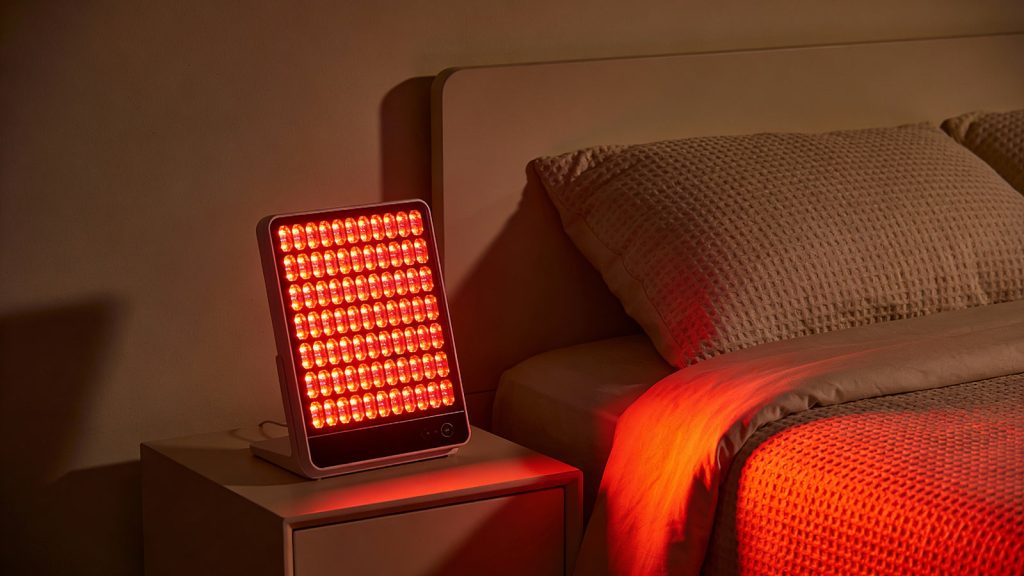
Look for an aluminum or aluminum-alloy housing with visible heat-sink fins on the rear. A plastic housing with no thermal path is a red flag for any panel above 500 W total electrical power. The panel should include active cooling fans with a tachometer output or thermal cutoff switch. If the fans fail, the LEDs should automatically derate or shut down rather than overheat.
Constant-current drivers are non-negotiable for stable irradiance. Constant-voltage LED strips show brightness drift as the diodes heat up, which changes the delivered dose during a session. A professional panel will specify current regulation within ±3% across the input voltage range. Check the power supply’s power factor and efficiency: a 0.95 power factor and 90% efficiency are typical for quality drivers, and they reduce heat load and electricity cost over thousands of operating hours.
Factory Certifications and What They Actually Cover
When a supplier says a full body red light therapy panel is “certified,” ask for the certificate number and issuing body. The relevant factory and system certificates are CE (European conformity for electrical safety and electromagnetic compatibility), RoHS (restriction of hazardous substances), ISO 9001 (quality management system), and ISO 13485 (quality management for medical devices, if the factory claims medical-grade production). These are factory certifications, not product performance guarantees.
A CE mark on a panel means the manufacturer has self-declared conformity with applicable EU directives, typically the Low Voltage Directive and Electromagnetic Compatibility Directive. Ask for the Declaration of Conformity and the test report from an accredited lab. If the supplier cannot provide the test report number, treat the CE mark as unverified.
Photobiological safety is governed by IEC 62471, which classifies lamps and lamp systems by their potential optical hazard. A full body panel should be classified as Exempt or Risk Group 1 at the intended use distance. Risk Group 2 or higher means the device requires additional warnings or access controls. Ask the supplier for the IEC 62471 test report and the exact classification at 20 cm and 30 cm distances.
Rule of thumb: never accept a quotation that lists only “CE and RoHS” without certificate numbers. A serious manufacturer will provide the test lab name, certificate number, and issue date within one business day of the request.
Sourcing, MOQ, and Lead Time for Importers and Distributors
Full body red light therapy panels are typically sourced from contract manufacturers in China, with a few specialist factories in Taiwan and South Korea. The market price structure for a mid-size professional panel (roughly 300-600 W, 100-200 LEDs, aluminum frame) falls into three tiers: entry consumer panels at $150-$400 per unit, mid-range clinic panels at $500-$1,200, and high-output modular systems at $1,500-$4,000. These are general market ranges, not quotations, and they exclude shipping, duties, and certification costs.
Minimum order quantities vary by factory and customization level. For an off-the-shelf design with your logo printed on the frame, expect an MOQ of 10-50 units. For a custom wavelength ratio, custom driver specification, or custom housing extrusion, the MOQ typically rises to 100-300 units because the factory must order dedicated LED reels and aluminum profiles. Lead time for stock panels is usually 15-30 days; custom production runs 45-60 days after sample approval.
Before placing a purchase order, request a pre-production sample and test it against these checkable points:
- Measure irradiance at 10 cm, 20 cm, and 30 cm with a calibrated meter; compare to the supplier’s irradiance map.
- Run the panel for 8 hours continuously and record housing temperature; it should stay below 50°C on the rear surface.
- Check the power draw at the wall with a watt meter; it should match the driver’s rated output within 10%.
- Inspect the LED solder joints and wire routing; cold solder joints and pinched wires are the most common early failure points.
- Request the IEC 62471 test report and confirm the risk group classification at your intended use distance.
FAQ: Full Body Red Light Therapy Device Selection
What is the difference between 660 nm and 850 nm LEDs in a full body panel?
660 nm red light is visible and absorbed primarily in the upper layers of skin, while 850 nm near-infrared light penetrates deeper into tissue. A full body panel should include both bands, and the supplier should state the peak wavelength tolerance for each LED bin, typically ±5 nm or ±10 nm.
How much irradiance do I need for a full body session?
A practical range is 3-50 mW/cm2 at the treatment plane, with a session dose of 3-20 J/cm2. At 30 mW/cm2 and 10 minutes, the dose is 18 J/cm2. Verify the irradiance at the actual standing distance, not at the LED surface.
What factory certifications should a professional panel have?
Look for CE, RoHS, ISO 9001, and ISO 13485, and ask for the certificate numbers and issuing bodies. Also request the IEC 62471 photobiological safety test report showing an Exempt or Risk Group 1 classification at your use distance.
What is a realistic MOQ and lead time for OEM panels?
For a stock design with your logo, expect an MOQ of 10-50 units and a lead time of 15-30 days. For custom wavelength ratios or housing, the MOQ is typically 100-300 units with a 45-60 day lead time after sample approval.
What to Do Next Before You Order
Full body red light therapy panels are a long-term capital purchase, and the difference between a reliable clinic workhorse and a warranty-return headache is visible in the spec sheet. Start by defining your required wavelength bands, irradiance at the intended use distance, and session dose, then compare suppliers against those numbers rather than against adjectives.
Request a sample, measure it yourself, and check the thermal performance under continuous load. Confirm the factory certificates with the issuing body, and ask for the IEC 62471 report before you commit to a container order. If a supplier cannot produce these documents or avoids specific questions about driver brand, LED binning, or irradiance mapping, walk away and find one that can.
Post time: 11-21-26