



Red Light Therapy for Clinics | Professional PBM Solutions
Professional Photobiomodulation Solutions Designed for Modern Clinics
Bring professional red light therapy and photobiomodulation (PBM) into your clinic with reliable LED light therapy equipment designed for repeatable treatments, flexible treatment areas, and professional workflows.
Our clinic solutions combine targeted red and near-infrared wavelengths, configurable treatment settings, and practical device designs to support a wide range of wellness, rehabilitation, aesthetic, and complementary care applications.
Whether you operate a physical therapy clinic, rehabilitation center, aesthetic clinic, sports recovery facility, wellness center, or integrative health practice, we can help you select a red light therapy solution for your clinic based on your treatment environment and business requirements.
Request a Clinic Solution
Talk to Our Red Light Therapy Experts
Red Light Therapy for Clinics: Built Around Your Treatment Needs
Every clinic has different treatment rooms, patient volumes, treatment goals, and equipment requirements.
Instead of using a one-size-fits-all device, a professional clinic setup should consider:
- Treatment area
- Wavelength selection
- Irradiance
- Energy density
- Treatment distance
- Session duration
- Device size
- Patient positioning
- Operator workflow
- Cleaning and maintenance
- Safety requirements
- Expected daily usage
Our team can help you build a suitable clinical red light therapy system according to your application and facility.
Why Clinics Are Adding Red Light Therapy
Photobiomodulation uses specific wavelengths of visible red and near-infrared light to deliver light energy to targeted tissue.
Unlike thermal light-based procedures, PBM is generally designed to deliver light without intentionally heating tissue. The FDA describes low-level light therapy as a non-thermal light-based procedure using low doses of visible light.
Clinical research continues to investigate PBM across areas including pain, tissue repair, dermatology, rehabilitation, and other applications.
A 2025 umbrella review covering 204 randomized clinical trials and more than 9,000 participants found evidence of benefit for some health outcomes, while also noting that evidence certainty varied considerably between applications.
For clinics, this means equipment selection and treatment protocols matter.
The goal is not simply to provide “more light.”
The goal is to provide consistent, measurable, and application-appropriate light delivery.
Our Red Light Therapy Solutions for Clinics
1. Full-Body Red Light Therapy Systems
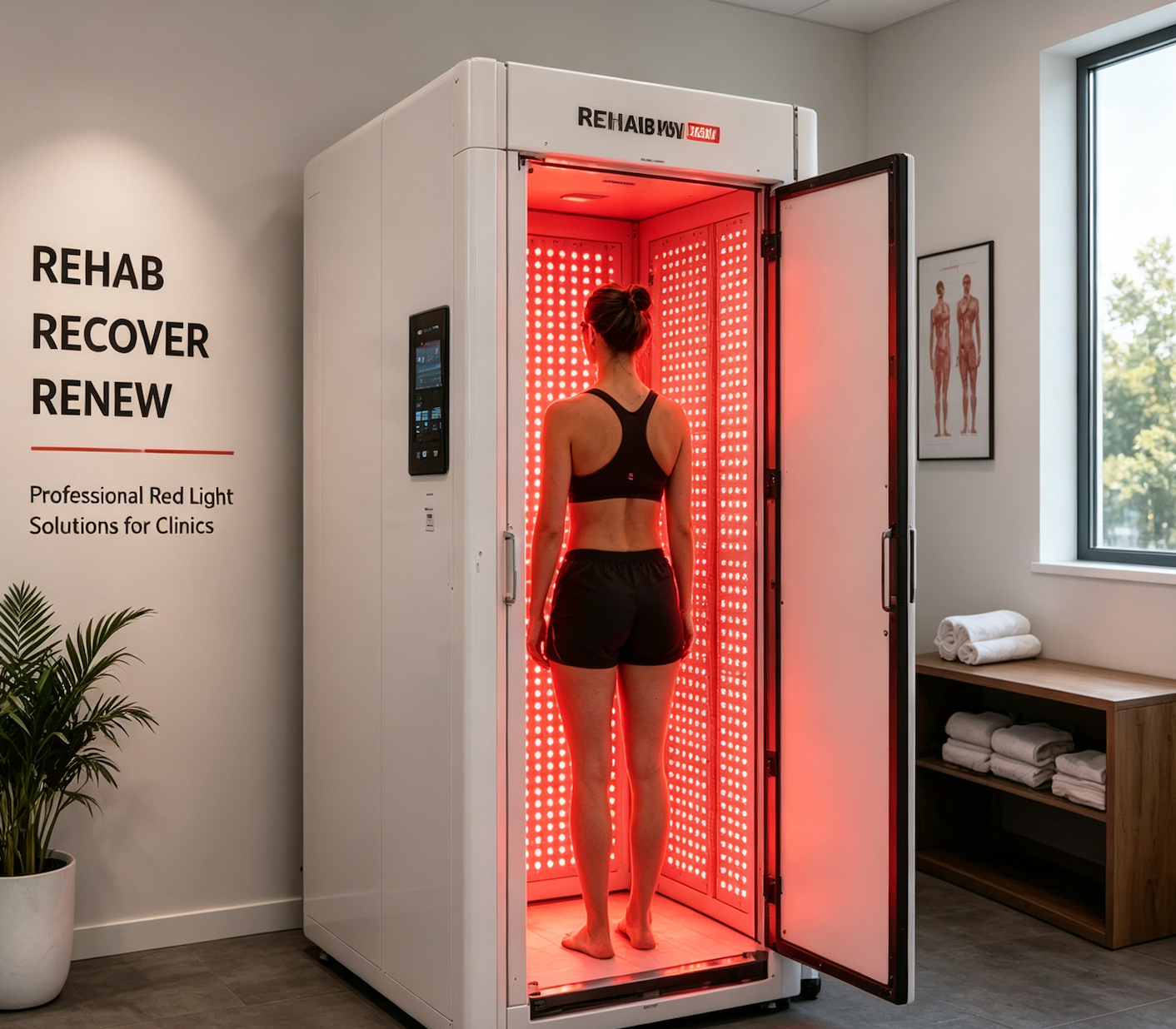
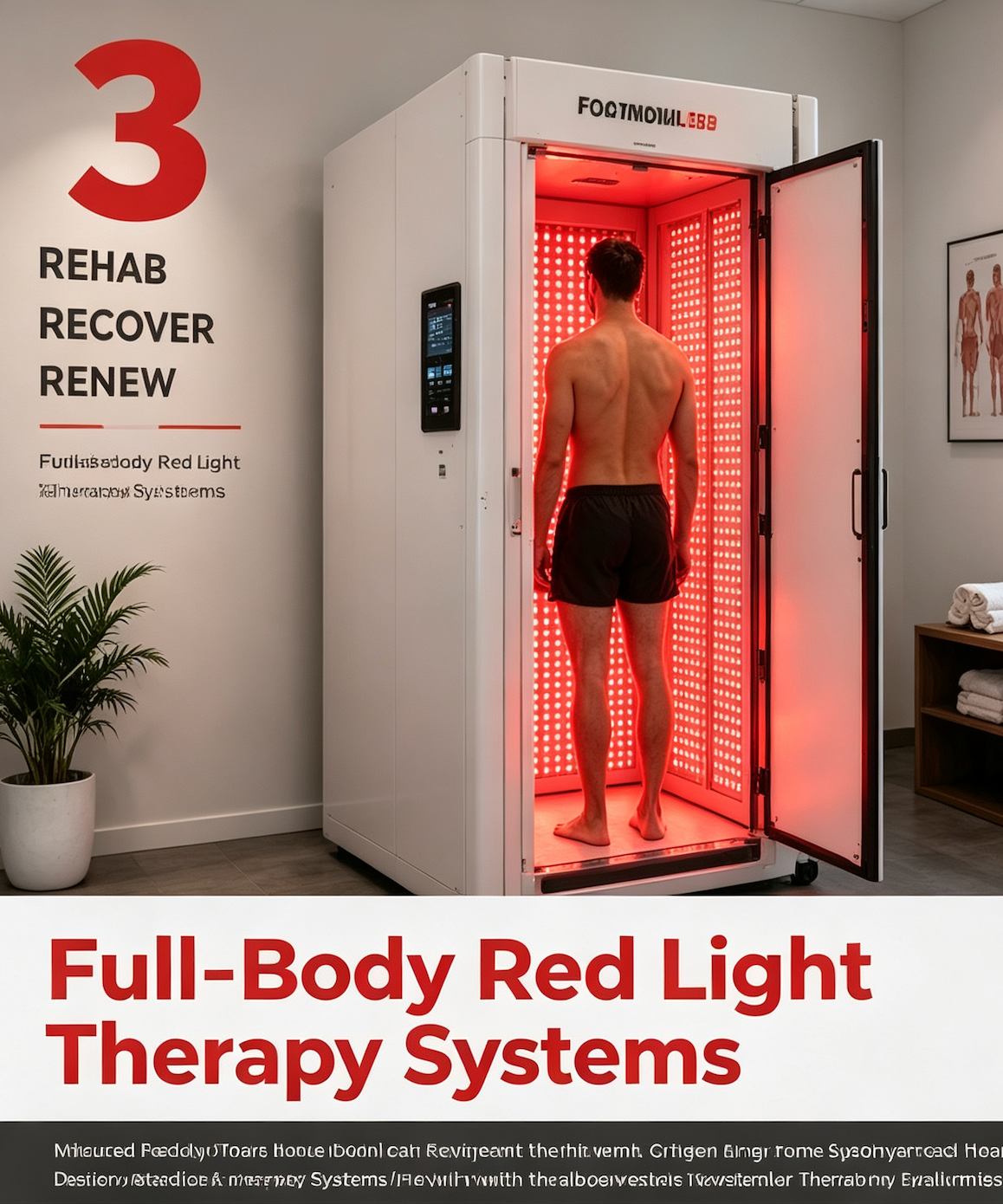
Full-body systems are designed for clinics that need to treat larger areas efficiently.
They can be used in environments such as:
- Rehabilitation centers
- Sports recovery clinics
- Wellness clinics
- Physical therapy facilities
- Integrative health centers
- Performance centers
A full-body red light therapy system can help clinics create a dedicated treatment area while reducing the need to reposition equipment repeatedly.
Key Features
- Red and near-infrared wavelengths
- Large treatment coverage
- Adjustable treatment settings
- Professional LED configuration
- Easy-to-operate control system
- Multiple treatment modes
- Designed for repeated professional use
2. Red Light Therapy Panels
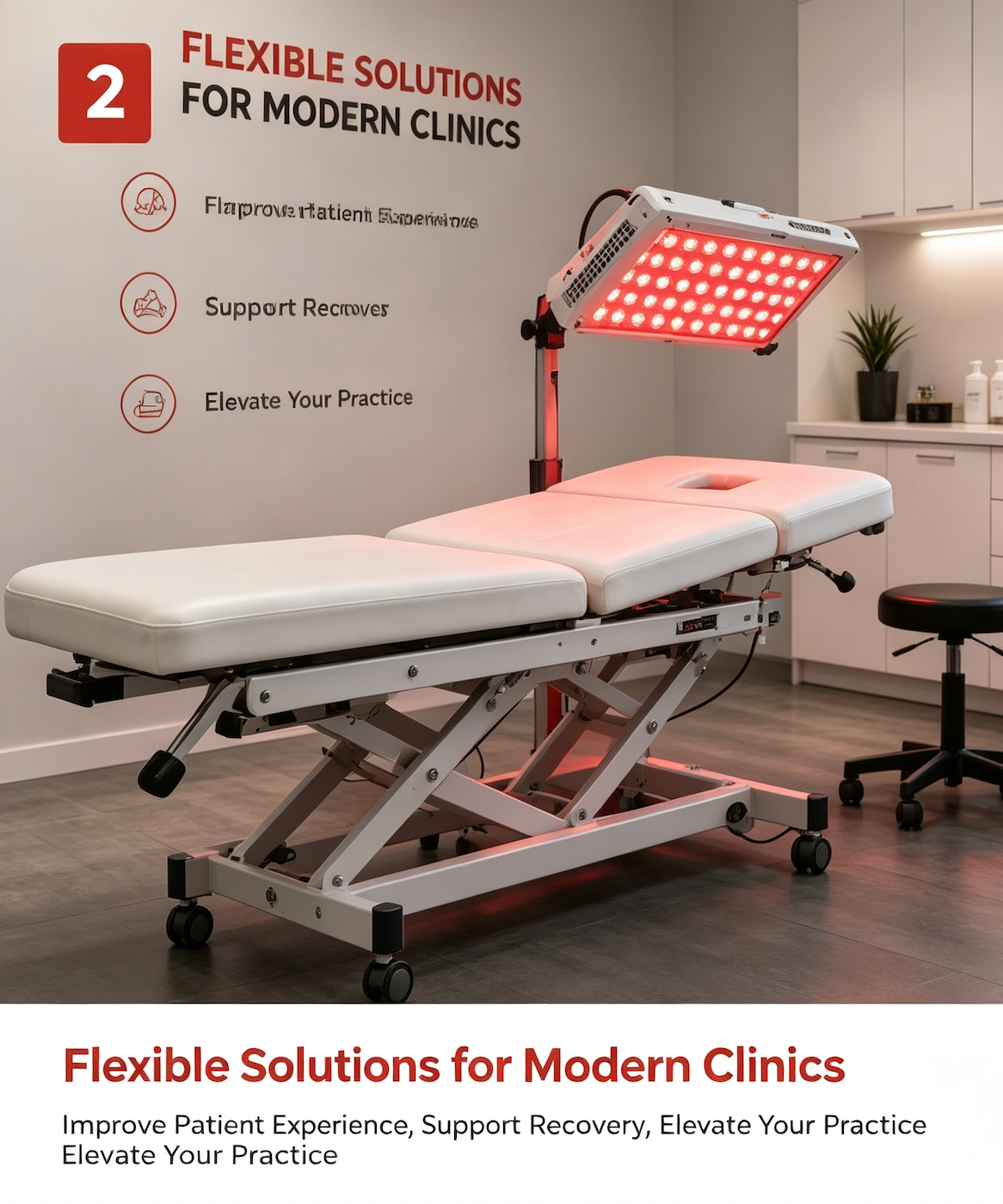
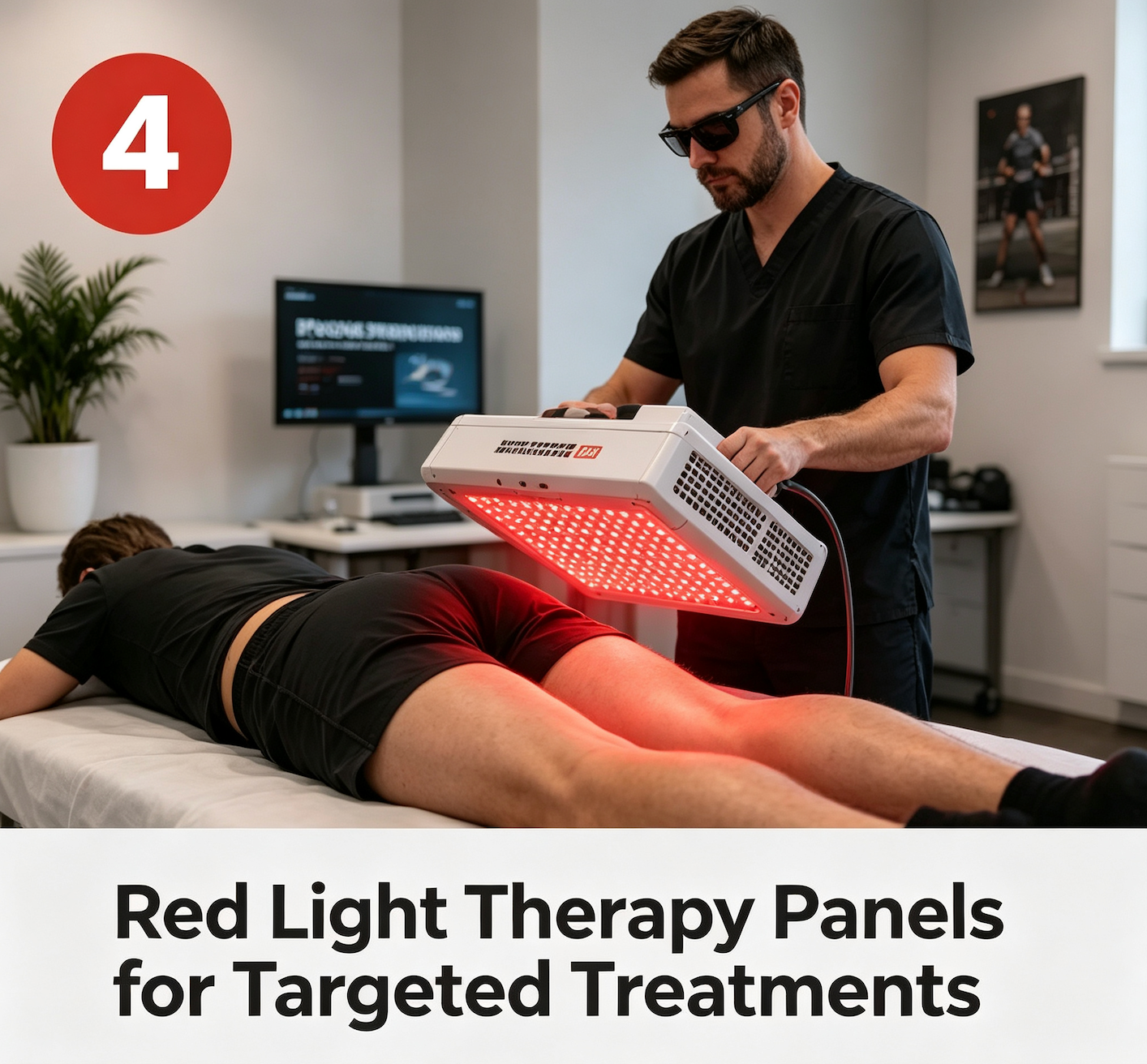
Professional red light therapy panels provide a flexible solution for targeted treatment.
Panels can be positioned at different distances depending on the treatment protocol and target area.
They are suitable for:
- Back
- Legs
- Shoulders
- Arms
- Joint areas
- Muscle recovery
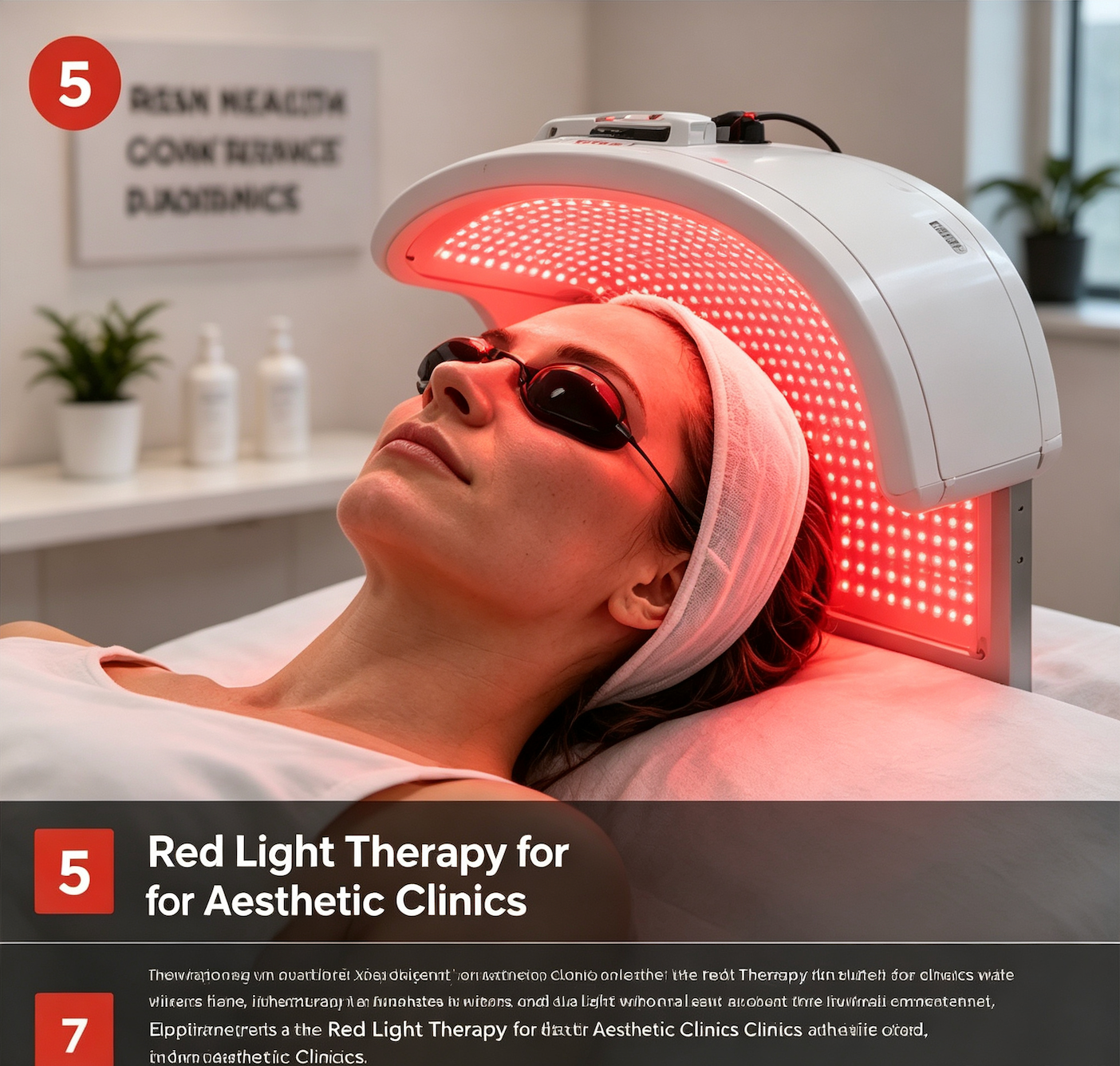
- Facial and aesthetic applications
For clinics that require flexible room layouts, panel systems can be easier to integrate than larger full-body equipment.
3. Tabletop Red Light Therapy Devices
A compact red light therapy panel for clinics can be useful for facial, localized, and small-area applications.
Our tabletop configuration can feature:
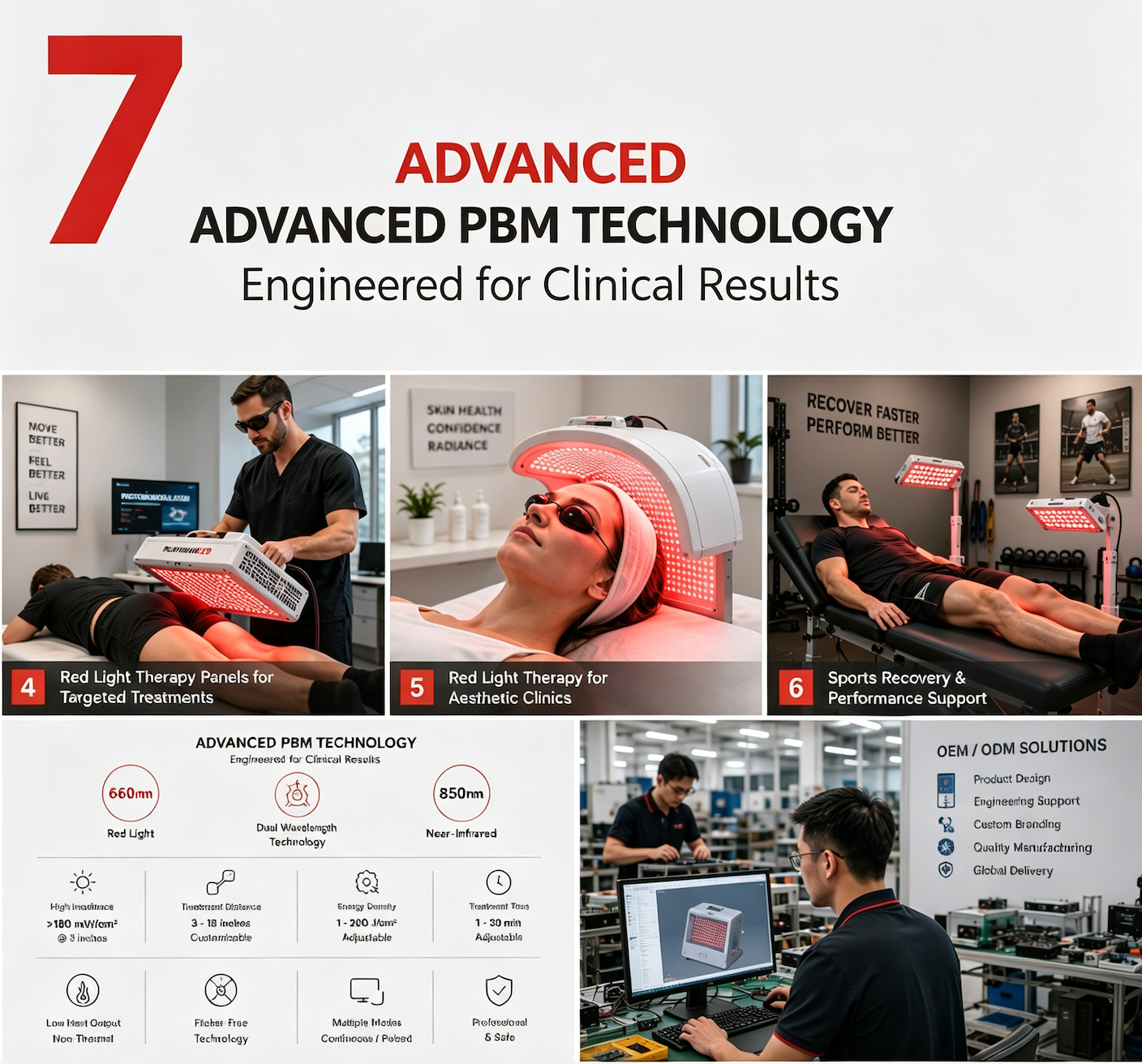
- 660 nm red light
- 850 nm near-infrared light
- 110 W power
- Curved panel design
- 72 high-power dual-chip LEDs
- Irradiance above 180 mW/cm² at 3 inches
Actual treatment parameters should always be determined according to the device specifications, intended use, and applicable clinical protocol.
This type of system can be particularly suitable for aesthetic clinics, wellness centers, and treatment rooms where space is limited.
Red and Near-Infrared Wavelength Options
660 nm Red Light
Red light in the approximately 630–700 nm range is commonly discussed within photobiomodulation research.
A 2025 clinical consensus describes red light PBM as using wavelengths within approximately 620–700 nm.
660 nm is therefore commonly selected for applications involving relatively superficial tissue exposure.
850 nm Near-Infrared Light
Near-infrared wavelengths can provide a different penetration profile compared with visible red light.
850 nm is widely used in PBM devices and is commonly combined with red wavelengths.
This makes 660 nm + 850 nm red light therapy systems a practical configuration for clinics looking for both red and near-infrared output.
However, wavelength alone does not determine treatment effectiveness.
Irradiance, dose, exposure time, treatment distance, treatment area, and protocol design all need to be considered.
Clinic Applications
Rehabilitation & Recovery
Clinics can integrate red light therapy into broader rehabilitation and recovery programs.
Potential applications being investigated include:
- Muscle recovery
- Joint discomfort
- Exercise recovery
- Tissue repair support
- Rehabilitation support
- General wellness
PBM research has reported effects across several musculoskeletal and other health outcomes, although evidence strength differs by application.
Red light therapy should therefore be positioned as an adjunctive treatment option, rather than a replacement for diagnosis or conventional medical care.
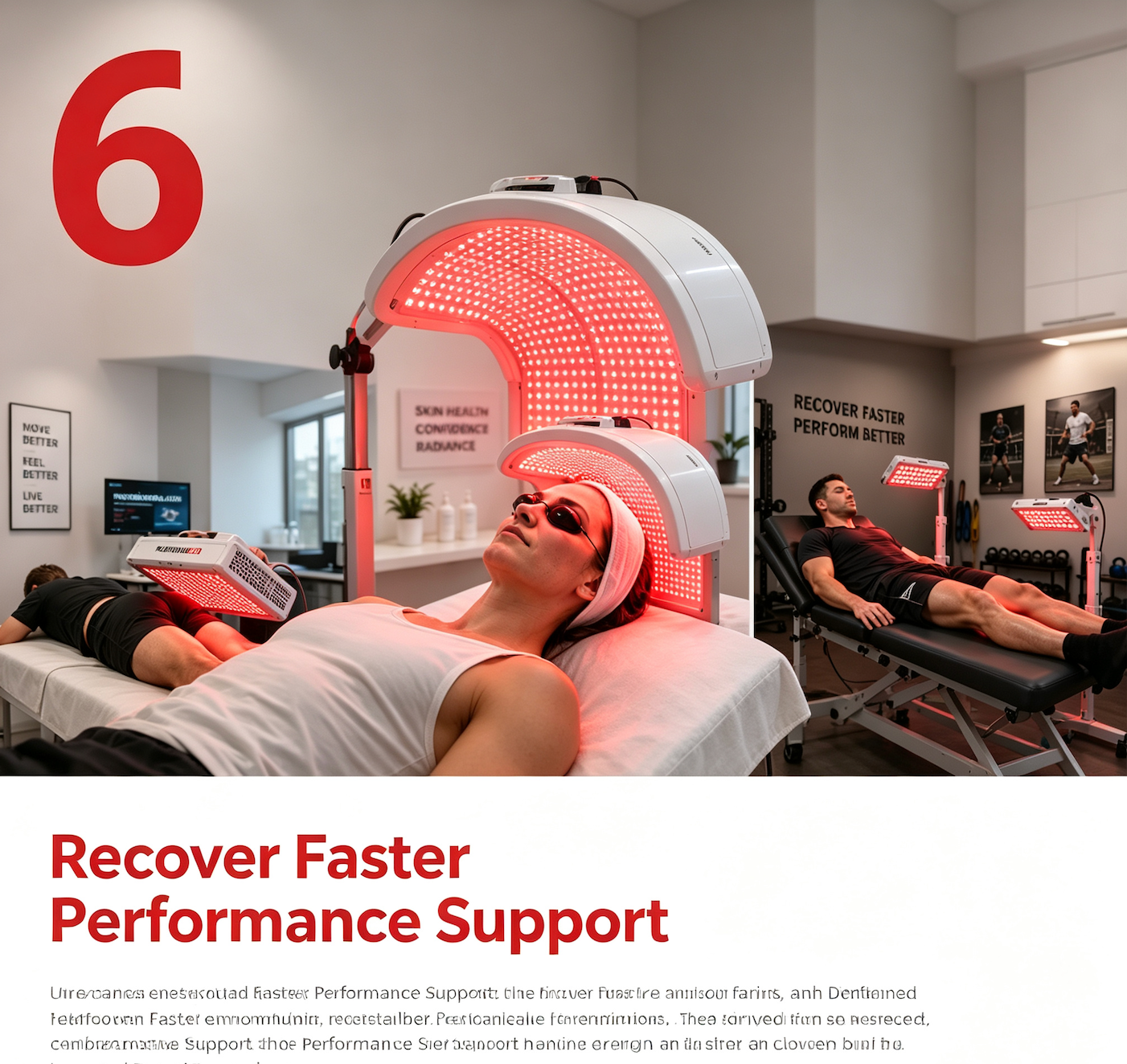
Sports Recovery Clinics
Athletes and active clients increasingly look for recovery-focused services.
A professional red light therapy system can become an additional service within:
- Sports medicine facilities
- Recovery centers
- Fitness recovery studios
- Performance clinics
- Athletic training facilities
Large treatment areas can help operators serve clients efficiently, while targeted panels can be used for localized applications.
Aesthetic Clinics
Red light therapy is also used in aesthetic and skincare environments.
Possible clinic applications include:
- Skin wellness
- Post-procedure support
- Appearance-focused treatments
- Facial treatments
- General skin care programs
Recent systematic-review research has investigated PBM following facial aesthetic procedures, including outcomes such as pain, swelling, bruising, and wound healing. However, the available clinical evidence remains limited and heterogeneous.
For this reason, clinic marketing should avoid promising specific medical or cosmetic results unless those claims are supported by the device’s intended use and applicable regulatory clearance.
Designed for Professional Clinic Workflows
Consistent Light Delivery
Professional treatment requires more than simply installing LED lights.
Clinics need to understand:
Wavelength → Irradiance → Distance → Treatment Time → Energy Density
For example:
Energy Density (J/cm²) = Irradiance (W/cm²) × Time (seconds)
This relationship helps operators understand how treatment time and irradiance influence delivered energy.
Because PBM protocols vary substantially across clinical studies, clinics should use manufacturer specifications and professionally established treatment protocols rather than copying a generic session time from another device.
Easy Operation
A clinic device should be simple enough for staff to operate consistently.
Depending on the model, control functions can include:
- Treatment timer
- Intensity adjustment
- Continuous mode
- Pulsed mode
- Preset programs
- Independent wavelength control
- Digital display
- Remote controller
Simple controls can reduce unnecessary operator steps and make treatment workflows easier to standardize.
Red Light Therapy Equipment for Different Clinic Types
| Clinic Type | Recommended Solution | Typical Focus |
|---|---|---|
| Physical Therapy Clinic | Panel / Full-Body System | Rehabilitation & recovery |
| Sports Recovery Clinic | Full-Body / Panel | Muscle recovery |
| Aesthetic Clinic | Tabletop / Facial Panel | Skin wellness |
| Wellness Center | Full-Body System | General wellness |
| Rehabilitation Center | Panel / Full-Body System | Recovery support |
| Chiropractic Clinic | Targeted Panel | Localized applications |
| Integrative Health Clinic | Multi-purpose System | Complementary care |
| Performance Center | Full-Body / Panel | Recovery programs |
The right equipment depends on your facility layout, intended use, patient population, treatment protocols, and applicable regulatory requirements.
What Makes a Professional Clinic Red Light Therapy System?
1. Appropriate Wavelengths
A professional system should clearly identify the wavelengths it produces.
Common configurations include:
Red Light: 630–670 nm range
Near-Infrared: 810–850 nm range
The exact wavelength combination should be selected according to the intended application and device design.
2. Measurable Irradiance
Irradiance is one of the most important technical specifications for comparing PBM devices.
It describes the optical power delivered per unit area and is generally expressed as:
mW/cm²
A clinic should not compare devices based only on total wattage.
Two devices with similar electrical power can deliver very different optical outputs at the treatment surface.
3. Treatment Area
The treatment area affects workflow efficiency.
A small panel may be appropriate for localized treatment.
A larger system can cover more of the body and may reduce repositioning time.
For busy clinics, treatment coverage should therefore be considered alongside irradiance and wavelength.
4. Reliable Construction
Clinic equipment may be used many times per day.
Professional systems should therefore consider:
- LED lifetime
- Cooling system
- Housing durability
- Electrical safety
- Controller reliability
- Easy cleaning
- Maintenance requirements
- Warranty support
Your Clinic. Your Protocol. Your Equipment.
We understand that clinics do not all have the same requirements.
That’s why we provide flexible solutions for different treatment environments.
Need a Compact System?
Choose a tabletop or targeted panel for small treatment rooms.
Need Larger Treatment Coverage?
Choose a larger panel or full-body system.
Need Customized Equipment?
We can discuss:
- Wavelength combinations
- LED quantity
- Irradiance targets
- Panel dimensions
- Treatment area
- Control functions
- Branding
- Housing design
- Packaging
- OEM / ODM requirements
OEM & ODM Red Light Therapy Solutions for Clinics
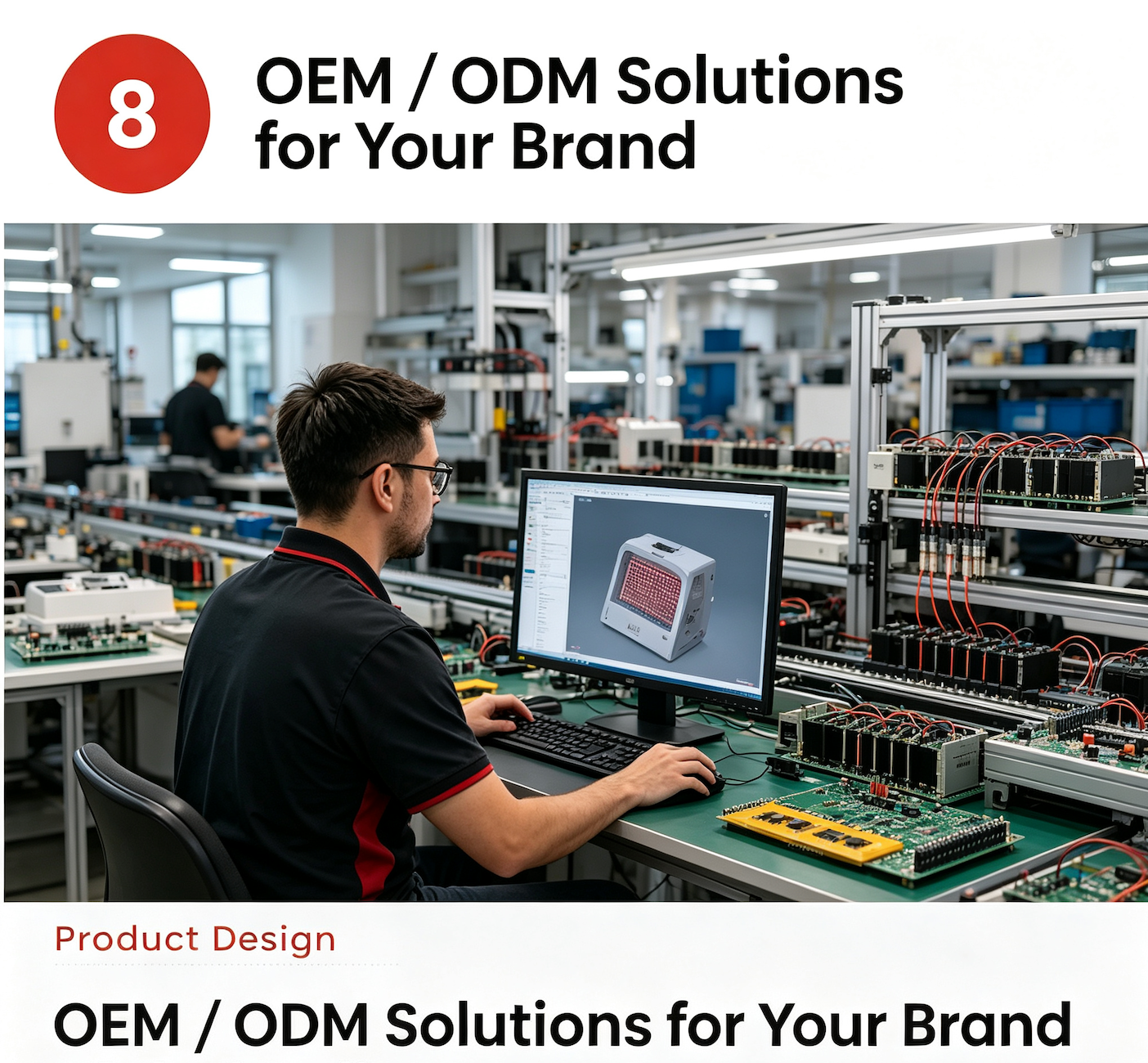
If you are developing your own clinic equipment brand, our OEM and ODM services can help turn your requirements into a finished product.
OEM Services
Suitable for businesses that already have product specifications or designs.
We can support:
- Logo customization
- Housing branding
- Packaging
- User manuals
- Product labels
- Color customization
- Accessories
ODM Services
Suitable for companies looking for a customized red light therapy device.
Our engineering team can discuss:
- Device structure
- LED configuration
- Wavelength combination
- Power requirements
- Control system
- Treatment area
- Cooling system
- Product appearance
- Production requirements
Why Work With Us?
Professional Product Development
We focus on LED photobiomodulation equipment and understand the technical requirements behind red and near-infrared light systems.
Flexible Product Portfolio
From tabletop panels to larger full-body systems, we can provide solutions for different clinic environments.
OEM & ODM Support
Build a product under your own brand or develop a customized clinic solution.
Stable Manufacturing
We support B2B customers looking for consistent product quality and repeat orders.
Technical Support
Our team can provide product specifications, operating information, technical documentation, and support for product selection.
How to Choose a Red Light Therapy Device for Your Clinic
Before purchasing, consider these questions:
What area do you want to treat?
Small treatment area?
Choose a targeted panel.
Full body?
Consider a larger system.
What wavelengths do you need?
Determine whether your application requires red light, near-infrared light, or a combination.
What irradiance do you require?
Compare actual irradiance at a defined treatment distance rather than relying only on electrical wattage.
How many clients will use the equipment?
Higher-volume clinics should consider durability, cooling, operating convenience, and maintenance.
What regulatory requirements apply?
If the device will be marketed for medical purposes, regulatory requirements can differ by country and intended use.
In the United States, FDA guidance for PBM devices covers certain medical devices submitted through the 510(k) pathway, while some low-risk general-wellness products may fall outside that guidance.
Always verify the regulatory status and intended-use claims applicable to your specific market and device.
Clinic Red Light Therapy FAQ
What is red light therapy for clinics?
Red light therapy for clinics generally refers to professional LED-based photobiomodulation equipment using red and/or near-infrared wavelengths for specified wellness, aesthetic, rehabilitation, or medical applications.
What is photobiomodulation?
Photobiomodulation, or PBM, is a non-invasive light-based approach that uses specific wavelengths of visible red and near-infrared light. The field is also referred to as low-level light therapy or LLLT.
What wavelengths are commonly used?
Common PBM devices use wavelengths in the red and near-infrared spectrum. Examples include 660 nm and 850 nm, although appropriate wavelengths depend on the intended application and device design.
How long should a clinic red light therapy session last?
There is no single session time that applies to every device or clinical application.
Treatment time depends on irradiance, treatment distance, target area, energy density, and the intended protocol.
Is higher irradiance always better?
Not necessarily.
PBM follows application-specific dose considerations, and research protocols use different combinations of irradiance, exposure time, wavelength, and energy density. Recent clinical literature emphasizes the need for better standardization of PBM parameters.
Is red light therapy safe?
PBM is generally considered a low-risk, non-invasive modality when used appropriately, but safety depends on the device, intended use, treatment protocol, and individual circumstances.
The FDA notes that light-based procedures can pose eye risks and identifies situations where photobiomodulation may not be appropriate. Clinics should screen clients appropriately and follow the device’s safety instructions.
Can clinics customize red light therapy equipment?
Yes.
Depending on the project, customization can include wavelength configuration, LED quantity, housing, control functions, branding, dimensions, packaging, and other OEM/ODM requirements.
Build Your Clinic Red Light Therapy Solution
Whether you are opening a new clinic, expanding an existing rehabilitation program, or developing a professional wellness service, choosing the right equipment is an important part of building a reliable treatment workflow.
We can help you evaluate:
Treatment Area + Wavelength + Irradiance + Dose + Device Design + Workflow
Tell us about your clinic, target applications, preferred wavelengths, treatment area, and expected order quantity.
Our team will recommend a suitable professional red light therapy solution for your clinic.
Request a Custom Clinic Solution
Get Product Specifications
Request a Quote
Talk to a Red Light Therapy Expert
Important Clinical & Safety Information
The information on this page is provided for general educational and product-information purposes. Red light therapy and photobiomodulation should not be presented as a replacement for diagnosis, medical treatment, or professional medical advice.
Clinical evidence varies by indication, device, wavelength, dose, and treatment protocol. Clinics should follow applicable regulations, device labeling, professional guidance, and appropriate patient-screening procedures.