



Benefits of Red Light Therapy for Gyms
Professional Red Light Therapy Solutions for Gyms and Fitness Centers
Add a modern recovery and wellness experience to your gym with professional Red Light Therapy Solutions designed for fitness centers, gyms, sports clubs, recovery studios, and performance facilities.
Our red light therapy systems combine red and near-infrared LED technology with flexible equipment configurations to help gyms create dedicated wellness and recovery spaces.
From full-body red light therapy panels to targeted systems and red light therapy mats, we provide scalable solutions for different gym sizes, customer groups, and facility layouts.
Build a professional Red Light Therapy area for your gym.
CTA: Request a Quote
CTA: Talk to Our Solution Team
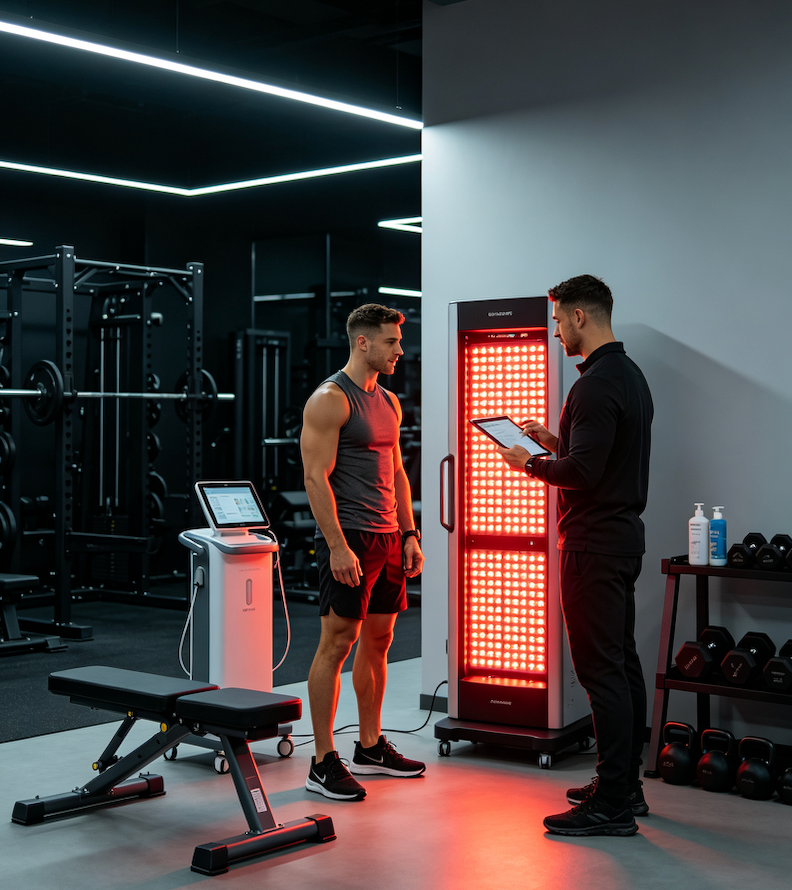
Why Should Gyms Add Red Light Therapy?
Fitness customers are no longer focused only on workouts.
Many gym members also care about recovery, relaxation, skincare, and overall wellness.
Adding a dedicated Red Light Therapy for Gyms area can help fitness businesses expand their service offering without requiring a large amount of additional floor space.
Create an Additional Wellness Service
Red light therapy can be offered as an additional service alongside strength training, cardio, personal training, stretching, and recovery programs.
Build a Better Post-Workout Experience
Gyms can create a customer journey that combines exercise with a dedicated recovery and relaxation experience.
Workout → Cool Down → Red Light Therapy → Relaxation
Differentiate Your Fitness Business
A dedicated red light therapy area can give gyms another way to build a modern wellness-focused environment.
Create New Membership Opportunities
Depending on the business model, gyms can include red light therapy in premium memberships, recovery packages, personal training programs, or individual sessions.
Maximize Existing Floor Space
Compact red light therapy panels can be installed in existing recovery areas, stretching zones, private rooms, or dedicated wellness spaces.
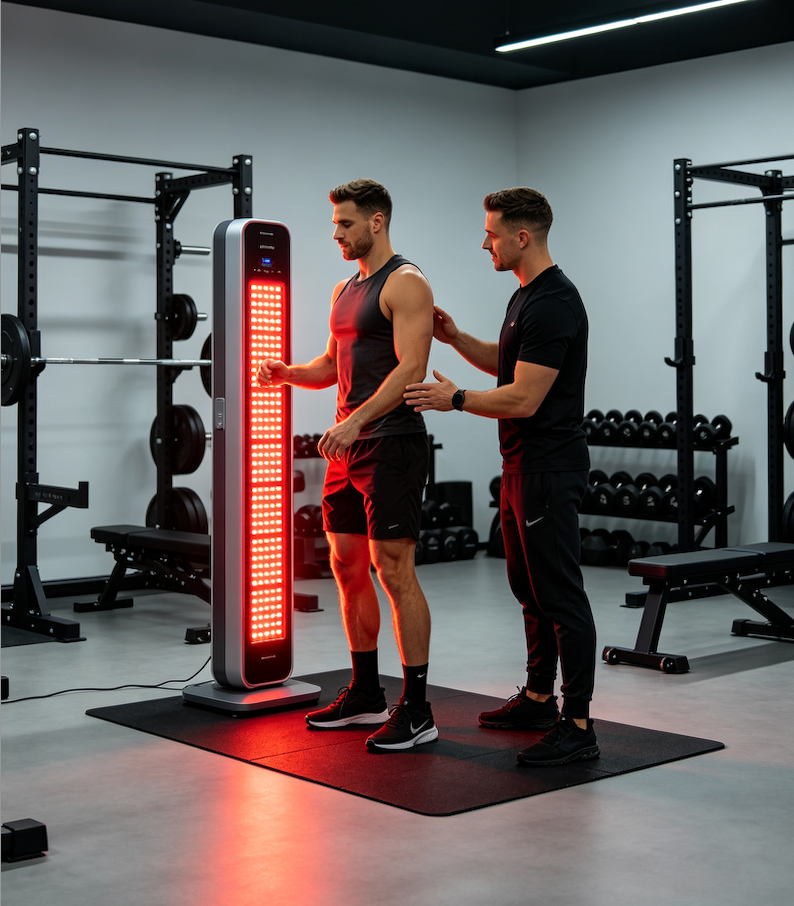
Red Light Therapy Applications in Gyms
Post-Workout Recovery
Red light therapy can be incorporated into a gym’s post-workout wellness routine.
Members can use a dedicated red light therapy area after strength training, cardio, HIIT, cycling, or other exercise sessions.
Research on photobiomodulation and exercise recovery has produced mixed findings, with outcomes depending on factors such as treatment protocol, body area, dose, timing, and study population.
Muscle Comfort and Wellness
Gyms can position red light therapy as part of a broader muscle comfort and wellness experience.
This makes it suitable for customers who want additional recovery-oriented services after demanding workouts.
Fitness and Performance Programs
Personal trainers and fitness professionals can integrate light-based wellness services into broader training programs where appropriate.
The red light therapy service should complement—not replace—proper training, nutrition, hydration, sleep, and professional healthcare when needed.
Relaxation After Exercise
A dedicated red light therapy room can provide a quiet environment where members can relax after exercise.
Skincare and Beauty Wellness
Gyms with beauty, spa, or wellness services can also consider red light therapy systems for appearance-focused applications, subject to the device’s intended use and permitted claims.
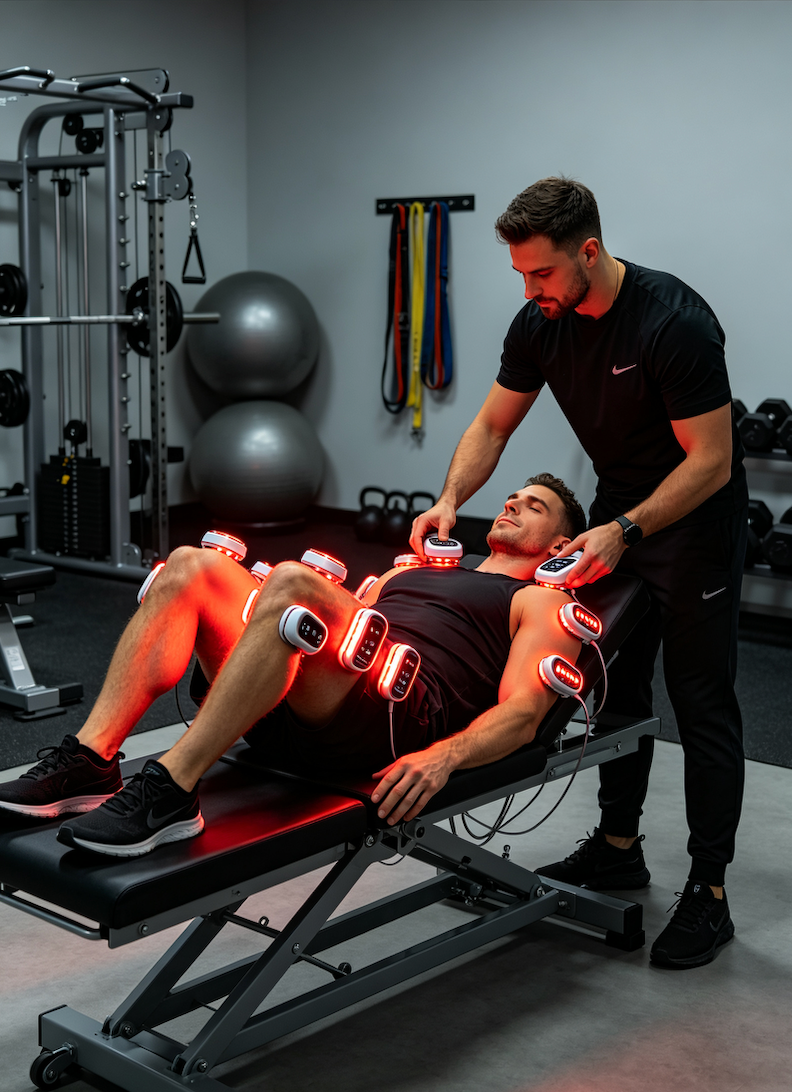
Professional Red Light Therapy Equipment for Gyms
Different gyms have different space requirements.
We provide multiple equipment formats to help fitness businesses build an appropriate red light therapy setup.
Full-Body Red Light Therapy Panels
Full-body panels provide broad light coverage and are suitable for gyms that want to create a dedicated recovery or wellness station.
Typical features include:
- Red and near-infrared wavelengths
- Large treatment area
- High-density LED configuration
- Adjustable intensity
- Programmable treatment time
- Multiple operating modes
- Professional housing
- Easy-to-use controls
Red Light Therapy Mats
A Red Light Therapy Mat provides a flexible option for customers who prefer a lying-down wellness experience.
It can be positioned in:
- Recovery rooms
- Stretching areas
- Private wellness rooms
- Fitness recovery zones
- Personal training facilities
Targeted Red Light Therapy Panels
Smaller panels can be used when a gym wants to provide a more targeted experience without dedicating a large room to a full-body system.
Potential areas include:
- Legs
- Back
- Shoulders
- Arms
- Neck
- Facial skincare
Multi-Panel Red Light Therapy Systems
Multiple panels can be combined to increase coverage.
This configuration is suitable for larger fitness centers that want to build a dedicated red light therapy room.
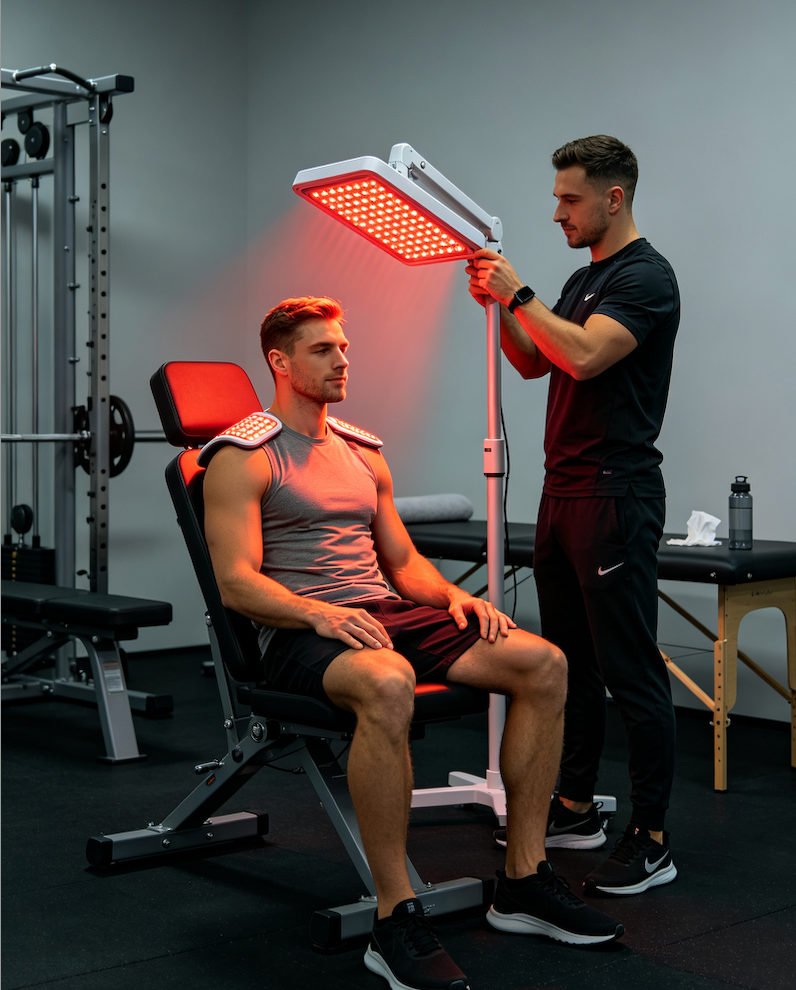
Red Light Therapy Gym Setup Options
Small Gym Red Light Therapy Setup
A smaller gym can start with one or two professional panels.
Recommended concept:
- 1–2 red light therapy panels
- Compact treatment area
- Simple control system
- Dedicated recovery station
This configuration minimizes space requirements while allowing the gym to test member demand.
Medium Fitness Center Setup
A medium-sized fitness center can create a dedicated recovery area.
Possible configuration:
- Multiple red light therapy panels
- Recovery seating or relaxation area
- Dedicated treatment stations
- Digital session controls
Large Gym or Fitness Club Setup
Large fitness clubs can create a complete wellness zone combining red light therapy with other recovery services.
Possible services include:
- Red light therapy
- Stretching
- Massage
- Recovery equipment
- Relaxation areas
- Personal training
- Wellness programs
Premium Recovery Room
High-end fitness clubs can create private red light therapy rooms for members who want a more personalized experience.
The room can include professional multi-panel systems, adjustable controls, comfortable flooring, seating, and dedicated lighting.
Red and Near-Infrared Light Technology for Fitness Facilities
660 nm Red Light
Red light around the 630–660 nm range is commonly used in photobiomodulation research and commercial light therapy systems.
It is often selected for applications involving the skin and surface-level light exposure.
850 nm Near-Infrared Light
Near-infrared light around 810–850 nm is also widely studied in photobiomodulation.
It is invisible to the human eye and can be incorporated into professional red light therapy systems.
Why Use Red and Near-Infrared Wavelengths Together?
A combination of red and near-infrared wavelengths gives a system access to different portions of the optical spectrum.
However, gym operators should not evaluate a device based on wavelength alone.
Other important specifications include:
- Irradiance
- Treatment distance
- Treatment time
- Energy dose
- Coverage area
- LED configuration
- Control system
How to Choose Red Light Therapy Equipment for a Gym
Check the Wavelength Configuration
Look for clearly specified wavelengths rather than vague descriptions such as “high-power red light.”
Example:
660 nm + 850 nm
Check Irradiance
Irradiance is normally expressed in mW/cm² and describes optical power delivered over an area.
A professional supplier should provide measurement information and the distance at which the irradiance was measured.
Consider Treatment Distance
The distance between the LED panel and the user’s body affects light exposure.
The equipment should provide clear operating instructions.
Evaluate Coverage Area
Large panels are suitable for full-body applications.
Smaller panels are more appropriate for targeted areas or compact spaces.
Look at Control Functions
Gym equipment should be simple enough for staff and members to operate.
Useful controls may include:
- Timer
- Intensity
- Light mode
- Pulse mode
- Preset programs
- Start/stop controls
Consider Daily Usage
Commercial gym equipment may be used repeatedly throughout the day.
Consider:
- LED lifespan
- Cooling system
- Housing durability
- Electrical safety
- Maintenance requirements
- Warranty
- Technical support
Build a Post-Workout Red Light Therapy Experience
A gym can integrate red light therapy into different stages of the member journey.
Before Training
Some research has investigated PBM before exercise, including potential effects on exercise performance and muscle-related outcomes, but results vary by protocol and population.
After Strength Training
Members can use the red light therapy area as part of a broader post-workout wellness routine.
After Cardio
Red light therapy can be positioned alongside cool-down and relaxation activities.
Recovery Days
Members can use wellness services on non-training days as part of their regular fitness routine.
The gym should present red light therapy as a complementary wellness service rather than a replacement for appropriate recovery practices or medical care.
Red Light Therapy Solutions for Different Fitness Businesses
Commercial Gyms
Create a dedicated red light therapy station for a large membership base.
Boutique Fitness Studios
Use compact panels to add a premium wellness service without requiring a large facility.
CrossFit and Functional Training Gyms
Integrate red light therapy into recovery-focused areas alongside stretching and mobility services.
Personal Training Studios
Trainers can incorporate wellness services into premium training packages where appropriate.
Sports Performance Centers
Sports-focused facilities can evaluate red light therapy as one component of a broader performance and recovery environment.
Luxury Fitness Clubs
Create private red light therapy rooms as part of a premium member experience.
How to Build a Gym Red Light Therapy Program
Step 1 — Analyze Your Gym
Evaluate:
- Gym size
- Available floor space
- Membership size
- Customer profile
- Existing recovery services
- Expected daily sessions
- Available budget
Step 2 — Choose Your Equipment
Select from:
- Full-body panels
- Targeted panels
- Red light therapy mats
- Multi-panel systems
- Private-room systems
Step 3 — Design the Treatment Area
Consider:
- Equipment placement
- Treatment distance
- Member flow
- Privacy
- Ventilation
- Electrical requirements
- Cleaning and maintenance
Step 4 — Establish Operating Procedures
Develop clear procedures covering:
- Equipment operation
- Treatment duration
- Recommended distance
- Cleaning
- Customer instructions
- Staff training
- Maintenance
Step 5 — Launch Your Wellness Service
The gym can introduce the service through:
- Membership packages
- Recovery programs
- Personal training
- Trial sessions
- Premium memberships
- Wellness promotions
Commercial Red Light Therapy Equipment Features
High-Density LED Configuration
High-density LED layouts can provide broad coverage in a compact equipment footprint.
Adjustable Intensity
Different intensity settings allow operators to configure the system according to the manufacturer’s operating instructions.
Multiple Treatment Modes
Depending on the model, systems may support continuous or pulsed modes.
Built-In Timer
Preset treatment times help simplify daily operation.
Professional Cooling
Commercial systems should be designed to manage heat during repeated operation.
Durable Housing
A strong enclosure helps the equipment withstand frequent use in commercial environments.
OEM and ODM Red Light Therapy Solutions for Gyms
Custom Red Light Therapy Panels
Develop panel dimensions and configurations based on your gym’s space.
Custom Wavelength Configuration
Configure red and near-infrared wavelengths according to the product’s intended use and technical requirements.
Private Label Red Light Therapy Equipment
Add your own:
- Logo
- Product branding
- Packaging
- User manuals
- Product appearance
Custom Control Systems
Develop control interfaces for:
- Timer
- Intensity
- Operating modes
- Preset programs
Complete B2B Project Support
Support can cover:
Product Selection → Customization → Branding → Production → Packaging → Technical Documentation
Safety and Responsible Use in Gyms
Commercial fitness facilities should establish clear operating procedures for red light therapy equipment.
Follow Manufacturer Instructions
Always operate the equipment according to its instructions for use and intended application.
Provide Appropriate Eye Protection
Light-based procedures can present eye-related risks, and FDA information advises appropriate protective eyewear where applicable.
Screen Customers When Required
Depending on the device and its intended use, facilities may need to identify customers with conditions or circumstances that make light-based procedures inappropriate.
Avoid Unsupported Medical Claims
Gym marketing should not claim that red light therapy diagnoses, cures, or treats medical conditions unless those claims are specifically supported and permitted for the product.
FDA distinguishes certain low-risk general-wellness light products from PBM medical devices subject to medical-device regulation and premarket requirements.
Why Choose Our Gym Red Light Therapy Solutions?
Professional B2B Manufacturing
We provide red light therapy equipment and solutions for commercial customers.
OEM and ODM Capabilities
Customize products according to your brand, market, specifications, and application requirements.
Multiple Product Configurations
Choose from panels, mats, targeted systems, full-body systems, and multi-panel solutions.
Flexible Commercial Solutions
Configure your system according to:
- Gym size
- Available space
- Customer volume
- Treatment area
- Budget
- Intended use
One-Stop Project Support
From equipment selection and customization to branding and technical documentation, we support your project from concept to deployment.
Frequently Asked Questions About Gym Red Light Therapy
What is red light therapy for gyms?
Red light therapy uses specific wavelengths of visible red and/or near-infrared light. Gyms can offer it as a complementary wellness and recovery-oriented service.
Why do gyms use red light therapy?
Gyms may use red light therapy to expand wellness services, create recovery-focused spaces, and provide members with an additional non-invasive light-based experience.
Can red light therapy be used after a workout?
It can be incorporated into a post-workout wellness routine when used according to the equipment manufacturer’s instructions and intended use.
Is red light therapy good for muscle recovery?
Research findings vary. Some studies and meta-analyses have reported potential benefits for certain muscle-related outcomes, while evidence for whole-body PBM and exercise recovery remains limited.
What wavelength is best for gym red light therapy?
There is no single wavelength that is universally “best” for every application. Commercial systems commonly use red wavelengths such as 630–660 nm and near-infrared wavelengths such as 810–850 nm.
How long should a gym red light therapy session last?
Session length depends on the equipment’s irradiance, treatment distance, intended use, and manufacturer’s instructions. There is no universal session time for every device.
What equipment does a gym need?
A small gym may start with one or two panels, while larger fitness centers may use multiple panels to create a dedicated red light therapy room.
Can gyms customize red light therapy equipment?
Yes. OEM and ODM options can include product dimensions, wavelengths, housing, controls, branding, packaging, and other specifications.
Can red light therapy be included in gym memberships?
Yes. A gym can decide how to structure its commercial offering, including individual sessions, premium memberships, recovery packages, or personal training programs.
Start Your Gym Red Light Therapy Project
Whether you operate a commercial gym, boutique fitness studio, sports performance center, or luxury fitness club, we can help you develop a red light therapy solution around your facility.
Tell us about:
- Gym type
- Country
- Facility size
- Available treatment space
- Required equipment
- Expected quantity
- OEM/ODM requirements
Our team can help you develop a Professional Gym Red Light Therapy Solution based on your business requirements.