


Understanding how does EMDR work is essential for clinic owners and distributors evaluating therapy equipment. EMDR, or Eye Movement Desensitization and Reprocessing, is a structured therapy that uses bilateral stimulation—typically guided eye movements, tactile pulses, or auditory tones—while the client recalls a distressing memory. This article explains the standard eight-phase protocol, the hardware used to deliver bilateral stimulation, and the specifications that matter when sourcing EMDR devices for professional use.
What EMDR Actually Does in a Session
EMDR is not a single device but a protocol delivered by a trained clinician. The core mechanism involves alternating left-right stimulation while the client holds a target memory in mind. This dual attention—focusing on the memory and the external stimulus—is believed to help the brain reprocess the memory so it becomes less disturbing. The exact neurological basis is still debated, but clinical guidelines describe the procedure in consistent phases.
A standard session follows eight phases: history taking, preparation, assessment, desensitization, installation, body scan, closure, and reevaluation. The desensitization phase is where bilateral stimulation is used most intensively. Sessions typically last 50–90 minutes, and the number of sessions varies by client. For clinic buyers, the key point is that the device must support the clinician’s protocol without adding distraction or downtime.
How Does EMDR Work: The Bilateral Stimulation Hardware
The hardware used in EMDR falls into three categories: light bars, tactile pulsers, and audio systems. Light bars present a moving light that the client follows with their eyes; the clinician controls speed and direction. Tactile pulsers deliver alternating vibrations to handheld pods or wrist bands. Audio systems deliver alternating tones through headphones. Many modern devices combine two or three modalities in one control unit.

When evaluating equipment, check the stimulus parameters. A typical light bar offers adjustable speed from 0.5 to 2.0 cycles per second and adjustable brightness up to 200 lux at 30 cm. Tactile pulsers should deliver adjustable intensity from gentle to strong, with a frequency range of 1–10 Hz. Audio systems should offer volume control and a frequency range of 200–2000 Hz. These ranges allow clinicians to adapt to client preference and tolerance.
Key Specifications to Verify
- Stimulus speed range: at least 0.5–2.0 Hz for eye movements; wider is better for tactile and audio.
- Intensity control: continuous adjustment, not just low/medium/high presets.
- Modality switching: ability to run light, tactile, and audio simultaneously or independently.
- Session timer: visible countdown or elapsed time display, ideally with an audible alert.
- Power source: rechargeable battery with at least 8 hours of continuous use per charge.
These features directly affect workflow. A device that resets to default settings between clients wastes time. A battery that dies mid-session disrupts the protocol. Ask suppliers for the full spec sheet, not just the marketing brochure.
Comparing EMDR Device Classes for Clinic Use
Three main device classes exist: standalone light bars, integrated multi-modal systems, and software-driven kits. Each has different cost, maintenance, and training implications. The table below summarizes the trade-offs for a clinic purchasing decision.

| Device class | Typical price range (USD) | Best for | Key consequence |
|---|---|---|---|
| Standalone light bar | 200–600 | Solo practitioners, low session volume | Lowest cost but only one modality; may limit client options |
| Integrated multi-modal system | 800–2,500 | Multi-clinician clinics, varied client needs | Higher upfront cost but faster session setup and more flexibility |
| Software-driven kit with tablet control | 1,500–4,000 | Large clinics, training programs, research settings | Steep learning curve; requires software updates and IT support |
Price ranges are general market observations from supplier catalogs and trade listings, not quotations. Lead times for OEM orders typically run 30–60 days after artwork approval, with MOQs of 50–200 units depending on customization. For white-label or private-label EMDR devices, expect to pay a 15–25% premium over stock units for branding and packaging changes.
Factory Certifications and Quality Control
Because EMDR devices are low-voltage electronic instruments, they generally fall under general product safety directives rather than medical device regulations in many markets. However, reputable manufacturers still obtain CE marking for electrical safety and electromagnetic compatibility, RoHS compliance for hazardous substance restrictions, and ISO 9001 for quality management. Some also hold ISO 13485, which indicates a quality system designed for medical devices, even if the specific product is not classified as one.
Always ask for the CE test report and RoHS certificate, not just the logo. A supplier that cannot provide these documents within 48 hours is likely a trading company, not a factory.
During factory audits, check the soldering quality on control boards, the strain relief on cable connections, and the consistency of LED brightness across units. A simple incoming inspection plan for distributors: sample 5% of each shipment, run each device for 30 minutes at maximum speed, and verify that all modalities function without flicker or dropout.
Sourcing EMDR Devices: OEM and ODM Considerations
If you plan to sell EMDR equipment under your own brand, you have two main paths: OEM (you provide the design or exact specifications) or ODM (the factory offers an existing design you can rebrand). OEM gives you control over features and component quality but requires higher MOQs—often 500–1,000 units—and longer lead times of 60–90 days. ODM allows MOQs as low as 100 units and lead times of 30–45 days, but you inherit the factory’s existing design and its limitations.
Common failure modes reported by clinic owners include: tactile pulsers losing sync between left and right pods, light bar LEDs dimming unevenly after six months, and control units freezing when switching modalities quickly. These issues usually trace back to cheap microcontrollers or poor battery management circuits. Specify a minimum of 32-bit microcontroller and a battery management IC with overcharge and over-discharge protection in your RFQ.
Maintenance and After-Sales Support
EMDR devices require minimal routine maintenance: wipe surfaces with a damp cloth, inspect cables for fraying monthly, and recalibrate light bar speed annually if the device allows it. The most common service request is battery replacement, which should be doable by the clinic staff with a screwdriver in under 10 minutes. Ask suppliers whether batteries are user-replaceable or require factory service.
After-sales support quality varies widely. A good supplier offers a 12–24 month warranty, responds to technical questions within 24 hours, and stocks spare parts for at least three years after the model is discontinued. Before placing a bulk order, request a sample unit and run it through a full 8-phase simulated session to test ergonomics, button placement, and stimulus smoothness.
Frequently Asked Questions
What is the difference between EMDR and a light therapy device?
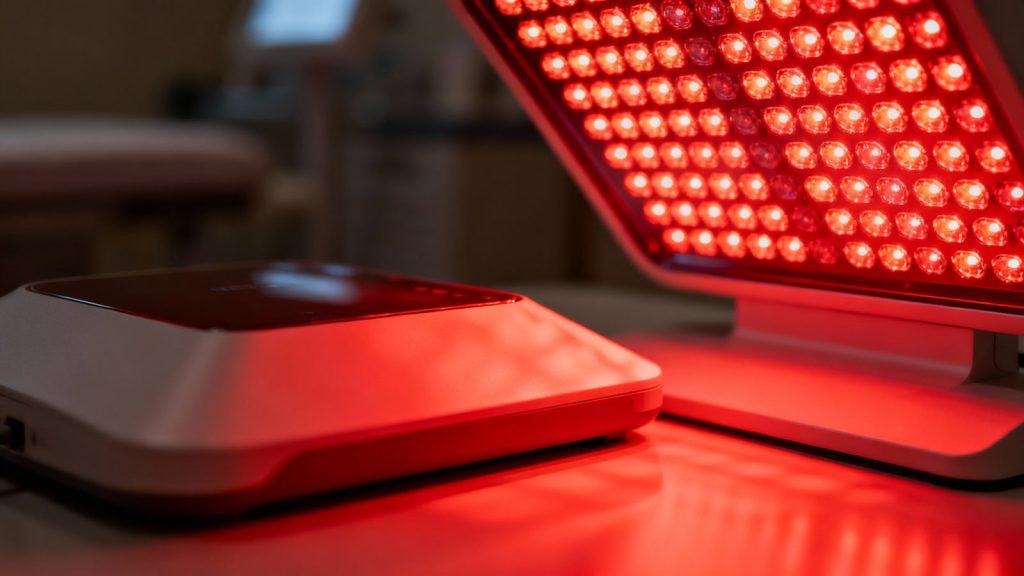
EMDR uses bilateral stimulation—moving lights, alternating vibrations, or tones—as part of a psychotherapy protocol. Red light therapy devices emit specific wavelengths (630–660 nm or 810–850 nm) for skin and tissue applications. They are entirely different technologies and are not interchangeable.
Do I need special certification to buy EMDR equipment?
No, EMDR hardware is not a controlled product in most markets. However, using it in a clinical setting requires a trained therapist. As a distributor or clinic owner, you can purchase equipment freely, but you should verify that your end users have appropriate professional training.
Can one EMDR device serve multiple therapists?
Yes, if it is a standalone unit that can be moved between rooms. For simultaneous sessions, you need one device per therapy room. Some multi-modal systems support multiple client pods from one control unit, but this adds cost and complexity.
What is the typical lifespan of an EMDR device?
With normal use—about 20 sessions per week—a quality device should last 3–5 years. The battery is usually the first component to degrade, often after 500–800 charge cycles. Choose a supplier that offers battery replacement kits.
Making a Confident Sourcing Decision
Understanding how does EMDR work helps you separate meaningful specifications from marketing noise. Focus on stimulus speed range, modality flexibility, battery life, and factory certifications. Request a sample, test it under real session conditions, and verify the supplier’s after-sales support before committing to a bulk order.
For clinic owners and distributors, the right EMDR device is a reliable tool that supports the therapist’s protocol without adding friction. Use the comparison table and specification checklist in this article as a baseline for evaluating any supplier. A well-chosen device will serve your clinic for years and reduce the need for frequent replacements.
Post time: 11-21-26