


LED phototherapy for acne is a growing category in professional aesthetic equipment, but buyers often compare devices using only wavelength claims. The concrete question this article answers is: which wavelengths, irradiance levels, and device formats actually deliver a usable acne treatment, and how should an importer or clinic owner evaluate a supplier? This guide covers the engineering and sourcing side, not medical advice.
Why Wavelength Selection Determines Device Performance
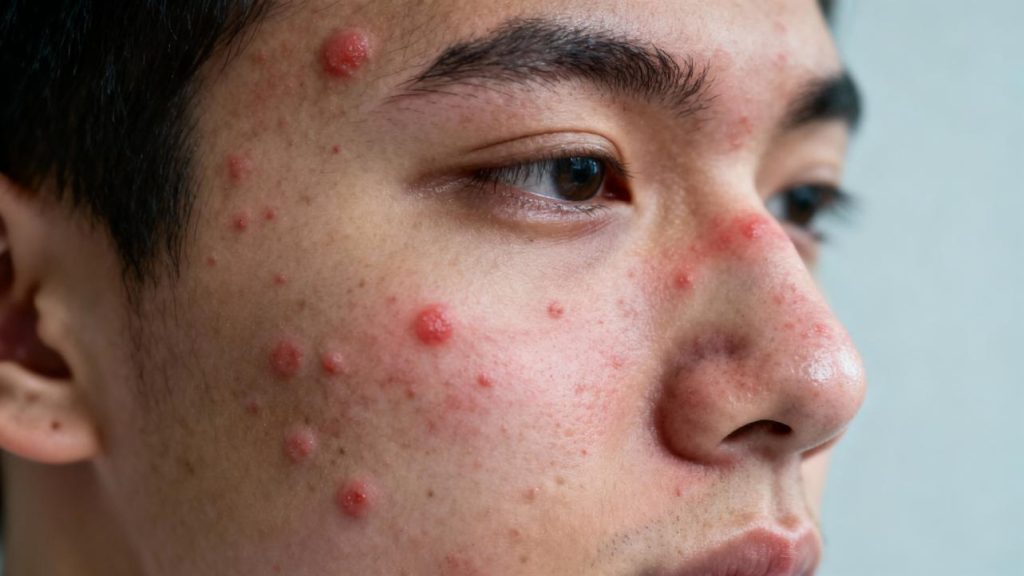
Acne-focused LED phototherapy typically uses two bands: blue light near 415 nm and red light between 630 nm and 660 nm. Blue light is absorbed by porphyrins produced by Cutibacterium acnes, generating reactive oxygen species that may reduce bacterial load. Red light penetrates deeper and is commonly included to support skin appearance, though its direct effect on acne is less specific than blue.
When reviewing a spec sheet, ask for the dominant wavelength and the tolerance. A 415 nm LED with a ±5 nm bin means actual output can range from 410 nm to 420 nm, which is acceptable for acne work. A tolerance of ±10 nm or more shifts the peak far enough that absorption drops sharply. Reputable suppliers provide binning reports or at least the LED manufacturer’s part number so you can verify the bin.
Some devices mix blue and red in a single panel. The ratio matters because blue LEDs typically have lower radiant flux per watt than red LEDs. A panel that claims 50/50 blue/red by LED count may deliver 40/60 or worse by optical power. Ask for irradiance per wavelength band, not just total irradiance.
Irradiance and Dose: The Numbers That Separate Useful Devices from Toys
For acne phototherapy, useful irradiance at the treatment surface is roughly 10-50 mW/cm2 per active wavelength band. Below 5 mW/cm2, session times become impractically long for clinical use. Above 100 mW/cm2, thermal discomfort and the need for eye protection increase without clear added benefit for acne.
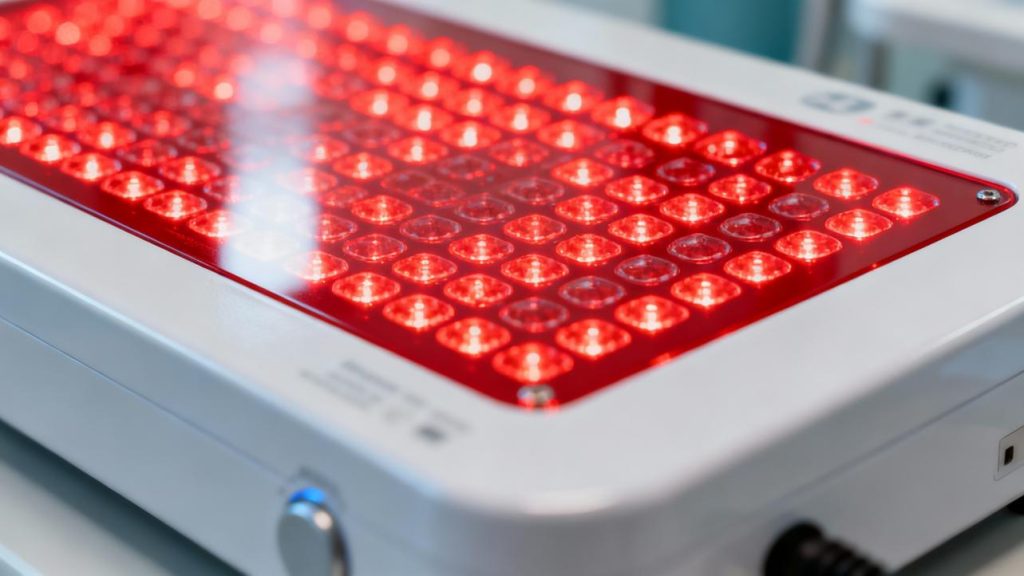
Dose is irradiance multiplied by time. A common target is 3-20 J/cm2 per session, so a device delivering 20 mW/cm2 needs 150-1000 seconds to reach that range. That is why panel devices with large treatment areas and moderate irradiance are preferred in clinics: a 20 cm x 30 cm panel can treat the full face in one session, while a 5 cm diameter handheld wand requires multiple placements and longer total time.
When comparing datasheets, check the measurement distance. Irradiance falls with distance, and a supplier may quote irradiance at 0 cm from the LED array. A panel rated at 50 mW/cm2 at 0 cm might deliver only 20 mW/cm2 at 15 cm, which is a realistic treatment distance. Ask for an irradiance map or at least values at 5 cm, 10 cm, and 15 cm.
LED Phototherapy for Acne: Device Classes and Trade-offs
Three main formats dominate the market: handheld wands, tabletop panels, and full-height beds or pods. Each has a different cost structure, treatment workflow, and failure profile. The table below summarizes the key differences.

| Device class | Typical irradiance at treatment distance | Treatment area per session | Consequence for buyers |
|---|---|---|---|
| Handheld wand | 10-30 mW/cm2 | 5-15 cm2 | Low unit cost but long session time; motorized or fan-cooled models fail faster than passive ones. |
| Tabletop panel | 20-60 mW/cm2 | 200-600 cm2 | Best balance for facial acne; verify LED density and heat sink quality to avoid early lumen depreciation. |
| Full-height bed/pod | 10-40 mW/cm2 | 1000-3000 cm2 | High capital cost and floor space; suitable for full-body service menus, but maintenance and spare parts are more complex. |
Handheld devices often use a small lithium battery and a single PCB with 10-30 LEDs. The most common failure mode is overheating of the driver circuit, which causes flicker or complete shutdown. Panels use constant-current drivers, which are more stable but generate heat that must be dissipated through an aluminum backplate. A panel without a visible heat sink or with a plastic enclosure should be treated with suspicion.
Optical Safety and Factory Certifications
LED phototherapy devices fall under photobiological safety standards such as IEC 62471. For acne devices using blue light, the relevant risk group is usually RG1 or RG2 at the intended treatment distance. RG2 means the device is safe for normal use but may cause discomfort with prolonged direct viewing, so eye protection is recommended. A supplier should provide an IEC 62471 test report from an accredited lab, not just a declaration.
Factory certifications such as ISO 9001 and ISO 13485 indicate that the manufacturer has a quality management system for medical or aesthetic devices. CE marking under the relevant directive, along with RoHS compliance, is common for devices sold in Europe. These are factory and system certifications, not product efficacy approvals. Ask for the certificate numbers and verify them with the issuing body if the order value justifies it.
Rule of thumb: if a supplier cannot provide an irradiance map with distance and a named LED chip manufacturer, the device is probably a commodity assembly with unknown binning and no real quality control.
OEM and ODM Sourcing: What to Ask Before You Order
Most acne phototherapy devices are made by contract manufacturers in Shenzhen, Guangzhou, or nearby industrial cities. MOQs typically start at 50-100 units for a standard handheld design and 10-30 units for a panel, though custom housing or firmware can push MOQ to 500 or more. Lead time for a first order is usually 30-45 days after deposit, plus 7-10 days for sea freight to the US or Europe.
When evaluating an OEM/ODM partner, request the following:
- LED chip brand and bin code (e.g., Seoul Viosys, Nichia, or a named Chinese brand with a datasheet).
- Driver topology: constant-current with output tolerance under ±5% across the input voltage range.
- Thermal test LED junction temperature after 60 minutes of continuous operation at 25°C ambient.
- IEC 62471 test report and the exact risk group at the claimed treatment distance.
- Warranty terms: at least 12 months for the driver and 24 months for the LED array is common in mid-tier products.
Price tiers are roughly $15-40 per handheld unit and $80-250 per panel at factory gate, depending on LED count, housing material, and certification level. A panel with 200 LEDs, CE and RoHS, and a real heat sink will land in the upper half of that range. Anything below $60 per panel at MOQ 100 usually means unbranded LEDs, a plastic housing, or no thermal management.
Maintenance and After-Sales Support
LED arrays degrade over time. A quality panel should maintain at least 70% of initial irradiance after 10,000 hours of operation. Ask the supplier for an LM-80 test report or at least a lumen maintenance curve from the LED manufacturer. If the supplier cannot provide this, assume the LEDs will lose 20-30% output within the first 2,000 hours, which shortens the device’s useful life in a busy clinic.
Common after-sales issues include driver failure, fan noise in actively cooled panels, and LED color shift in blue channels. A good supplier will stock replacement drivers and LED boards and ship them within 5-10 business days. Clarify whether the warranty covers parts only or parts and labor, and whether the buyer is expected to do board-level replacement or return the whole unit.
For clinic owners, a maintenance log with monthly irradiance checks using a calibrated meter is the simplest way to catch degradation before clients notice. A handheld spectrometer or a dedicated LED power meter costs $100-300 and pays for itself by preventing under-dosing.
Comparing Suppliers: What the Spec Sheet Won’t Tell You
Beyond the datasheet, three supplier behaviors separate reliable manufacturers from trading companies. First, a real manufacturer can show you the production floor via video call and name the LED chip supplier without hesitation. Second, they will accept a third-party inspection before shipment, such as SGS or Bureau Veritas, at your cost. Third, they will provide a sample unit for testing, usually at 1.5-2x the unit price, with the cost credited against a later bulk order.
Trading companies often quote faster and cheaper, but they have no control over binning, driver quality, or firmware. If a problem arises, they cannot fix it at the source. For a device that will be used on paying clients, the 10-20% price premium for a factory-direct order with proper documentation is usually justified.
Ask for the BOM (bill of materials) for the LED board and driver. A legitimate supplier will share the LED part number, driver IC, and capacitor brands. If they refuse, walk away. This level of transparency is standard in professional equipment manufacturing and is not a trade secret for a commodity acne panel.
FAQ
What is the best wavelength for LED phototherapy for acne?
Blue light near 415 nm is the most specific for acne because it targets porphyrins in Cutibacterium acnes. Red light at 630-660 nm is often added for skin appearance, but blue is the workhorse wavelength for acne-focused devices.
How much irradiance do I need for a clinic-grade acne device?
Aim for 10-50 mW/cm2 per active wavelength at the treatment distance. Below 5 mW/cm2, sessions become too long for a busy clinic. Above 100 mW/cm2, thermal discomfort and eye safety concerns increase without clear benefit.
What certifications should a supplier provide?
Look for IEC 62471 photobiological safety test reports, ISO 9001 or ISO 13485 factory certifications, CE marking, and RoHS compliance. These are factory and system certifications, not product efficacy approvals.
What is a realistic MOQ for an OEM acne panel?
MOQs typically start at 10-30 units for a standard panel design and 50-100 units for a handheld. Custom housing or firmware can push MOQ to 500 or more. Lead time is usually 30-45 days plus shipping.
What to Do Next
Before you order LED phototherapy for acne devices, write down your required wavelength tolerance, minimum irradiance at treatment distance, and acceptable session time. Then ask every supplier the same five questions: LED chip brand and bin, driver topology, thermal test data, IEC 62471 report, and warranty terms. Compare answers side by side, not just prices.
If a supplier cannot answer these questions in writing within a few days, they are likely a trading company without engineering depth. For clinic owners and distributors, that is the single biggest risk in this category. A device that under-doses or fails after six months costs more than the savings from a cheap quote.
Use this article as a checklist when you evaluate samples. The difference between a professional acne phototherapy panel and a commodity light box is not visible in a product photo, but it shows up in the irradiance map, the binning report, and the thermal design. Ask for those documents before you pay a deposit.
Post time: 11-23-26