


Red light therapy lights vary widely in wavelength accuracy, power density, and mechanical durability. This article answers the practical question of how to evaluate a professional device before purchase, whether you are an importer, distributor, clinic owner, or informed consumer. We focus on measurable specifications, factory certifications, and sourcing trade-offs rather than marketing claims.
Why Wavelength Tolerance Matters More Than Peak Wavelength
Most red light therapy lights are marketed as 660 nm or 850 nm, but the actual LED emission can shift by ±10 nm or more depending on binning and drive current. A panel labeled 660 nm may contain chips that peak anywhere from 650 to 670 nm, and this spread affects the depth of light penetration into tissue. For professional buyers, the key spec is not the nominal wavelength but the tolerance band stated on the LED datasheet.
Reputable manufacturers bin LEDs after production to narrow the distribution. A tight bin, such as ±5 nm, costs more but ensures consistent spectral output across every device in a batch. Ask the supplier for the LED manufacturer’s part number and bin code, not just a marketing wavelength. If they cannot provide this, assume the tolerance is uncontrolled.
Typical therapeutic windows are 630-660 nm for red and 810-850 nm for near-infrared. Devices that mix both bands in a single panel should specify the ratio of red to NIR chips, because this affects the total irradiance and the treatment time needed for a given dose.
Irradiance: The Number That Determines Dose and Session Length
Irradiance, measured in mW/cm², tells you how much optical power reaches the target surface. Most red light therapy lights deliver between 20 and 100 mW/cm² at the device face, but this number drops sharply with distance. A panel rated at 100 mW/cm² at 0 cm may deliver only 30 mW/cm² at 15 cm, which changes the session time required to reach a target dose of 5-20 J/cm².
The dose in J/cm² is calculated as irradiance multiplied by time in seconds divided by 1000. For example, 50 mW/cm² for 200 seconds gives 10 J/cm². Buyers should ask for an irradiance map, not a single peak number, because LED panels often have hot spots in the center and 20-30% lower output at the edges.
Measurement conditions matter. A supplier may state irradiance at the LED surface, at 10 cm, or at 30 cm. Without a defined distance and aperture size, the number is meaningless. Request a test report from a calibrated spectrometer or photometer, and confirm the device uses a constant-current driver so output does not drift as the LEDs heat up.
Thermal Design and LED Lifespan in Red Light Therapy Lights
LED junction temperature directly affects both output stability and lifetime. If a panel lacks adequate heat sinking, the junction temperature can exceed 85°C, causing a 10-15% drop in irradiance within the first 30 minutes and accelerating lumen depreciation. Professional red light therapy lights use aluminum substrates, finned heatsinks, and sometimes active cooling fans.
Check the manufacturer’s claimed L70 lifetime, which is the number of hours until output falls to 70% of initial. A well-designed panel should state at least 20,000 hours at a defined ambient temperature, typically 25°C. Cheap devices may omit this spec entirely or claim 50,000 hours without test data. Ask for LM-80 test reports on the LEDs themselves.
For clinic use, continuous operation for 8 hours a day is common. The housing should remain below 45°C on accessible surfaces to meet touch-temperature limits. If the supplier cannot provide a thermal image or surface temperature measurement under load, treat the device as a consumer-grade product, not professional equipment.
Factory Certifications: What CE, RoHS, ISO 9001, and ISO 13485 Actually Mean
CE marking on red light therapy lights indicates conformity with European directives for electrical safety and electromagnetic compatibility, but it is a self-declaration for most device classes. RoHS restricts hazardous substances in electronics. ISO 9001 certifies a quality management system, while ISO 13485 is specific to medical device manufacturing processes. None of these are product performance certifications.
An importer should verify the certificate number and issuing body, then check the scope of the certificate. A factory may hold ISO 13485 for a different product line, not for light therapy devices. Request a copy of the certificate and the latest audit report summary. Legitimate suppliers provide these within days; those that hesitate often have expired or mismatched certificates.
IEC 62471 is the photobiological safety standard for lamps and lamp systems. Devices intended for skin exposure should be classified as exempt or low-risk under this standard. Ask for a test report showing the risk group classification at the intended use distance, because a panel that is safe at 30 cm may exceed exposure limits at 10 cm.
Panel, Bed, and Handheld Red Light Therapy Lights: Choosing the Right Form Factor
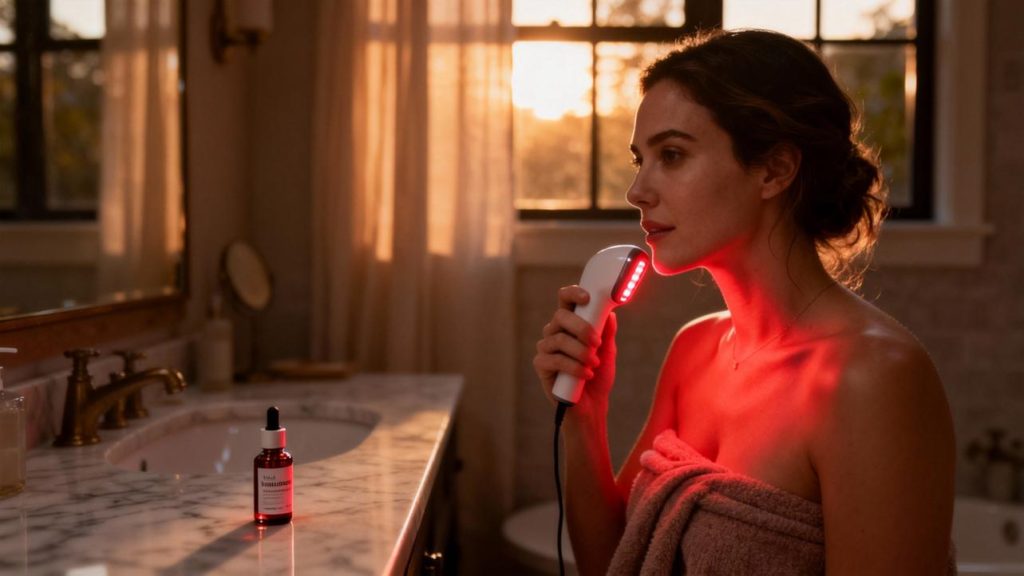
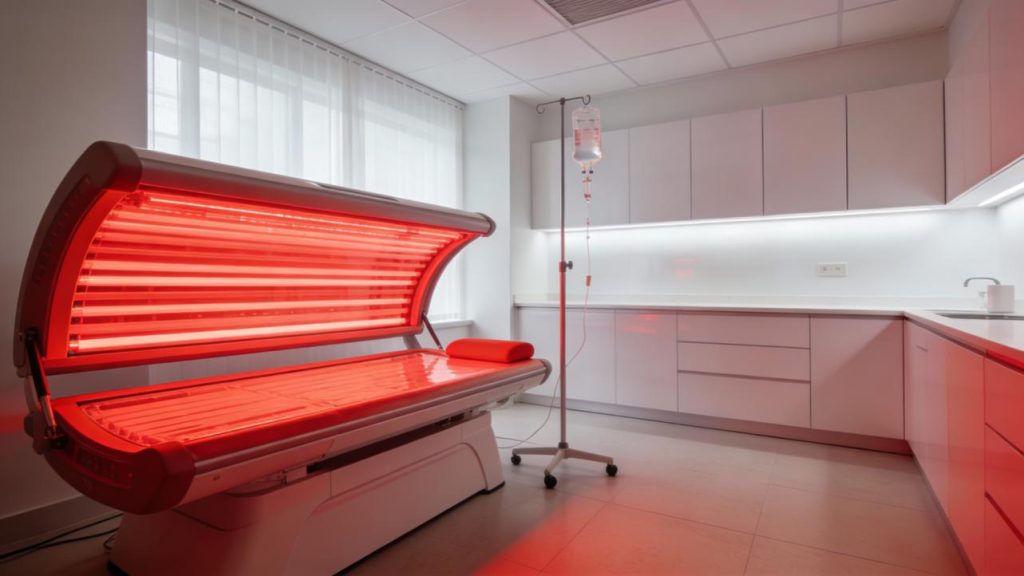
The three main form factors serve different use cases. Panels are the most common for clinics and home users, offering a large treatment area and high total power. Beds or full-body systems cover the entire body but cost 5-10 times more and require dedicated space. Handheld devices are portable but have small apertures, so treating a large area takes much longer.
For importers, panels offer the best balance of shipping cost and market demand. A typical panel is 300 x 200 mm with 60-120 LEDs, weighs 2-4 kg, and draws 100-300 W. Beds are usually built to order with lead times of 45-60 days, while panels can be shipped from stock in 7-15 days if the supplier holds inventory.
Handheld devices often use a single high-power LED or a small cluster, with irradiance of 30-80 mW/cm² at the skin. They are suitable for spot treatment but not for whole-body protocols. When sourcing handhelds, check the battery capacity and whether the driver maintains constant current as the battery voltage drops, because output can fall by 20% or more near the end of a charge cycle.
OEM and ODM Sourcing: MOQ, Lead Time, and Price Tiers
Most red light therapy lights are manufactured in China, with major clusters in Shenzhen and Guangzhou. A typical OEM panel order has a minimum order quantity (MOQ) of 50-100 units, though some factories accept 20 units for existing designs. Lead time for a standard panel is 15-30 days after deposit, while custom ODM projects take 45-90 days depending on tooling.
Price tiers reflect component quality. A basic 60-LED panel with unbranded chips and a simple driver may cost $40-70 per unit at 100-piece MOQ. A mid-range panel with binned LEDs, aluminum heatsink, and CE/RoHS certifications costs $80-150. A high-end panel with dual-wavelength chips, constant-current drivers, and full IEC 62471 test reports can exceed $200 per unit. These are general market ranges, not quotations.
Ask the supplier for a bill of materials (BOM) with LED part numbers. If they refuse, you cannot verify the wavelength tolerance or lifespan claims. Also confirm the warranty terms: professional suppliers typically offer 2 years on the driver and 1 year on the LEDs, with a defined process for returns and replacements.
Common Failure Modes and How to Avoid Them
The most frequent failure in red light therapy lights is driver burnout, often caused by cheap electrolytic capacitors rated for 85°C instead of 105°C. A driver failure can cause flickering, sudden shutdown, or complete loss of output. Specify drivers from known brands such as Mean Well or MOSO, and ask for the capacitor temperature rating in the BOM.
LED degradation is another issue. Unbinned or low-quality chips may lose 30% of output within 5,000 hours. This is invisible to the user because the panel still lights up, but the therapeutic dose drops below the intended level. A simple check is to request a spectroradiometer test of a production unit, not a prototype, and compare it to the initial specification.
Mechanical failures include loose connectors, cracked acrylic covers, and bent frames during shipping. Specify double-wall cartons with foam inserts, and ask for a drop test report. For international shipments, the packaging should withstand a 76 cm drop on each face, which is the standard ISTA 1A procedure.
A practical rule: if a supplier cannot provide an irradiance map at a defined distance, an LED bin code, and a thermal image under load, the device is not professional-grade regardless of the marketing copy.
Comparing Supplier Types for Red Light Therapy Lights
Not all suppliers are equal. Trading companies often offer lower prices but cannot control production quality or provide technical documentation. Direct factories give better support for OEM projects but may have higher MOQs. Contract manufacturers with ISO 13485 certification are suitable for medical-grade devices, but expect longer lead times and higher costs.
The table below summarizes the key differences and the consequence for your sourcing decision.
| Supplier Type | Typical MOQ | Lead Time | Documentation | Consequence |
|---|---|---|---|---|
| Trading company | 10-50 units | 7-15 days | Often incomplete | Lower price but higher risk of inconsistent quality; hard to verify wavelength or driver specs. |
| Direct factory, standard | 50-100 units | 15-30 days | CE, RoHS, basic test reports | Good balance for importers; can customize logo and packaging but limited design changes. |
| ODM factory with in-house R&D | 100-500 units | 45-90 days | Full BOM, IEC 62471, thermal data | Higher cost and longer lead time, but you get a unique product with verified specs. |
| Contract manufacturer, ISO 13485 | 500+ units | 60-120 days | Complete technical file, audit reports | Best for medical or clinical use, but requires significant upfront investment and regulatory expertise. |
Maintenance and After-Sales Support
Professional red light therapy lights require periodic cleaning of the LED surface and cooling vents. Dust accumulation can reduce output by 5-10% and increase junction temperature. Use a dry microfiber cloth; avoid liquid cleaners that can seep into the housing and damage the driver.
Check the supplier’s after-sales policy before ordering. A serious manufacturer offers a defined warranty period, spare parts availability for at least 3 years, and a technical contact who can troubleshoot driver or LED issues remotely. If the supplier only offers a 6-month warranty and no spare parts, the total cost of ownership will be higher than the initial price suggests.
For clinics, consider keeping one spare driver and one spare LED module on hand. A driver replacement takes 15 minutes with basic tools, while a full panel replacement can take weeks if the unit must be shipped back to the factory.
Frequently Asked Questions About Red Light Therapy Lights
What is the difference between 630 nm, 660 nm, and 850 nm wavelengths?
630 nm and 660 nm are red light, absorbed primarily by superficial tissue layers. 850 nm is near-infrared, which penetrates deeper. A panel that combines both bands can cover a wider range of tissue depths, but the ratio of red to NIR chips should be specified because it affects the total dose delivered at each wavelength.
How do I verify the irradiance of a red light therapy light before buying?
Request an irradiance map measured with a calibrated spectrometer at a defined distance, such as 15 cm from the device face. The map should show values across the entire treatment area, not just the center. If the supplier cannot provide this, ask for a sample unit to test yourself with a solar power meter or spectrometer.
What certifications should a professional red light therapy light have?
At minimum, look for CE marking for electrical safety and EMC, RoHS compliance, and an IEC 62471 photobiological safety test report showing exempt or low-risk classification. ISO 9001 and ISO 13485 are factory quality system certifications, not product certifications, but they indicate a more controlled manufacturing process.
Can I use a red light therapy light continuously for several hours?
Yes, if the thermal design is adequate. Check that the housing surface temperature stays below 45°C after 2 hours of continuous operation and that the driver is rated for the ambient temperature of your environment. Continuous use accelerates LED aging, so expect a shorter lifespan if the device runs 8 hours a day compared to 30 minutes a day.
Next Steps for Evaluating Red Light Therapy Lights
Start by defining your use case: clinic, home, or resale. This determines the form factor, irradiance requirements, and certification level you need. Then shortlist suppliers who can provide a complete technical file, not just a catalog page.
Request a sample unit and measure the irradiance yourself at your intended use distance. Compare the measured values to the supplier’s claims. If the numbers match within 10%, the supplier is likely reliable. If not, move on.
Finally, negotiate the OEM terms: MOQ, lead time, warranty, and spare parts availability. A professional red light therapy light is an investment in measurable performance, not a commodity purchase. The time you spend verifying specifications will pay off in fewer returns and more satisfied end users.
Post time: 11-25-26