


How does EMDR therapy work, and why should a red light therapy importer or clinic owner care? EMDR is a structured psychotherapy protocol that uses bilateral stimulation, often visual or tactile, while the client recalls a disturbing memory. This article explains the eight-phase clinical process and then focuses on what matters for your hardware decisions: wavelength stability, irradiance, thermal management, and supplier documentation.
EMDR Therapy Protocol Overview
EMDR therapy is delivered in eight phases, from history-taking to reevaluation. The core of the method is dual attention: the client holds a memory in mind while following a moving light or alternating tones. The therapist controls the speed and duration of the bilateral stimulation, typically 24 to 40 back-and-forth movements per set.
For device manufacturers, the key specification is not the therapy itself but the light source used for visual stimulation. A light bar with LEDs is the most common hardware. Buyers should ask for a light bar with adjustable speed, brightness, and direction, because therapists need to adapt the stimulus to each client’s tolerance. A fixed-speed bar limits clinical flexibility and leads to returns.
How Does EMDR Therapy Work in Practice
In a typical session, the client sits about 60 to 90 cm from a light bar. The therapist starts with a slow speed of about 1 cycle per second and increases only if the client remains comfortable. Each set lasts 30 to 60 seconds, followed by a brief check-in. The process repeats for 20 to 40 minutes, depending on the phase.

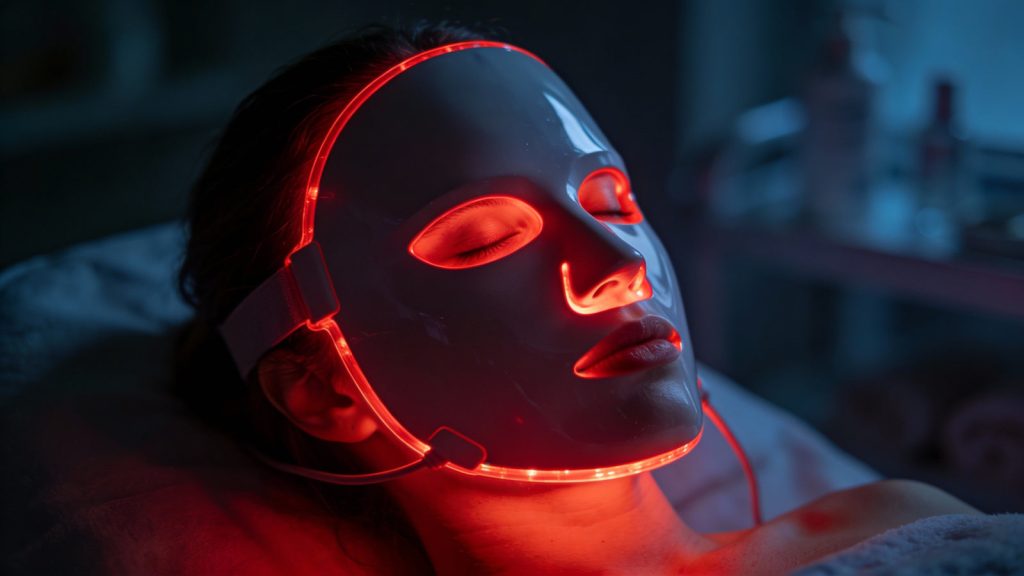
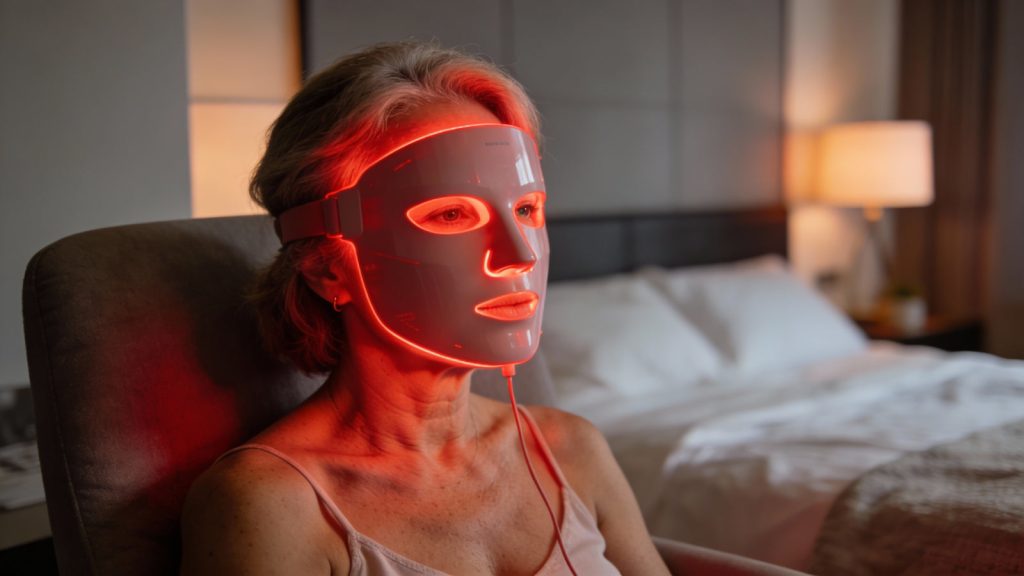
The light bar is not a therapeutic light source in the photobiomodulation sense. It delivers a visible, low-intensity stimulus, usually red or white LEDs at 5 to 20 lux. Do not confuse this with red light therapy panels that deliver 630-660 nm at 30-100 mW/cm2. Mixing these two product categories is a common sourcing error: a photobiomodulation panel cannot be repurposed as an EMDR light bar without a complete redesign of the control interface.
Bilateral Stimulation Hardware Requirements
- Adjustable speed range: at least 0.5 to 3 cycles per second, with fine steps of 0.1 Hz.
- Brightness control: 10 to 100 lux, dimmable in 10% increments or better.
- Direction control: left-right, right-left, and alternating pattern, selectable from a remote.
- Auditory option: a 3.5 mm jack or Bluetooth for headphones, with volume control.
- Power: USB-C or 12V DC, with a 2-meter cable and a wall adapter included.
Each of these features is a decision rule for procurement. If a supplier cannot state the speed range in Hz and the lux output at 60 cm, the product is not ready for professional use.
Comparing EMDR Light Bars and Red Light Therapy Panels
Many importers already sell red light therapy panels and wonder if they can add an EMDR light bar to the same container. The answer is yes, but the two products have different engineering priorities. The table below shows the key differences and the sourcing consequence for each.
| Specification | EMDR Light Bar | Red Light Therapy Panel | Sourcing Consequence |
|---|---|---|---|
| Wavelength | White or red 620-630 nm, low intensity | 630-660 nm red, 810-850 nm near-infrared | Do not accept a panel with only 850 nm LEDs as an EMDR bar; it is invisible and useless for visual tracking. |
| Irradiance | 5-20 lux at 60 cm | 30-100 mW/cm2 at 15 cm | Ask for the lux or mW/cm2 value at a stated distance; if missing, reject the quote. |
| Control interface | Handheld remote, speed and direction buttons | Touchscreen or app with timer and intensity | EMDR bars need one-hand operation; a panel’s touchscreen is not a substitute. |
| Thermal design | Passive cooling, no heatsink needed | Active fan or large heatsink | A fan-cooled light bar is too noisy for a quiet therapy room; specify passive cooling. |
| Certifications | CE, RoHS, ISO 9001 factory | CE, RoHS, ISO 13485 factory preferred | For EMDR bars, ISO 13485 is not required; insist on CE and RoHS at minimum. |
Rule of thumb: if a supplier quotes a light bar with irradiance in mW/cm2, they are selling you a photobiomodulation panel, not an EMDR device. Walk away or ask for the lux specification.
Wavelength and Irradiance: What Buyers Must Verify
For an EMDR light bar, the exact wavelength is less critical than consistency. A red LED with a peak anywhere from 620 to 630 nm works well, but the binning tolerance should be within ±5 nm. A wider tolerance can cause visible color differences between LEDs on the same bar, which distracts clients and looks unprofessional.
Irradiance is measured in lux because the light is for visual tracking, not tissue penetration. A good light bar delivers 10 to 20 lux at the client’s eye position, which is about 60 to 90 cm away. If the supplier only gives the lux at 10 cm, the number is meaningless. Ask for the lux at 60 cm and at maximum brightness.
For red light therapy panels, the relevant numbers are 630-660 nm and 810-850 nm, with irradiance of 30-100 mW/cm2 at the treatment surface. Always ask for the measurement distance and the instrument used. A solar power meter is not accurate for narrowband LEDs; the supplier should use a spectrometer or a calibrated photodiode sensor.
Factory Certifications and OEM/ODM Sourcing
Professional buyers should require three documents before placing an order: a CE declaration of conformity, a RoHS test report, and an ISO 9001 certificate for the factory. For red light therapy panels intended for clinical use, ISO 13485 is a strong signal of quality management for medical devices, but it is not a product certification. Describe it as a factory certification, not a device approval.
Typical MOQs for EMDR light bars are 100 to 500 units, with a lead time of 30 to 45 days after deposit. Red light therapy panels usually start at 50 units for OEM and 200 units for ODM, with lead times of 45 to 60 days. Price tiers vary widely: a basic EMDR light bar with remote costs $15 to $25 per unit ex-works, while a mid-size red light therapy panel with dual wavelengths and a touchscreen costs $80 to $150 per unit ex-works. These are general market ranges, not quotations.
Ask the supplier for a sample before bulk production. Test the light bar for speed range, brightness steps, and remote responsiveness. For panels, measure the irradiance at 15 cm with your own meter and compare it to the spec sheet. A 20% deviation is common; a 50% deviation is a red flag.
Thermal Management and Safety
EMDR light bars generate very little heat because the LEDs run at low current. Passive cooling is sufficient, and a fan is a design flaw in a quiet therapy room. The housing should be aluminum or ABS plastic with a matte finish to avoid glare. Check that the light bar does not flicker at any speed setting; flicker can cause discomfort even if it is not visible. A high-speed camera or a smartphone slow-motion video can reveal flicker.
Red light therapy panels need active thermal management. A 300-LED panel at 100 mW/cm2 can dissipate 50 to 80 watts of heat. Look for a heatsink with a minimum thickness of 5 mm and a fan with a noise rating below 40 dB. If the panel has no fan and a thin heatsink, it will overheat within 20 minutes and the LEDs will degrade rapidly.
Photobiological safety is covered by IEC 62471. For red light therapy panels in the 630-660 nm and 810-850 nm range, the risk group is usually Exempt or Risk Group 1 at normal use distances. Ask the supplier for an IEC 62471 test report. For EMDR light bars, the risk is negligible, but a basic lux measurement should confirm the output is below 100 lux at the eye position.
FAQ: EMDR Therapy and Device Sourcing
Can I use a red light therapy panel as an EMDR light bar?
No. A red light therapy panel delivers 30-100 mW/cm2 for tissue photobiomodulation, while an EMDR light bar delivers 5-20 lux for visual tracking. The control interface, brightness range, and safety profile are completely different. Attempting to repurpose a panel will result in an unusable product and likely a return.
What certifications should I require for an EMDR light bar?
Require CE and RoHS at minimum, plus an ISO 9001 certificate for the factory. ISO 13485 is not necessary for a light bar but is a plus for red light therapy panels. Always verify that the CE declaration lists the correct product model and the correct EU directives.
What is a reasonable MOQ and lead time for these devices?
For EMDR light bars, expect an MOQ of 100 to 500 units and a lead time of 30 to 45 days. For red light therapy panels, MOQs are typically 50 to 200 units for OEM and lead times of 45 to 60 days. These are general market ranges; always confirm with the specific supplier.
How do I verify irradiance claims from a supplier?
Ask for the irradiance value at a stated distance, the instrument used, and the date of measurement. For red light therapy panels, request a spectrometer reading at 15 cm. For EMDR light bars, request lux at 60 cm. If the supplier cannot provide these, do not proceed with the order.
What to Do Next
Understanding how EMDR therapy works is the first step. The second step is translating that clinical protocol into a hardware specification you can enforce with suppliers. Write down your required speed range, brightness steps, and control interface before you contact any factory.
Request samples, measure the output yourself, and compare at least three suppliers on certifications, lead time, and after-sales support. A light bar that fails in the field costs more than the unit price; it costs your reputation with every therapist who bought it.
Post time: 11-25-26