


Near infrared light therapy devices dominate the professional photobiomodulation market, but buyers often confuse marketing irradiance with measured output and overlook driver quality. This article answers one concrete question: how do you verify that a near infrared panel will perform as specified after 6, 12, and 24 months of daily clinic use? You will learn which wavelengths matter, which measurements to request, and which supplier documents separate a durable OEM partner from a trading company with a glossy catalog.
Why Near Infrared Wavelengths Matter in Photobiomodulation
Near infrared in photobiomodulation usually means 810 nm to 850 nm, with 830 nm as the midpoint many researchers reference. These wavelengths penetrate deeper than 630-660 nm red light because water and melanin absorb less energy in this band. A 2019 review in Lasers in Medical Science noted that 810-830 nm reaches 3-5 cm into soft tissue under typical clinical irradiance, while red light at 660 nm is largely attenuated within the first 1-2 cm.
For device buyers, the practical consequence is that a panel sold as “deep tissue” must state its spectral peak and tolerance. A reputable supplier will quote 810 nm ± 5 nm or 850 nm ± 5 nm, not “near infrared” alone. Ask for the integrating sphere test report, not a smartphone lux meter reading, because lux meters are calibrated for human vision and read near zero at 850 nm even when the LED output is strong.
Irradiance Claims: The Number Buyers Misread
Irradiance is power per area, reported in mW/cm², and it falls off with distance. A panel advertised as “200 mW/cm²” usually means measured at the LED surface or at 0 cm, which is not a usable treatment distance. At 15 cm from the panel, the same device may deliver only 40-60 mW/cm², and at 30 cm it may drop below 20 mW/cm².
A practical rule of thumb: request irradiance at three distances—10 cm, 15 cm, and 30 cm—measured with a calibrated spectrometer, not a solar power meter. A supplier that cannot provide this table has not done basic optical testing.
For clinical use, the commonly cited effective window is roughly 3-50 mW/cm² at the skin, with session doses of 3-20 J/cm². Below 3 mW/cm² the session time becomes impractical; above 50 mW/cm² thermal effects dominate and photobiomodulation benefits plateau. Buyers should therefore ask for the irradiance map across the panel face, because edge LEDs often output 20-30% less than center LEDs due to thermal and electrical layout differences.
LED Binning, Wavelength Tolerance, and Spectral Drift
LED chips are binned by peak wavelength and radiant flux at the factory. A low-cost panel may use chips from a wide bin, so the actual output spans 790-870 nm while the spec sheet says 830 nm. Over 2,000-5,000 hours of operation, junction heating and phosphor degradation can shift the peak by 3-8 nm and reduce output by 10-15%.
Ask the supplier for the LED manufacturer’s bin code, such as a 5 nm bin for 830 nm, and the expected L70 lifetime—the hours until output drops to 70% of initial. Quality near infrared LEDs from established chipmakers typically carry an L70 of 30,000-50,000 hours at 25°C ambient, but a poorly cooled panel may reach that degradation in half the time. Thermal design matters more than the chip brand alone.
Driver Quality and Flicker: The Hidden Failure Mode
Constant-current LED drivers regulate the current through each string of LEDs, and poor drivers cause two problems: flicker and premature LED failure. Flicker at 100-120 Hz is invisible to the eye but can be measured with a photodiode and oscilloscope; some users report subjective discomfort under high-flicker panels even when the irradiance is correct.
A durable near infrared panel uses a driver with output ripple below 5% and active power factor correction above 0.9. Ask for the driver’s MTBF (mean time between failures) rating; 50,000 hours at 40°C is a reasonable benchmark. Also confirm that the panel uses separate constant-current channels per wavelength, not a single voltage source with resistors, because resistor-based designs drift with temperature and shorten LED life.
Factory Certifications and What They Actually Cover
For B2B buyers, factory certifications signal process control, not medical efficacy. CE marking under the Low Voltage Directive and EMC Directive, RoHS compliance, and ISO 9001 for quality management are the baseline for importing into most markets. ISO 13485 indicates a quality system designed for medical device manufacturing, which matters if the panel will be integrated into a regulated product.
Request the certificate numbers and verify them on the issuing body’s database. A trading company may show a CE certificate for a different factory or an expired ISO 9001. Also ask for the IEC 62471 photobiological safety test report, which classifies the panel into risk groups for eye and skin exposure. A near infrared panel for clinical use should fall into Exempt or Risk Group 1 at the intended treatment distance.
| Supplier Type | Typical MOQ | Lead Time | Price Tier | Consequence for Buyer |
|---|---|---|---|---|
| Trading company | 1-10 units | 1-2 weeks | $80-$150 per panel | Fast but no control over binning, drivers, or after-sales |
| OEM factory, standard design | 50-100 units | 4-6 weeks | $40-$80 per panel | Lower cost, but limited customization and shared tooling |
| OEM factory, custom spectrum | 200-500 units | 8-12 weeks | $60-$120 per panel | Full control of wavelengths, irradiance, and driver spec |
| ODM partner, full enclosure design | 500+ units | 12-16 weeks | $100-$200 per panel | Unique product, but requires engineering and certification budget |
These ranges reflect general market conditions for near infrared panels in the 100-300 W class as of 2026. Prices exclude shipping, duties, and certification testing, which can add 15-25% to landed cost.
Panel, Bed, and Handheld: Matching Form Factor to Use Case
Near infrared devices come in three main form factors, and each has a distinct engineering trade-off. Panels offer the largest treatment area—typically 30 x 60 cm to 60 x 120 cm—and the highest total optical power, but they require a stand or wall mount and a fixed distance. Beds provide full-body coverage but cost 5-10 times more and need dedicated floor space and electrical circuits.
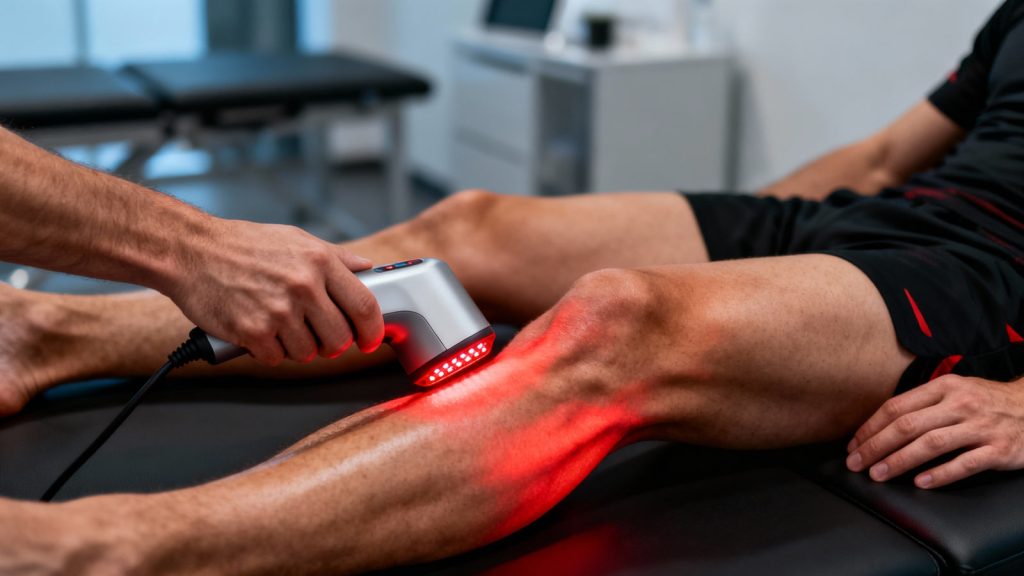
Handheld devices are portable and inexpensive, but their small emitter area means irradiance drops sharply with distance, and session times for large areas become impractical. For a distributor, panels are the volume product; for a clinic, a combination of one bed and two panels covers most workflows. Ask the supplier for the beam angle of the LEDs: a 30° lens concentrates light for deeper penetration, while a 60° or 90° lens spreads it for surface coverage.
OEM and ODM Sourcing: Questions That Separate Serious Suppliers
When sourcing near infrared panels from an OEM or ODM factory, the first conversation should cover five technical points. First, request the LED bin report and driver schematic, not just the finished product photo. Second, ask for the irradiance map at three distances. Third, confirm the warranty terms: a 2-year warranty on LEDs and drivers is standard, but some factories offer only 12 months on drivers.
Fourth, clarify the MOQ and tooling cost. A standard panel design may have an MOQ of 50 units with no tooling fee, while a custom enclosure requires $5,000-$15,000 in mold costs and an MOQ of 500 units. Fifth, ask about after-sales: who handles warranty claims, what is the replacement lead time, and whether spare drivers and LED boards are stocked. A factory that cannot answer these questions in writing is likely a trading company.
Maintenance, Lifespan, and When to Replace a Panel
Near infrared LEDs degrade gradually, so a panel that measures 100 mW/cm² at 15 cm on day one may measure 85 mW/cm² after 18 months of daily use. Clinics should re-measure output every 6 months with a calibrated spectrometer and log the results. When output drops below 80% of the original at the treatment distance, either increase session time proportionally or replace the LED boards.
Common failure modes include individual LED strings going dark due to driver failure, fan failure causing thermal runaway, and power supply capacitor wear after 3-5 years. A well-designed panel uses a modular LED board so a single failed string can be replaced without scrapping the entire unit. Ask the supplier whether replacement boards are available as spare parts and at what minimum order quantity.
FAQ: Near Infrared Device Verification
What is the difference between 810 nm and 850 nm near infrared?
Both wavelengths are used in photobiomodulation, but 810 nm is closer to the absorption peak of cytochrome c oxidase, a key mitochondrial enzyme, while 850 nm penetrates slightly deeper due to lower melanin absorption. For a device buyer, the choice matters less than the tolerance: a 810 nm ± 5 nm panel and an 850 nm ± 5 nm panel are both acceptable, but a “broad spectrum” panel spanning 800-880 nm may deliver less energy at any single peak.
How do I verify a supplier’s irradiance claim without expensive equipment?
Request the integrating sphere test report from an independent lab, not the supplier’s own measurement. The report should state the spectrometer model, the distance from the panel, and the ambient temperature. If you have a calibrated spectrometer, measure at 15 cm and compare to the spec sheet; a deviation of more than 15% is a red flag.
What certifications should a near infrared panel have for import into the EU?
CE marking under the Low Voltage Directive and EMC Directive is mandatory, and RoHS compliance is required for electronic components. ISO 9001 and ISO 13485 are factory quality system certifications, not product certifications, but they indicate process control. Request the certificate numbers and verify them with the issuing body.
Is a higher irradiance always better for near infrared therapy?
No. The commonly cited effective range is 3-50 mW/cm² at the skin, and exceeding 50 mW/cm² can cause thermal discomfort and reduce the biological response. A panel that advertises 200 mW/cm² at the surface may deliver 40 mW/cm² at a usable distance, which is appropriate. Focus on the irradiance at the treatment distance, not the surface number.
What to Do Next: Build a Verification Checklist
Before placing an order for near infrared light therapy devices, create a one-page checklist with the following items: LED bin report with wavelength tolerance, irradiance map at 10, 15, and 30 cm, driver ripple and MTBF, IEC 62471 risk group classification, and factory certificate numbers. Send this checklist to three suppliers and compare their responses side by side.
A supplier that answers every point with data is worth a sample order of 2-3 units for independent testing. A supplier that deflects with marketing language or “trust us” should be removed from the shortlist. The near infrared market rewards buyers who verify, not those who buy on wattage and price alone.
Post time: 11-26-26