


Red light therapy fat loss is a growing category for professional equipment buyers, but the market is full of vague claims and under-specified hardware. This article answers a concrete question: which device specifications and sourcing decisions actually matter when you evaluate red light therapy equipment for body contouring or aesthetic applications? We focus on wavelengths, irradiance, thermal design, safety standards, and supplier qualification, not medical promises.
Why Wavelength and Irradiance Matter for Fat Loss Devices
Most red light therapy fat loss devices use LED arrays that emit either red light around 630-660 nm or near-infrared light around 810-850 nm. The choice is not cosmetic: near-infrared penetrates deeper into tissue, while red wavelengths are absorbed more superficially. For body contouring, many manufacturers combine both bands in one panel, typically with a ratio of roughly 1:1 or 2:1 red to near-infrared.
Irradiance, measured in mW/cm2, is the single most important number on a spec sheet. A device that delivers 3-20 mW/cm2 at the skin surface is in the commonly used range for photobiomodulation sessions of 10-20 minutes. Beware of vendors who quote only total power in watts or LED count; without beam area and distance, those numbers are meaningless. Ask for irradiance measured at a defined distance, such as 15 cm or 30 cm from the panel surface.
Comparing Device Classes for Fat Loss Applications
Buyers choose among three main form factors: large panels, full-body beds, and handheld or targeted devices. Each has a different cost structure, maintenance profile, and clinical workflow. The table below summarizes the key trade-offs.
| Device class | Typical irradiance at working distance | Coverage area | Price tier (B2B, per unit) | Consequence for buyer |
|---|---|---|---|---|
| LED panel (60-300 W) | 20-80 mW/cm2 at 15 cm | 40 x 20 cm to 120 x 60 cm | $400-$4,000 | Best balance of cost and flexibility; check uniformity across the panel. |
| Full-body bed or pod | 10-50 mW/cm2 at skin contact | 160-200 cm length | $8,000-$40,000 | High throughput for clinics; higher service and shipping cost. |
| Handheld or targeted pad | 30-100 mW/cm2 at 5 cm | 10-30 cm diameter | $150-$1,500 | Low entry cost; operator fatigue and inconsistent dosing risk. |
For fat loss or body contouring, a large panel with both 660 nm and 850 nm LEDs is the most common professional choice. Handheld devices require more sessions per area and are harder to standardize. Beds offer the best workflow but demand a dedicated room and higher electrical load, often 1,500-3,000 W.
LED Chip Quality and Binning: What to Ask Suppliers
Not all 660 nm or 850 nm LEDs are equal. Reputable manufacturers bin their chips for wavelength tolerance, typically ±5 nm or ±10 nm. A panel advertised as 660 nm may actually contain LEDs ranging from 650 to 670 nm if binning is loose. That shifts the absorption profile and can reduce the intended effect.

Ask your supplier for the LED brand and bin code. Common industrial sources include Osram, Seoul Semiconductor, and Epistar, but many OEMs use unbranded chips. Also request the expected L70 lifetime, which is the hours until output drops to 70% of initial. Quality panels often state 50,000 hours or more. If a supplier cannot provide binning data or L70, treat that as a red flag for batch consistency.
Thermal Design and Constant-Current Drivers
Heat kills LED performance. A panel that runs hot will lose irradiance quickly and may shift wavelength. Look for aluminum PCB substrates, active fan cooling, and thermal cutoff protection. Passive cooling alone is acceptable only for low-power panels under 100 W.
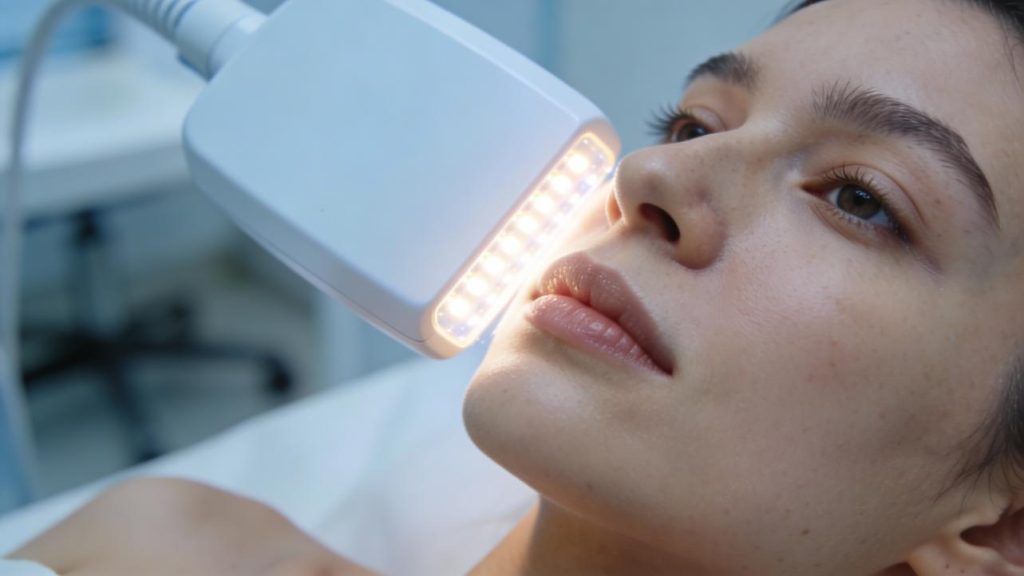
The driver is equally important. Constant-current drivers maintain stable output as LEDs heat up, while constant-voltage drivers allow current to drift. For a fat loss device that must deliver repeatable dosing, specify a constant-current driver with a ripple below 5%. Ask for the driver brand or at least the topology; Mean Well and Inventronics are common in quality equipment. A cheap driver can cause flicker, uneven output, and early failure.
Safety Standards and Factory Certifications
Photobiological safety is governed by IEC 62471, which classifies LED products by risk group. For a body-contouring panel, the device should be tested and fall into Risk Group 2 or lower at the intended working distance. Risk Group 3 requires additional controls and is not suitable for unsupervised use. Ask for the IEC 62471 test report, not just a statement of compliance.
Never accept a spec sheet that lists only wavelength and power. A usable device quote includes irradiance at a defined distance, wavelength tolerance, IEC 62471 risk group, and driver type.
Factory certifications such as CE, RoHS, ISO 9001, and ISO 13485 indicate quality management and electrical safety processes. These are factory-level credentials, not product efficacy claims. For European distribution, CE marking with a valid Declaration of Conformity is essential. For medical or clinical environments, ISO 13485 is a strong signal that the manufacturer follows medical device quality systems.
OEM/ODM Sourcing: MOQ, Lead Time, and Customization
Most red light therapy fat loss devices are sourced from contract manufacturers in China, with typical MOQs of 10-50 units for standard panels and 100-500 units for full OEM branding. Lead times range from 25 to 45 days for standard products, plus 15-30 days for custom logo, casing color, or firmware changes. Air freight adds 5-10 days; sea freight adds 30-45 days.
When evaluating an OEM/ODM partner, request the following:
- IEC 62471 test report for the exact model you will buy
- CE and RoHS certificates with matching model numbers
- LED binning data and driver specification sheet
- Sample unit for irradiance measurement at your intended distance
- Warranty terms: at least 2 years on LEDs and driver is common
Price tiers for standard 300 W dual-wavelength panels are typically $400-$800 per unit at 10-unit MOQ, falling to $250-$450 at 500 units. Custom enclosures, touchscreen controls, and app connectivity add 20-40% to unit cost. Do not chase the lowest quote; a $50 saving per panel is worthless if 5% of units fail within six months and your brand absorbs the returns.
Red Light Therapy Fat Loss: What the Evidence Does and Does Not Show
This section addresses the primary keyword directly. The honest position is that red light therapy fat loss is an area of ongoing research, not a settled clinical indication. Some small studies suggest that photobiomodulation may influence adipocyte metabolism or support body contouring when combined with other modalities, but the effect sizes are modest and protocols vary widely.
For a B2B buyer, this means you should market the device based on its physical specifications, not on promised outcomes. A panel that delivers 30 mW/cm2 of 660 nm and 850 nm light at 15 cm is a verifiable product. A claim that it “reduces fat” is not. Position your equipment as a tool for professional use, and let practitioners determine protocols. This protects your distribution business from regulatory and reputational risk.
Maintenance and After-Sales Considerations
LED panels for fat loss applications run hot and accumulate dust. Specify removable, washable front covers or at least easy access to the fan intakes. Ask about spare part availability: LED modules, drivers, and fans should be orderable as separate SKUs. A supplier that only sells complete units will force you to scrap a $2,000 panel for a $30 fan failure.
Warranty terms vary widely. Standard is 2 years on the entire device, with 5 years on the LED array. Some manufacturers offer extended warranties of 3-5 years for an additional 5-10% of unit cost. For clinic customers, a service-level agreement with 48-hour replacement part dispatch is worth negotiating. Also confirm firmware update policy if the device has digital controls.
FAQ: Red Light Therapy Fat Loss Device Sourcing
What irradiance level should a fat loss panel deliver?
For professional body contouring use, look for 20-50 mW/cm2 at the intended working distance, typically 15-30 cm. Lower irradiance means longer sessions; higher irradiance increases heat and safety risk. Always verify the measurement distance on the spec sheet.
Is 660 nm or 850 nm better for fat loss?
Most devices combine both. Red 660 nm light is absorbed more superficially, while near-infrared 850 nm penetrates deeper. A dual-wavelength panel with roughly equal output in both bands is the most common professional configuration. The exact ratio is less important than consistent irradiance and wavelength tolerance.
What certifications should a supplier have?
At minimum, request CE and RoHS certificates with matching model numbers, plus an IEC 62471 photobiological safety test report. ISO 9001 and ISO 13485 factory certifications indicate stronger quality systems. These are factory credentials, not product performance guarantees.
What is a realistic MOQ for OEM fat loss panels?
Standard panels typically have an MOQ of 10-50 units. Full OEM branding with custom logo, casing, and packaging usually requires 100-500 units. Lead time is 25-45 days for production, plus shipping. Request a sample before committing to a large order.
Conclusion: Buy the Spec, Not the Story
Red light therapy fat loss is a market segment where hardware quality separates sustainable brands from short-lived ones. Focus on measurable specifications: wavelength binning, irradiance at a defined distance, driver topology, IEC 62471 risk group, and thermal design. These are the details that determine whether a device delivers consistent, repeatable output over thousands of hours.
When you evaluate suppliers, ask for test reports and samples before discussing price. A panel that meets your irradiance and safety requirements at a fair MOQ is a better long-term investment than a cheaper unit with vague specs. Use the checklist in this article to compare options, and confirm any health-related claims with a qualified clinician before making them part of your marketing.
Post time: 11-26-26