


When considering a red light therapy sample order, buyers must assess device performance, safety, and supplier reliability before committing to bulk purchasing. This article explains how to evaluate a sample order using concrete tests, specification checks, and sourcing best practices.
Key Criteria for Evaluating a Red Light Therapy Sample Order
The decision to place a large order should always begin with a careful assessment of the sample unit. For red light therapy devices, several objective criteria must be checked:
- Wavelength accuracy: Confirm emission in the 630-660 nm (red) and/or 810-850 nm (near-infrared) bands with a spectrometer. Deviations of ±10 nm are common, but tighter tolerance (±5 nm) is preferred for clinical settings.
- Irradiance output: Use a calibrated meter to measure surface irradiance at the target distance. Typical values are 3-50 mW/cm2; significant deviation from the datasheet may signal driver or LED binning issues.
- Thermal management: Check for overheating after 20-30 minutes of continuous operation. Poor heat dissipation can lead to early LED degradation or warping of enclosures.
- Factory certifications: Request valid CE, RoHS, ISO 9001 or ISO 13485 certificates. These do not guarantee regulatory approval but confirm basic quality and safety controls.
- Build quality: Inspect the enclosure, connectors, and lensing for loose parts, sharp edges, or inconsistent assembly. Frequent failures in samples often predict higher defect rates at scale.
Document all findings with photos and meter readings. This evidence is essential when negotiating with suppliers or resolving disputes.
Understanding Technical Specifications: What to Check
Sample evaluation is only as good as your understanding of the technical sheet. Focus on these lines in the spec sheet:
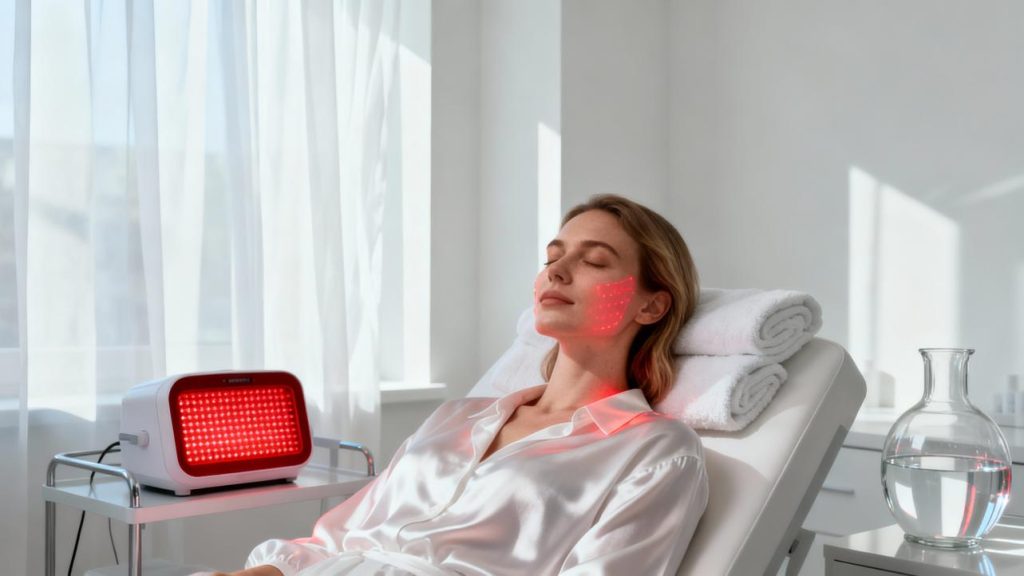
- LED chip type and bin: Reputable suppliers disclose chip model (e.g., Epistar 660 nm) and bin code, which affects wavelength and efficiency. Ask for the bin sheet if not provided.
- Driver type: Constant-current drivers are standard for photobiomodulation. Fluctuating current or voltage drivers can shorten LED lifespan or reduce consistency.
- Lens angle: Common options are 30°, 60°, and 90°. Tighter angles increase intensity but reduce coverage; wider angles may lower peak irradiance.
- Session timer and controls: Look for digital or mechanical timers, and check if controls are intuitive and robust. Faulty timers are a frequent early failure mode.
- Power supply and plug: Confirm voltage compatibility (e.g., 110V/220V) and plug type for your region. Adapters are a weak link in long-term use.
If the spec sheet omits any of these, request clarification before proceeding. Insufficient documentation is a warning sign for larger orders.
Comparing Device Classes and Application Scenarios
The choice of device class affects both sample evaluation and long-term purchasing decisions. Here is a comparison of common red light therapy device types:
| Device Class | Typical Use | Irradiance Range (mW/cm2) | Coverage Area | Sample Order Implication |
|---|---|---|---|---|
| Handheld | Spot treatments, home use | 3-20 | <100 cm2 | Easy to test; check for hot spots and battery life |
| Panel | Body part or full body | 10-50 | 500-2000 cm2 | Assess uniformity and cooling under extended use |
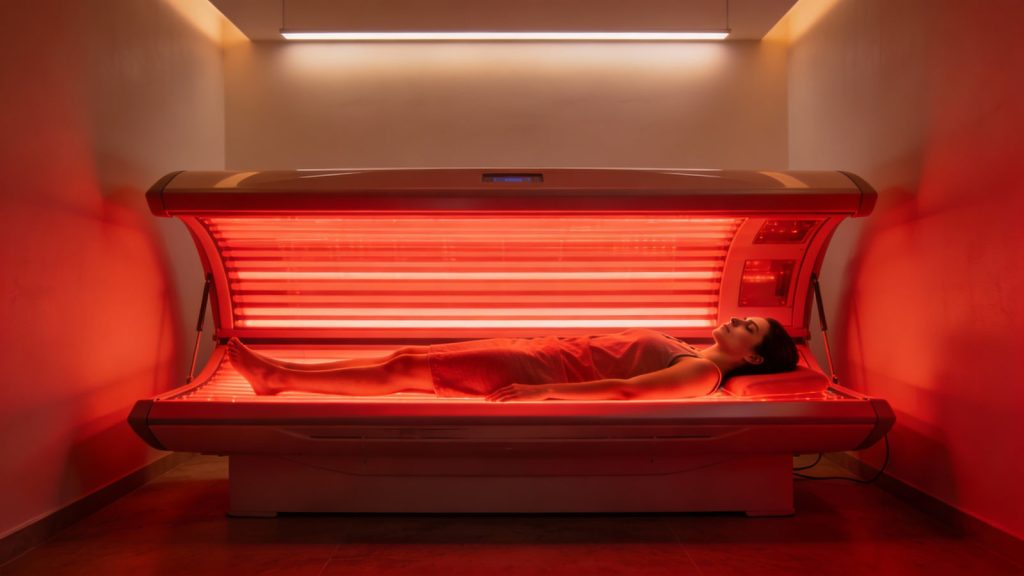
| Bed | Professional clinics, whole body | 10-30 | >10,000 cm2 | Test for structural integrity and service access |
Choose your sample based on your target market and application. For example, a distributor serving clinics should request panel or bed samples, while retail channels may focus on handhelds.
Supplier Selection: OEM, ODM, and Trading Companies
Your choice of supplier directly impacts sample quality and post-sale support. There are three main supplier types in the red light therapy market:

- OEM (Original Equipment Manufacturer): Manufactures devices to your design/specs. Suitable for custom branding or features. Typical MOQ for bulk is 50-200 units, with sample orders often possible at 1-3 units.
- ODM (Original Design Manufacturer): Offers ready-made designs that can be branded. Faster lead times and lower MOQs (10-100 units) but less customization.
- Trading companies: Source from multiple factories. Can consolidate orders but may have less control over production quality or consistency.
Always request a factory audit report or third-party inspection for OEM/ODM suppliers. Lead times for samples typically range from 7-21 days, while bulk orders may require 30-60 days depending on customization and order size.
Testing Protocols: How to Assess Performance and Safety
Objective testing of your red light therapy sample order is critical. Establish a standardized protocol:
- Measure irradiance at the recommended distance (often 10-15 cm) using a calibrated power meter. Record values at center and edges.
- Check emitted wavelengths with a portable spectrometer. Verify main peaks are within 630-660 nm or 810-850 nm, within ±10 nm tolerance.
- Run the device for 30 minutes. Monitor for surface temperature and any auto-shutdown or flicker. Surface temperature should not exceed 55°C for hand-helds or 45°C for panels/beds.
- Inspect for electrical safety: check for exposed wiring, loose connectors, and grounded plugs. Confirm CE and RoHS labels are present and match provided certificates.
- Cycle the controls and timer through several on/off operations to test for reliability.
Record all data in a standardized checklist. If any parameter fails, communicate with the supplier and request a replacement or explanation before scaling up.
Factory Certification and Regulatory Considerations
While factory certifications do not guarantee regulatory approval in every market, they are essential quality markers. The most relevant certifications for red light therapy device manufacturing include:
- CE: Confirms conformity to European market safety standards, including IEC 62471 for photobiological safety.
- RoHS: Ensures restriction of hazardous substances in electronic components.
- ISO 9001: General quality management system certification.
- ISO 13485: Quality management for medical device manufacturing, required by some importers and clinics.
Request current certificates and check their validity (issue date, scope, and certifying body). For clinical or commercial use, confirm the device’s compliance with photobiological safety standards such as IEC 62471, and request the relevant test report if available.
“If a supplier hesitates to provide certification documents or detailed test data for your red light therapy sample order, treat it as a red flag and consider alternative sources.”
Common Failure Modes and How to Spot Them in Samples
Identifying early failure modes in red light therapy devices can prevent costly returns and customer dissatisfaction. Common issues to check during sample evaluation include:
- LED degradation: Noticeable drop in irradiance after several hours of use signals poor binning or inadequate heat sinking.
- Driver failure: Flickering lights or inability to sustain power output often trace back to low-quality constant-current drivers.
- Thermal runaway: Excessive heat buildup can warp enclosures or damage internal circuitry, especially in compact panels.
- Mechanical failures: Loose screws, rattling parts, or non-uniform lensing indicate inconsistent assembly processes.
- Control/timer malfunction: Unreliable session timing can result from cheap components or poor PCB design.
Document any issues with photos and video. Suppliers who respond constructively to sample feedback are more likely to be reliable partners for bulk orders.
FAQ: Red Light Therapy Sample Order Evaluation
How many sample units should I order before bulk purchase?
Most buyers request 1-3 sample units to test for consistency and to perform destructive testing on at least one device without risking the only unit.
What is a typical lead time for a red light therapy sample order?
Lead times for sample orders are usually 7-21 days depending on stock, customization, and shipping method.
What if the sample fails my technical or safety checks?
Communicate objectively with the supplier, provide test data, and request a replacement or improvement. Reliable factories should address issues before negotiating bulk terms.
Can I request custom wavelengths or branding on a sample order?
Most OEM/ODM suppliers offer custom wavelengths (within 630-660 nm or 810-850 nm) and branding for sample orders, but this may extend lead time and require a higher unit price.
Conclusion: Making Informed Bulk Purchasing Decisions from Red Light Therapy Sample Orders
Evaluating a red light therapy sample order is a critical step before placing a large-scale order. By systematically testing for wavelength accuracy, irradiance, thermal management, and build quality, buyers can avoid common pitfalls and ensure device performance matches specifications. Always verify factory certifications and document your findings.
For importers, distributors, and clinic owners, a thorough sample evaluation process protects both your investment and reputation. Take the time to communicate clearly with suppliers, request supporting documents, and use well-defined technical protocols. This approach to red light therapy sample orders will position your business for successful sourcing and long-term customer satisfaction.
Post time: 11-29-26