

Does red light therapy work for hair loss? The honest answer is that the evidence is mixed, and the outcome depends heavily on the device you buy or source. This article explains what red light therapy devices can realistically offer, which specifications matter, and how to evaluate suppliers without falling for inflated claims.
What Red Light Therapy Devices Actually Do
Red light therapy, also called photobiomodulation, delivers light in the 630-660 nm red and 810-850 nm near-infrared bands. The proposed mechanism is that photons are absorbed by cytochrome c oxidase in mitochondria, which may increase cellular energy production and modulate oxidative stress. For hair loss, the hypothesis is that this can shift hair follicles from a resting phase into an active growth phase, but the clinical evidence is not yet strong enough for any definitive statement.
Most published studies use irradiance between 3 mW/cm2 and 50 mW/cm2 and session doses between 3 J/cm2 and 20 J/cm2. Devices that fall outside these ranges may still be safe, but they are not supported by the same body of research. When a supplier claims their device is proven to regrow hair, ask for the exact wavelength, irradiance, dose, and study reference.
Does Red Light Therapy Work for Hair Loss? The Evidence Gap
Some small trials and meta-analyses have reported increased hair density and thickness after 12-26 weeks of treatment with red or near-infrared light. However, many studies are small, short-term, or funded by device manufacturers, and the effect sizes are modest. A 2021 systematic review found that low-level laser therapy may improve hair count in androgenetic alopecia, but the authors noted high heterogeneity and a need for larger, independent trials.
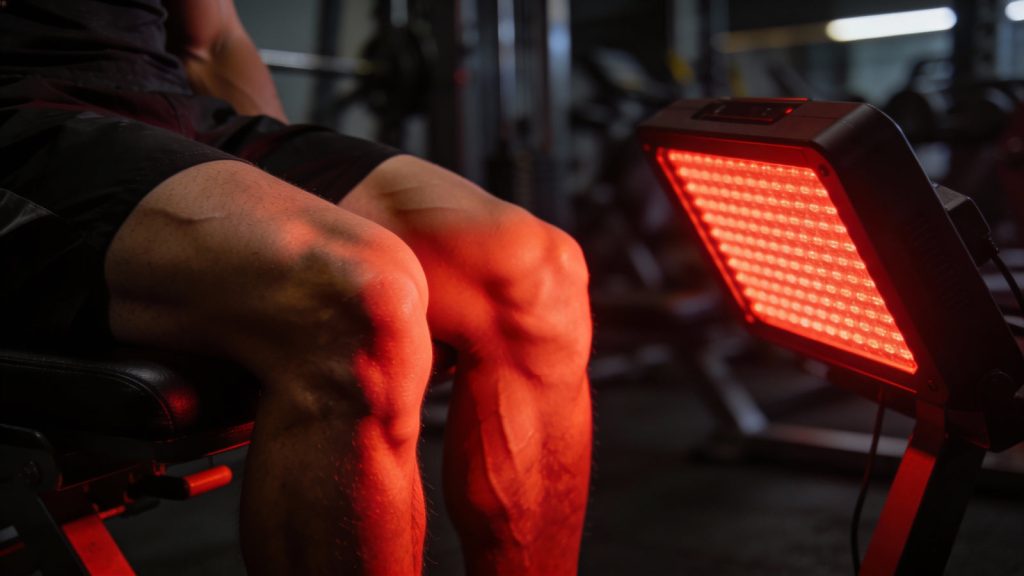
For a buyer, this means you should not rely on a single study or a before-and-after photo. Instead, focus on the device parameters that are consistent across the more credible studies: wavelengths around 630-660 nm and 810-850 nm, irradiance of roughly 10-30 mW/cm2, and total doses of 10-20 J/cm2 per session. Devices that cannot state these numbers clearly are a red flag.
Wavelength Bands and Their Trade-offs
Red light at 630-660 nm penetrates roughly 1-3 mm into tissue and is often used for surface-level applications. Near-infrared at 810-850 nm penetrates deeper, typically 3-10 mm, and may reach the hair follicle bulge region more effectively. Some devices combine both bands, which is reasonable, but the ratio matters more than the total number of LEDs.
| Wavelength Band | Typical Penetration | Common Use in Hair Devices | Buyer Consequence |
|---|---|---|---|
| 630-660 nm red | 1-3 mm | Scalp surface stimulation | Lower cost, but may not reach deeper follicles; verify irradiance at skin contact |
| 810-850 nm near-infrared | 3-10 mm | Deeper follicle targeting | Higher cost and more heat; check thermal management and duty cycle |
| Dual-band (red + NIR) | Combined | Broad coverage | More flexible, but check power split; some panels underdrive one band |
When comparing devices, request a spectral power distribution graph, not just a marketing wavelength number. A 660 nm LED with a tolerance of ±10 nm can actually emit anywhere from 650 to 670 nm, which may shift the absorption peak and reduce effectiveness.
Irradiance, Dose, and the Measurement Problem
Irradiance is the power density at the treatment surface, measured in mW/cm2. Dose is irradiance multiplied by time, measured in J/cm2. A common failure mode is a supplier quoting irradiance at the LED surface rather than at the intended treatment distance. For a panel used 15 cm from the scalp, the irradiance at 15 cm can be half or less of the surface value.
Always ask: “At what distance was this irradiance measured, and with what instrument?” If the answer is vague or the distance is not stated, treat the number as unreliable.
For hair loss support, many protocols use 3-5 sessions per week for 10-20 minutes each, which at 10 mW/cm2 yields 6-12 J/cm2 per session. Devices that deliver less than 3 mW/cm2 at the treatment distance are unlikely to produce any photobiomodulation effect, while devices above 50 mW/cm2 can cause thermal discomfort and may require cooling.
Device Classes: Panel, Bed, Handheld, and Cap
Hair loss devices come in four main form factors, each with different trade-offs for clinics and distributors.
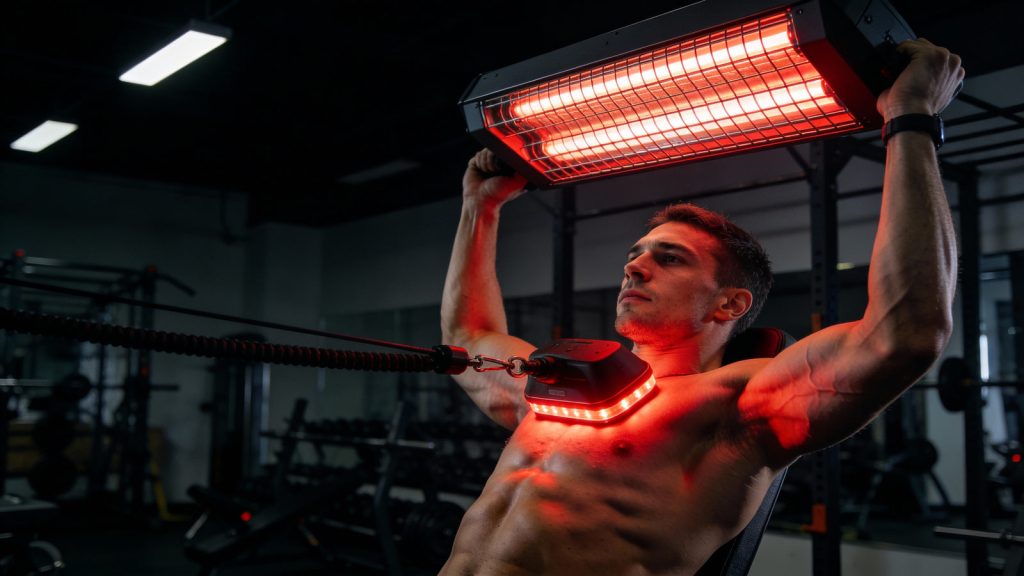
- LED panel: Large treatment area, typically 300-1500 LEDs, suitable for clinic use. Requires precise distance control and often a stand or mount.
- LED bed or dome: Full-scalp coverage with consistent distance, but high upfront cost and large footprint. Common in professional settings.
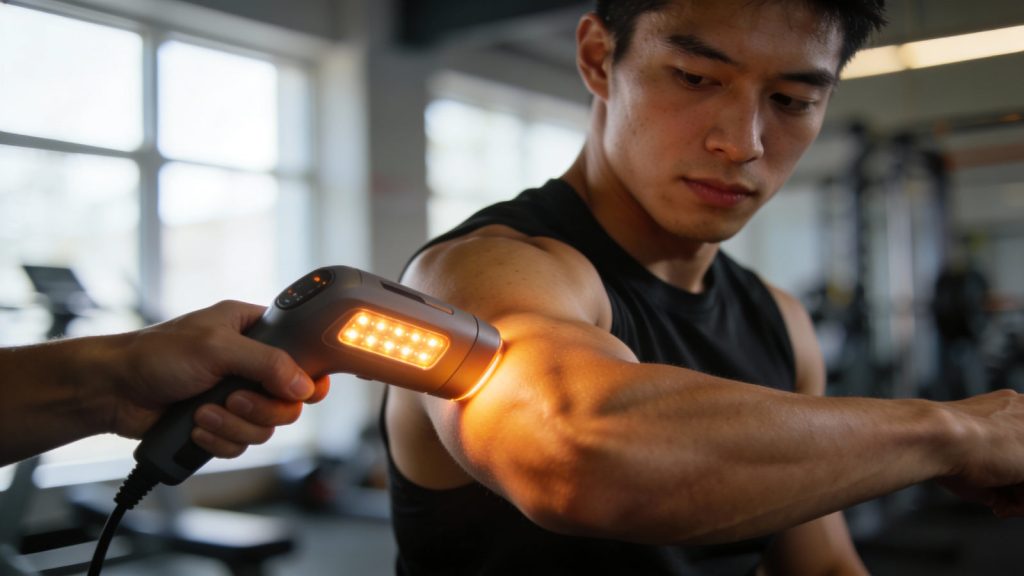
- Handheld wand: Low cost and portable, but small spot size means longer treatment times and inconsistent coverage.
- Wearable cap: Convenient for home use, but often low irradiance due to small battery and heat constraints. Check the actual mW/cm2 at the scalp, not the total LED count.
For importers and distributors, the panel and cap segments are the most active. Panel MOQs typically start at 50-100 units with lead times of 30-45 days, while caps may start at 200-500 units. Clinic owners should prioritize panels or beds with adjustable height and documented irradiance maps.
Factory Certifications and Sourcing Questions
When sourcing red light therapy devices, factory certifications such as CE, RoHS, ISO 9001, and ISO 13485 indicate that the manufacturer follows recognized quality and safety management systems. These are not product efficacy approvals, but they do reduce the risk of electrical faults, poor soldering, and inconsistent LED binning.
Ask the supplier for the following before placing an order:
- LED bin and wavelength tolerance: request the binning report for the specific reel used in production.
- Driver type: constant-current drivers are preferred over constant-voltage for stable output and longer LED life.
- Irradiance test report: measured with a calibrated spectrometer or power meter at defined distances.
- Thermal test surface temperature after 30 minutes of continuous operation at maximum power.
- OEM/ODM capability: can they customize wavelength ratio, housing, logo, and packaging?
Typical price tiers for professional panels range from $80 to $250 per unit at MOQ, depending on LED count, driver quality, and housing material. A panel with 300 dual-chip LEDs, constant-current drivers, and a CE-marked power supply should not cost less than $60 at factory gate; if it does, the LEDs are likely unbinned or the drivers are undersized.
Safety and Maintenance Considerations
Red light therapy devices are generally considered low-risk when used as directed, but they are not without hazards. The main risks are eye exposure, thermal burns from prolonged contact, and electrical faults in poorly built units. Look for devices with an automatic shutoff timer, over-temperature protection, and a grounded power supply.
For clinic owners, a maintenance schedule is essential. LEDs degrade over time, typically losing 10-20% of output after 10,000-20,000 hours of use. Ask the supplier for the L70 lifetime rating, which is the number of hours until output drops to 70% of initial. A reputable manufacturer will provide this in the datasheet.
FAQ: Does Red Light Therapy Work for Hair Loss?
What wavelength is best for hair loss support?
Most studies use 630-660 nm red or 810-850 nm near-infrared, or a combination. There is no consensus on a single best wavelength, but devices outside these bands have little supporting evidence.
How much irradiance do I need?
Aim for 10-30 mW/cm2 at the treatment distance. Below 3 mW/cm2 is unlikely to produce a photobiomodulation effect, and above 50 mW/cm2 may cause thermal discomfort.
How long does it take to see results?
Clinical trials typically run 12-26 weeks with 3-5 sessions per week. Some users report visible changes earlier, but there is no guarantee of any result for a given individual. Confirm any treatment plan with a clinician.
Can I use a red light therapy panel for other purposes?
Yes, many panels are marketed for general wellness and skin support. However, the irradiance and dose parameters for hair loss may differ from those for other applications, so check the device’s intended use and adjust distance and time accordingly.
What to Do Next
If you are evaluating red light therapy devices for hair loss support, start by defining your use case: clinic, home, or resale. Then shortlist devices that state wavelength, irradiance at a defined distance, and session dose in their specifications. Request the binning report, driver type, and thermal test data before committing to a sample order.
For importers and distributors, the key is to separate factory quality from marketing claims. A device with CE, RoHS, ISO 9001, and ISO 13485 certifications from a factory that can provide full documentation is a safer bet than one with a slick website and no technical data. Ask for a sample, measure the irradiance yourself if possible, and test the unit for at least 30 minutes at maximum power to check for overheating or flicker.
Finally, remember that red light therapy is not a substitute for professional medical advice. Anyone considering it for hair loss should confirm with a clinician, especially if they have an underlying condition or are taking medication.
Post time: 11-23-26