


How often should you do red light therapy? The answer is not a single number. It depends on irradiance, wavelength, session length, device type and your own tolerance. This article gives you a practical framework for setting a schedule, based on the widely used dose range of 3-50 mW/cm2 and 3-20 J/cm2 per session.
Why Frequency Matters More Than Total Time
Photobiomodulation follows a biphasic dose response. Too little energy produces no measurable effect, while too much can suppress the very cellular activity you are trying to support. Frequency controls how often you cross that useful window.
A device delivering 10 mW/cm2 for 10 minutes gives 6 J/cm2. A device delivering 50 mW/cm2 for the same 10 minutes gives 30 J/cm2, which is above the commonly cited upper limit for a single session. The same schedule can be reasonable on one panel and excessive on another.
Most manufacturers and clinical protocols settle on 3-5 sessions per week for whole-body panels, with rest days between sessions. Handheld devices with lower irradiance are often used 5-7 times per week on smaller areas. The key is to match frequency to the dose per session, not to copy a schedule blindly.
How Often Should You Do Red Light Therapy: The Core Ranges
For a panel emitting 20-50 mW/cm2 at the skin surface, 3-4 sessions per week is a common starting point. Each session lasts 5-10 minutes per treatment area, giving roughly 6-20 J/cm2. This schedule leaves at least one rest day between exposures, which many users find reduces the chance of feeling overstimulated.
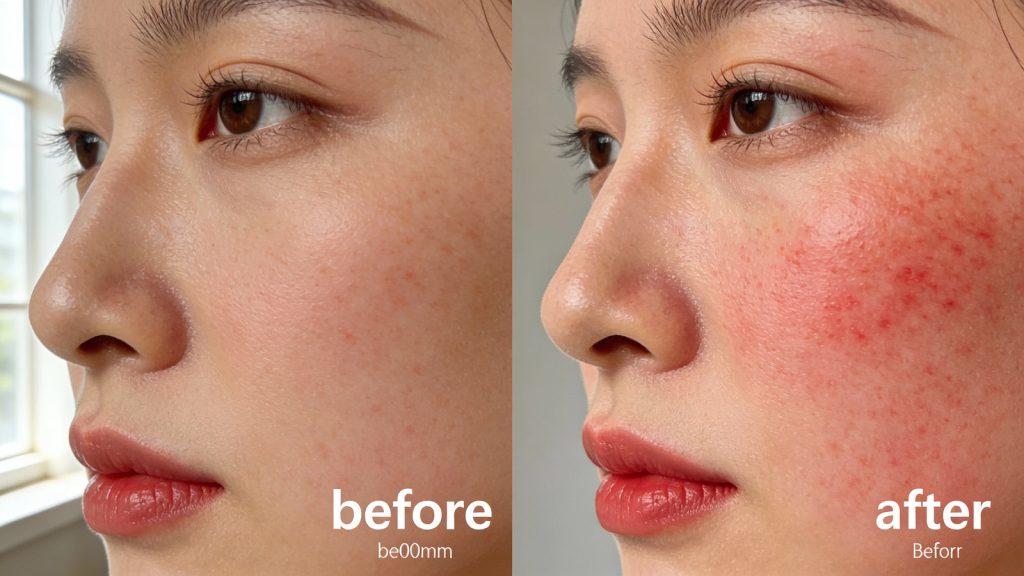
For a lower-power device emitting 3-10 mW/cm2, daily use is often tolerated. A 10-minute session at 5 mW/cm2 delivers only 3 J/cm2, so the cumulative weekly dose remains moderate. Handheld units and small pads fall into this category.
For whole-body beds or large panels used in a clinic, 2-3 sessions per week is a conservative professional schedule. These devices often reach 30-50 mW/cm2, and a 15-minute full-body session can deliver 27-45 J/cm2. Spacing sessions by 48 hours is a common rule of thumb.
| Device type | Typical irradiance | Common frequency | Consequence for the buyer |
|---|---|---|---|
| Low-power handheld | 3-10 mW/cm2 | 5-7 sessions/week | Requires daily commitment; low dose per session is forgiving. |
| Mid-size panel | 10-30 mW/cm2 | 3-5 sessions/week | Flexible sweet spot; check actual measured irradiance at target distance. |
| High-power panel or bed | 30-50 mW/cm2 | 2-3 sessions/week | Higher upfront cost but fewer sessions needed; thermal comfort becomes a factor. |
| Clinic-grade full-body bed | 40-50 mW/cm2 | 2 sessions/week | Requires trained operator; session time must be strictly controlled. |
These ranges are starting points, not prescriptions. A user who feels tired or headachy after sessions should reduce frequency or shorten sessions. A user who notices no change after 4-6 weeks may increase frequency within the safe dose window.
Reading the Spec Sheet: Irradiance and Dose
Suppliers often quote irradiance at the LED surface, not at the skin. A panel rated at 100 mW/cm2 at the diode may deliver only 30 mW/cm2 at 15 cm distance. Always ask for the measurement distance and the instrument used.
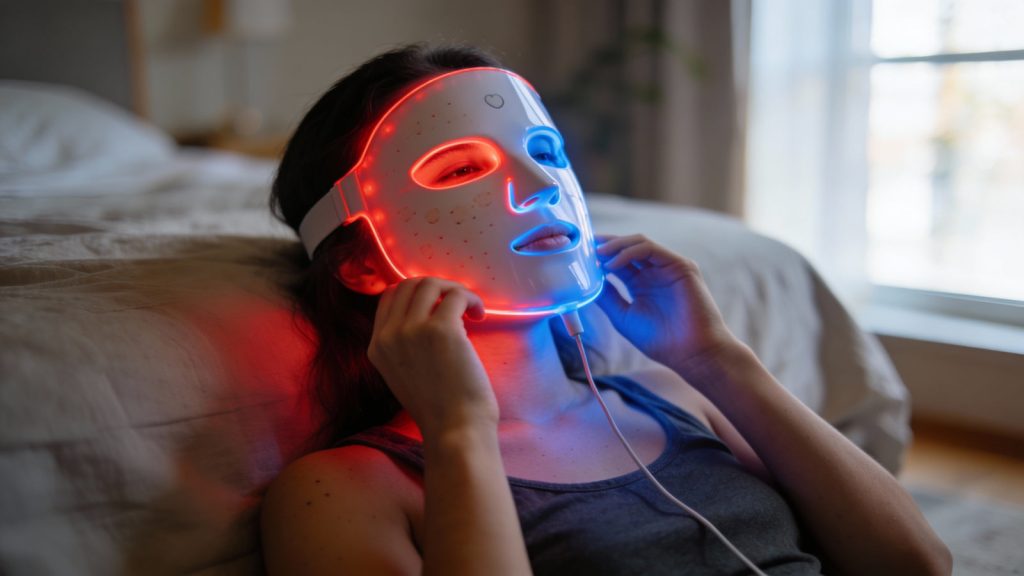
Look for these three lines on a spec sheet:
- Irradiance in mW/cm2 at a stated distance, usually 10 cm or 15 cm.
- Wavelength tolerance, such as ±10 nm around 660 nm or 850 nm.
- Beam angle, which affects how quickly irradiance drops with distance.
A panel with a 30-degree beam angle concentrates energy in a smaller area, so the measured irradiance at 15 cm may be higher than a 60-degree panel with the same total output. This changes the effective dose and therefore the safe frequency.
For importers and distributors, request a third-party irradiance map, not just a single center-point reading. A map showing 20% variation across the treatment area means some zones receive more energy, which can lead to uneven dosing if the user does not move during the session.
Wavelength Bands and Their Effect on Scheduling
Red light at 630-660 nm is absorbed mainly in the skin and superficial tissue. Near-infrared at 810-850 nm penetrates deeper, into muscle and connective tissue. Many devices combine both bands, but the ratio matters.

A panel with 50% red and 50% near-infrared LEDs delivers a balanced dose. A panel with 80% near-infrared may feel warm and require shorter sessions, because near-infrared energy is converted to heat more readily. Users who feel overheated should reduce session length before reducing frequency.
For professional buyers, ask the supplier for the exact LED chip bin and wavelength tolerance. A bin of 660 nm ±5 nm is tighter than ±10 nm and gives more predictable dosing. Loose bins can shift the effective wavelength, which changes penetration depth and therefore the biological response.
Session Length, Rest Days and the Biphasic Curve
The biphasic dose response means that a small dose can stimulate, a moderate dose can maintain, and a large dose can inhibit. This is why doubling your session time does not double the benefit. It can push you past the useful range.
A practical rule of thumb: if you feel warm, tired, or headachy after a session, the dose was too high for that day. Reduce session length by 30% before you reduce frequency.
Rest days are not just about avoiding overstimulation. They also let you observe how your body responds. A schedule of Monday, Wednesday, Friday gives two 48-hour gaps and one 72-hour gap each week. Many users find this pattern easy to maintain and gentle enough for long-term use.
For clinic owners, rest days also reduce the risk of client complaints about feeling overstimulated. A client who has a negative first session may not return. Starting with 2 sessions in the first week, then increasing to 3, is a cautious professional approach.
Sourcing Questions That Affect Frequency Decisions
When you evaluate a red light therapy device for import or distribution, the following questions will determine what schedule you can honestly recommend to end users:
- What is the measured irradiance at 15 cm, and was it tested with a calibrated spectrometer or a solar power meter?
- What is the LED bin and wavelength tolerance for both red and near-infrared channels?
- Does the driver deliver constant current or constant voltage? Constant-current drivers keep irradiance stable over the session, which makes dosing predictable.
- What is the thermal design? Panels that overheat will throttle output after 10-15 minutes, silently reducing the dose mid-session.
- What factory certifications does the manufacturer hold? CE, RoHS, ISO 9001 and ISO 13485 are common for professional equipment.
Typical OEM/ODM pricing for a mid-size panel starts around USD 80-150 per unit at 500-piece MOQ, with lead times of 30-45 days. Handheld devices run USD 15-40 at 1,000-piece MOQ. These are general market ranges, not quotations, and they vary with LED quality, housing material and driver type.
FAQ: Red Light Therapy Frequency
Can I use red light therapy every day?
Yes, if the device delivers low irradiance, typically 3-10 mW/cm2, and sessions are short. At 5 mW/cm2 for 10 minutes, the daily dose is only 3 J/cm2. For high-power panels above 30 mW/cm2, daily use is more likely to exceed the commonly cited safe window of 3-20 J/cm2 per session.
How long should a red light therapy session last?
Most protocols use 5-15 minutes per treatment area. The exact length depends on irradiance: at 20 mW/cm2, 10 minutes gives 12 J/cm2. At 50 mW/cm2, the same 10 minutes gives 30 J/cm2, which is above the typical upper limit. Always calculate dose as irradiance multiplied by time in seconds, divided by 1000.
What happens if I use red light therapy too often?
You may cross the biphasic peak and experience a reduced response, or simply feel warm and fatigued. The effect is not permanent, but it wastes sessions and can discourage consistent use. Reducing frequency or session length usually restores the desired response within a week or two.
Should I take rest days from red light therapy?
For most users, yes. Rest days reduce the chance of overstimulation and give you a clear baseline to judge the effect. A Monday-Wednesday-Friday schedule is a practical default for panels. If you use a low-power handheld, you may not need rest days, but a weekly break of one day is still reasonable.
What to Do Next
Start by measuring your device’s actual irradiance at the distance you use it. If you do not have a meter, ask the supplier for a third-party test report. Then calculate your per-session dose and choose a frequency that keeps you within 3-20 J/cm2 per session for most applications.
For importers and distributors, the frequency question is really a product specification question. A device with stable constant-current output, tight wavelength bins and honest irradiance maps will support a clear, defensible usage schedule. A device with loose specs will force you to hedge your recommendations.
If you are evaluating suppliers, request irradiance maps, LED bin certificates, driver specifications and factory certifications such as CE, RoHS and ISO 13485. These documents tell you more about real-world dosing than any marketing claim. Confirm any health-related use with a qualified clinician before starting a routine.
Post time: 11-25-26