


How to use red light therapy correctly depends less on the timer and more on the device itself. This article answers the concrete question buyers and clinic owners face: which wavelengths, irradiance levels, session doses, and build-quality checks actually matter. It covers panel versus bed versus handheld choices, measurement methods, supplier questions, and maintenance routines.
How to Use Red Light Therapy: Core Operating Parameters
Red light therapy devices are typically operated at close range, with the user positioned 15 to 30 cm from the LED surface for panels, or lying directly on a bed. The two most widely used bands are 630-660 nm red and 810-850 nm near-infrared. A session commonly lasts 10 to 20 minutes, delivering roughly 3-20 J/cm2 at the skin surface.
Most manufacturers specify irradiance in mW/cm2 at a given distance, usually 10 cm or 15 cm. A panel rated at 100 mW/cm2 at 10 cm may drop to 40 mW/cm2 at 20 cm. Buyers should ask for an irradiance map, not a single peak number, because LED arrays have hot spots near the center and falloff at the edges.
Rule of thumb: if a supplier cannot provide an irradiance map with distance and uniformity data, the device is not ready for professional use, regardless of the wattage printed on the box.
Wavelength Bands and Why Tolerance Matters
Red light therapy devices use LEDs with a dominant wavelength and a tolerance, often ±5 nm or ±10 nm. A 660 nm LED with ±10 nm tolerance can emit anywhere from 650 to 670 nm. Tight binning reduces this spread and keeps the output within the intended band.
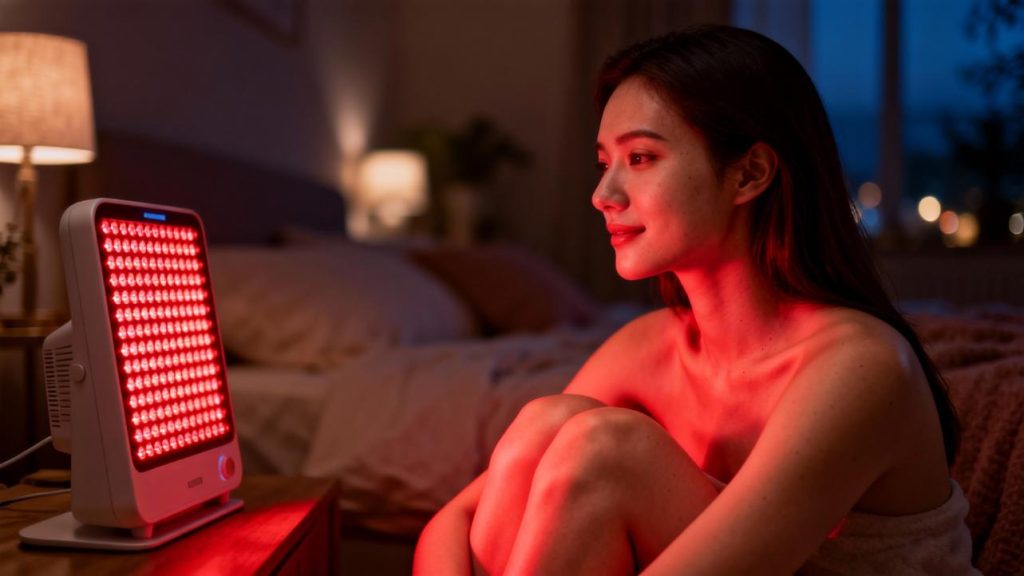
Near-infrared LEDs at 850 nm are invisible to the eye, so users cannot judge output by brightness alone. A device may appear dim but still deliver high near-infrared irradiance. Buyers should request spectral test reports for each batch, not just the datasheet nominal value.
Some panels mix red and near-infrared LEDs in a 1:1 or 2:1 ratio. The ratio affects the delivered dose in each band. A 50/50 mix is common, but some suppliers offer custom ratios for OEM orders.
Irradiance, Dose, and Measurement Pitfalls
Irradiance is measured in mW/cm2, and dose is irradiance multiplied by time, expressed in J/cm2. A session of 50 mW/cm2 for 400 seconds delivers 20 J/cm2. A session of 25 mW/cm2 for 800 seconds delivers the same dose but with lower peak power.
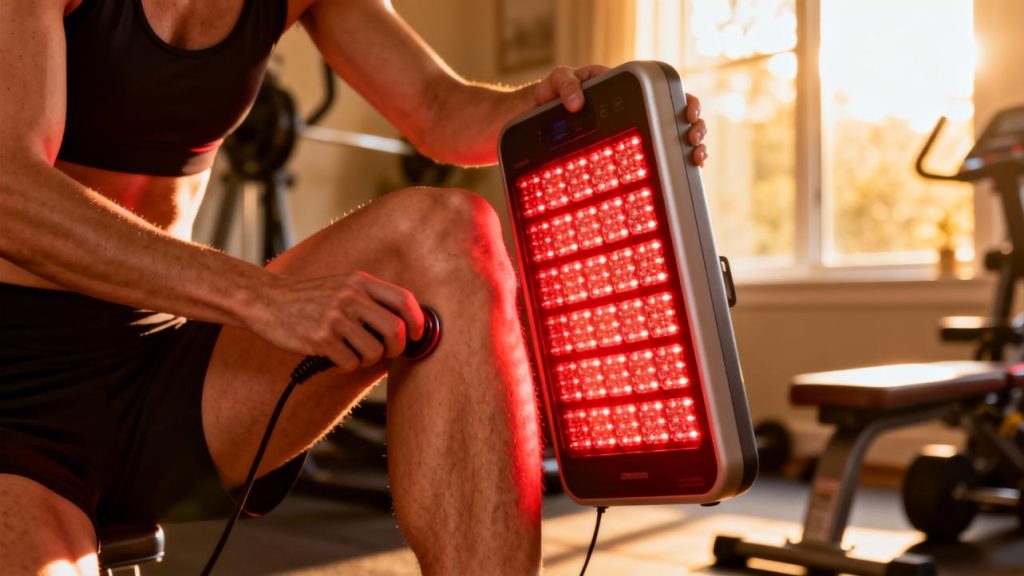
Solar power meters are not suitable for measuring LED irradiance. They are calibrated for broadband sunlight and read incorrectly for narrowband red or near-infrared LEDs. A proper quantum sensor or spectroradiometer is required for accurate verification.
Buyers should ask for the measurement distance, the instrument used, and the uniformity across the treatment area. A single center-point reading can overstate the average irradiance by 30% or more on a large panel.
Panel, Bed, and Handheld: Choosing the Right Form Factor
Panels are the most common choice for clinics and distributors because they cover a large area and can be mounted on stands or walls. Beds offer full-body coverage but require more floor space and a higher initial investment. Handheld devices are portable but have small treatment areas and lower total power.
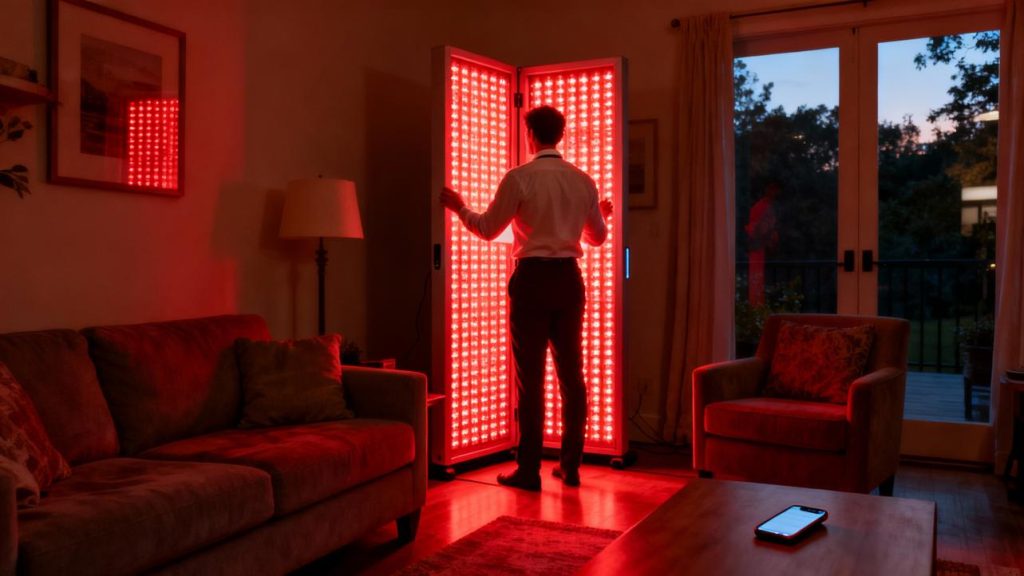
The table below compares the three form factors on the criteria that matter for sourcing and operation.
| Form factor | Typical irradiance at 15 cm | Coverage area | Key sourcing consequence |
|---|---|---|---|
| LED panel | 30-80 mW/cm2 | 40 x 20 cm to 60 x 30 cm | Check fan noise and driver reliability; panels run for hours daily in clinics. |
| LED bed | 20-50 mW/cm2 at surface | Full body | Requires CE and RoHS documentation; shipping and installation costs are higher. |
| Handheld | 50-100 mW/cm2 at 5 cm | 5-10 cm diameter | Battery life and heat buildup limit session length; verify runtime at full power. |
For importers, panels offer the best balance of shipping cost, duty classification, and after-sales service. Beds are often sold as complete systems with installation, which changes the supplier relationship from product sale to project sale.
Thermal Design and Constant-Current Drivers
LED output drops as junction temperature rises. A panel without adequate heat sinking will lose 10-20% of its irradiance after 30 minutes of continuous use. Look for aluminum PCB substrates, finned heatsinks, and active cooling fans.
Constant-current drivers are essential for stable output. Cheap constant-voltage drivers allow current to vary with temperature and LED forward voltage, causing uneven brightness and accelerated aging. Ask the supplier for the driver brand, current per string, and expected lifetime in hours.
Thermal failure is the most common field issue reported by distributors. A panel that overheats will shut down or reduce output, leading to user complaints and returns. Request a thermal test report showing surface temperature after 60 minutes at full power.
Factory Certifications and Sourcing Questions
Professional buyers should verify factory certifications such as CE, RoHS, ISO 9001, and ISO 13485. These are factory and system certificates, not product approvals, and they indicate the manufacturer follows quality management and safety standards. Ask for copies of the certificates and verify the scope covers LED therapy devices.
Typical MOQs for OEM panels range from 50 to 200 units, with lead times of 30 to 60 days after order confirmation. Custom wavelength ratios, housing colors, and logo printing usually require an additional 2 to 4 weeks. Price tiers depend on LED bin quality, driver type, and housing material.
Questions to ask a supplier before ordering:
- What is the irradiance at 15 cm, measured with which instrument, and what is the uniformity across the panel?
- What is the LED bin tolerance for 660 nm and 850 nm, and can you provide spectral test reports for the current batch?
- What driver topology is used, and what is the expected lifetime at 12 hours per day?
- What are the MOQ, lead time, and warranty terms for OEM orders?
FAQ: How to Use Red Light Therapy Devices
What distance should I use for a red light therapy panel?
Most panels are designed for use at 15 to 30 cm from the skin. The irradiance drops significantly with distance, so a panel rated at 100 mW/cm2 at 10 cm may deliver only 30 mW/cm2 at 30 cm. Check the supplier’s irradiance map for the exact values.
How long should a session last?
A typical session lasts 10 to 20 minutes, delivering roughly 3-20 J/cm2. The exact time depends on the device’s irradiance at the chosen distance. Calculate time as dose divided by irradiance, then adjust based on user comfort and the manufacturer’s guidance.
Can I use a solar power meter to measure irradiance?
No. Solar power meters are calibrated for broadband sunlight and give inaccurate readings for narrowband red or near-infrared LEDs. Use a quantum sensor or spectroradiometer designed for the specific wavelength range.
What is the difference between red and near-infrared LEDs?
Red LEDs emit visible light in the 630-660 nm range, while near-infrared LEDs emit invisible light in the 810-850 nm range. Near-infrared penetrates deeper into tissue, but both are commonly used together in panels. The ratio affects the delivered dose in each band.
What to Check Before You Buy or Recommend
How to use red light therapy correctly starts with verifying the device’s output, not just reading the marketing copy. Request an irradiance map, spectral test report, and thermal test data before committing to a purchase. These documents reveal whether the panel will perform consistently over months of daily use.
For importers and distributors, the supplier’s ability to provide these reports is a stronger signal than the wattage or LED count. A manufacturer that tests and documents its output is more likely to deliver consistent batches and honor warranty claims. Ask for a sample unit, measure it yourself, and compare it against the datasheet before placing a bulk order.
Post time: 11-25-26