


Infra red light therapy devices vary widely in build quality, measured output, and regulatory documentation. This article answers the concrete question a buyer should ask before committing to a container or a clinic install: which wavelengths, irradiance levels, driver designs, and factory certifications actually matter, and which spec-sheet lines hide a short service life.
Wavelength Bands That Matter in Infra Red Light Therapy
Most professional panels combine red and near-infrared emitters. The red band is commonly specified as 630-660 nm, and the near-infrared band as 810-850 nm. A panel that lists only “660 nm and 850 nm” without a tolerance tells you little; a credible supplier states the binning range, typically ±5 nm or ±10 nm.
The choice between 630 nm and 660 nm is not cosmetic. 630 nm penetrates less but is often cheaper to source in high volume, while 660 nm is the more common red peak in clinical photobiomodulation literature. For near-infrared, 810 nm and 830 nm are frequent in research, while 850 nm is popular because high-power 850 nm LEDs are inexpensive and widely available.
Ask the supplier for the LED manufacturer and bin code. Cree, Osram, Seoul Semiconductor and Epistar are common sources, and the bin code tells you the actual dominant wavelength spread. A panel assembled from mixed bins may still look bright pink, but it will not deliver a consistent dose across the treatment area.
Irradiance: The Number That Separates Real Panels from LED Strips
Irradiance is the power density at the treatment surface, expressed in mW/cm2. For whole-body or targeted panels, the widely used working range is roughly 3-50 mW/cm2 at the stated distance, usually 6 inches or 15 cm. A higher number is not automatically better; it changes the session time needed to reach a given dose in J/cm2.
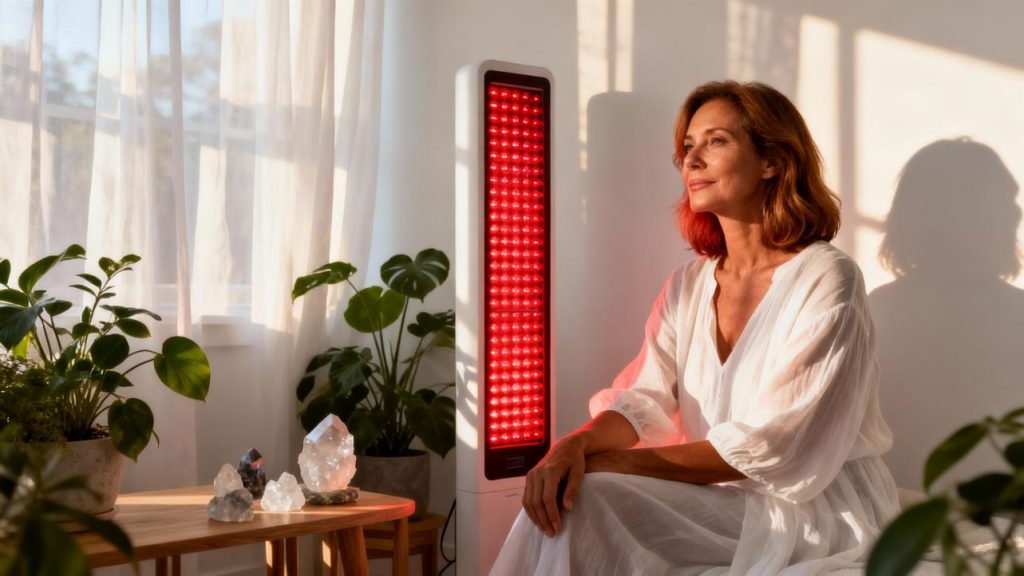
A common failure mode is a supplier quoting irradiance at the LED surface, not at the user plane. Surface readings can be 3-5 times higher than the value at 15 cm. Demand a test report that states the measuring instrument, the distance, and whether the reading is peak or average across the panel face.
Use a calibrated solar power meter or a spectrometer with a cosine corrector to verify a sample. If the measured value is more than 20% below the spec sheet at the same distance, reject the batch or renegotiate. This single check catches many low-quality panels before they reach your warehouse.
Driver, Thermal Design and the 10,000-Hour Question
LED emitters are only as stable as the current driving them. Look for constant-current drivers, not constant-voltage strips with resistors, because constant current holds the output steady as the LEDs heat up. A panel that dims by 15% after 30 minutes is not delivering the dose the user expects.
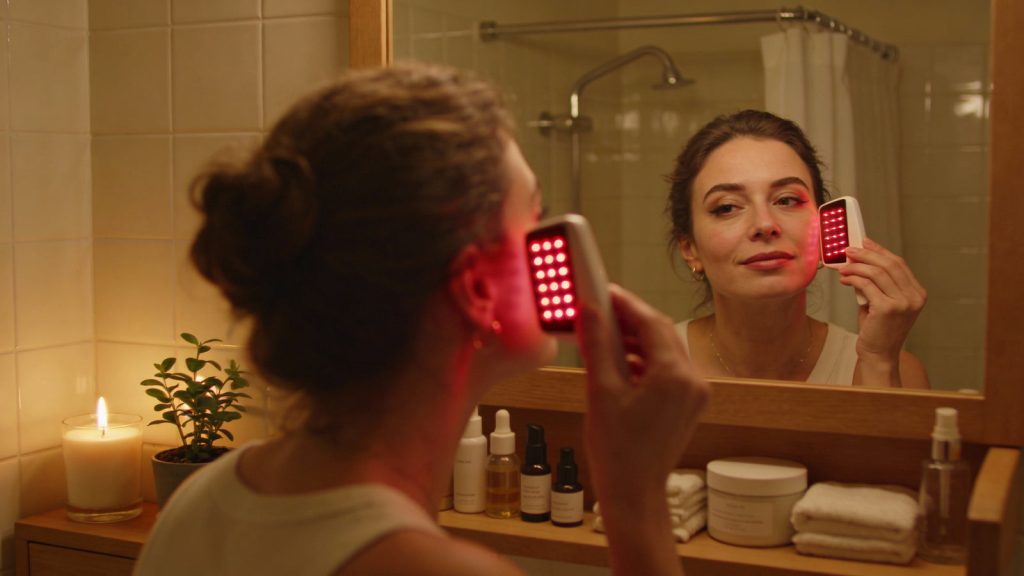
Thermal design is the next filter. Aluminum PCB, finned heatsinks, and active cooling fans are the standard combination for panels above 300 W. If a supplier cannot name the junction temperature of the LEDs at full power, or the fan bearing type and expected life, treat the panel as a short-life product.
Ask for the LM-80 test report for the LED package and the calculated L70 lifetime. A credible panel should state L70 of 30,000 to 50,000 hours, meaning output has dropped to 70% of initial value. Without this, a 100,000-hour claim is marketing, not engineering.
Factory Certifications and the Paper Trail You Actually Need
For import into the EU, CE marking under the Low Voltage Directive and EMC Directive is the baseline, supported by a Declaration of Conformity. RoHS compliance is expected for lead-free solder and restricted substances. For medical or wellness equipment, ISO 13485 at the factory indicates a quality management system designed for medical devices, while ISO 9001 is a general manufacturing certificate.

Request the certificate numbers and verify them on the issuing body’s database. A surprising number of suppliers show a CE logo but cannot produce a test report from a recognized lab such as TUV, SGS or Intertek. If the certificate is a scanned image without a traceable number, walk away.
Photobiological safety is another check. The relevant standard is IEC 62471, which classifies the device into risk groups. A panel intended for close-range use should be tested and classified, usually as Exempt or Risk Group 1 at the stated distance. Ask for the test report, not just a sentence on the datasheet.
Panel, Bed, Handheld: Matching Form Factor to the Buyer’s Market
The three common form factors serve different channels. A full-body panel of 300 to 1500 W suits clinics and wellness centers; a half-body or targeted panel of 100 to 300 W fits home users and small studios; a handheld device of 5 to 30 W is an entry-level retail product with lower margin but higher volume.
Panel size drives shipping class and landed cost. A 60 x 30 cm panel may ship by air courier, while a 180 x 60 cm full-body panel often requires sea freight and a wooden crate. Calculate the volumetric weight before quoting a landed price to a distributor.
Beds are the highest-ticket category, typically 600 to 3000 W, and demand the most after-sales support. If you are new to the category, start with panels and add beds only after you have a local service partner who can replace drivers and LED boards.
OEM/ODM Terms, MOQ and the Real Cost Structure
Most Chinese and Southeast Asian manufacturers quote an MOQ of 10 to 50 units for standard panels, with OEM branding at 50 to 100 units. Custom wavelength ratios, housing colors, or control software usually push the MOQ to 200-500 units. Lead time for a standard order is 15 to 30 days after deposit; custom tooling adds 30 to 45 days.
Price tiers for a 300 W dual-chip panel (660 nm + 850 nm) typically range from $180 to $350 FOB per unit at 100-unit quantity, depending on LED brand, driver quality, and housing material. A $120 panel at the same spec almost always uses unbranded LEDs, a constant-voltage driver, or a plastic housing that warps under heat.
Negotiate on the bill of materials, not the final price. Ask for the LED brand, driver brand, fan brand, and PCB thickness. A supplier who can name all four and show photos of the assembly line is more likely to deliver consistent quality over repeat orders.
Common Failure Modes and How to Catch Them Before Shipping
- LED color shift: poor thermal management raises junction temperature and shifts the dominant wavelength by 5-10 nm within months. Verify with a spectrometer on a sample after a 2-hour burn-in.
- Driver whine or flicker: cheap constant-current drivers audibly whine and may flicker at low dimming levels. Check at 10%, 50% and 100% output with a phone camera in slow motion.
- Uneven irradiance: edge LEDs run hotter and dim faster, creating a hot spot in the center. Measure 9 points across the panel face and require a uniformity of ±15% or better.
- Fan failure: sleeve-bearing fans fail at 5,000-10,000 hours, while dual-ball-bearing fans last 30,000-50,000 hours. Specify the bearing type in the purchase order.
- Housing warping: ABS plastic housings deform above 70°C. For panels over 500 W, specify aluminum alloy or steel frame with a polycarbonate diffuser.
If a supplier cannot produce a measured irradiance map, a driver datasheet, and a CE test report from a named lab, the panel is not ready for your market, no matter how good the price looks.
Comparing Supplier Types: What You Trade at Each Price Point
| Supplier type | Typical MOQ | Price tier (300 W panel) | Consequence for the buyer |
|---|---|---|---|
| Trading company | 1-10 units | $220-$350 FOB | Fast sampling but no control over BOM; quality varies between orders. |
| OEM factory, standard models | 50-100 units | $180-$280 FOB | Consistent BOM and better margin, but limited customization and longer lead time. |
| ODM factory, custom design | 200-500 units | $200-$350 FOB plus tooling | Full control of wavelengths, housing and software; requires upfront NRE and 60-90 day timeline. |
| European or US assembler | 10-50 units | $400-$700 FOB | Shorter lead time and local support, but 2-3x landed cost for the same LED count. |
FAQ: Infra Red Light Therapy Device Sourcing
What irradiance should a clinic panel have at the user plane?
Aim for 20-50 mW/cm2 at a stated distance of 15 cm for a full-body panel. This allows a 10 J/cm2 session in roughly 4-8 minutes. Verify with your own meter, not the supplier’s photo.
Is a higher LED count always better?
No. A panel with 600 low-power LEDs can deliver less useful irradiance than one with 300 high-power LEDs on a proper heatsink. Compare total optical output in watts and the irradiance map, not the LED count.
What certifications should I require for import into the EU?
Require CE marking with a Declaration of Conformity, RoHS compliance, and ideally IEC 62471 photobiological safety classification. Ask for the test lab name and certificate number, and verify them independently.
How do I avoid a batch that dims after six months?
Specify constant-current drivers from a named brand, dual-ball-bearing fans, and an aluminum PCB. Request an LM-80 report for the LEDs and run a 72-hour burn-in test on a sample before mass production.
What to Do Next with Infra Red Light Therapy Sourcing
Before you place an order, build a one-page technical requirement sheet: wavelength bins (±5 nm), irradiance at 15 cm (state the minimum), driver type (constant current), fan bearing (dual ball), housing material (aluminum or steel), and required certificates (CE, RoHS, IEC 62471 report). Send this to three suppliers and compare their responses line by line.
Request a sample, measure the irradiance map yourself, and run the panel for 72 hours at full power. If it passes, negotiate the OEM branding terms and lock the BOM in the purchase contract. This process takes two to four weeks and separates a durable product line from a costly return wave.
Post time: 11-25-26