


Medical grade red light therapy devices differ from consumer panels in measurable ways: tighter wavelength bins, higher sustained irradiance, constant-current drivers, and documented factory certifications. This article answers the practical question: which specifications actually separate a professional device from a commodity panel, and how should a buyer verify them before committing to a purchase order?
What Makes a Device Medical Grade Red Light Therapy Equipment?
The term “medical grade” is not a regulated label, so buyers must rely on engineering evidence rather than marketing copy. In practice, a medical grade red light therapy device should show three things: a wavelength tolerance of ±5 nm or better around the nominal peak, irradiance that holds within 10% across the treatment area at a stated distance, and a driver design that prevents current overshoot as LED junction temperature rises.
Ask the supplier for a spectral power distribution (SPD) report from an integrating sphere, not a handheld spectrometer snapshot. A credible report lists peak wavelength, full width at half maximum (FWHM), and output power per nm. Panels marketed for clinical use typically specify peak wavelengths of 630–660 nm for red and 810–850 nm for near-infrared, with FWHM under 30 nm.
Also check the LED binning policy. Reputable manufacturers source LEDs in narrow bins—for example, 660 nm ±5 nm—and reject parts that drift outside that window. Commodity panels often mix bins to reduce cost, which broadens the combined spectrum and changes the dose per session.
Wavelength Bands and the Consequences of Tolerance Drift
Wavelength choice is the first specification to lock down because it determines penetration depth and chromophore absorption. Red light around 630–660 nm is absorbed mainly in the first few millimeters of tissue, while near-infrared at 810–850 nm reaches deeper structures. A device that claims both bands should list them separately with individual irradiance values, not a combined total.

Tolerance drift matters more than peak wavelength. A panel specified at 660 nm ±10 nm can deliver light from 650 to 670 nm, which shifts the absorption curve and changes the effective dose. For clinical consistency, specify ±5 nm or tighter for the dominant wavelength, and require a bin report for each production batch.
| Specification | Commodity Panel | Medical Grade Panel | Buyer Consequence |
|---|---|---|---|
| Wavelength tolerance | ±10 nm or unspecified | ±5 nm or tighter | Tighter bins keep dose repeatable across units and batches |
| Irradiance at 15 cm | Often overstated; drops 30–50% at edges | Specified with uniformity map, ≤10% variance | Uniformity map lets you calculate real treatment area |
| Driver type | Constant voltage with resistors | Constant current per string, active thermal foldback | Constant current prevents LED overdrive and early lumen depreciation |
| Thermal design | Thin PCB, passive cooling only | Aluminum core PCB, heat sink, active cooling option | Lower junction temperature extends LED life and stabilizes output |
| Factory certifications | CE only, self-declared | CE, RoHS, ISO 9001, ISO 13485 available | ISO 13485 indicates a quality system suitable for medical device components |
Irradiance: How to Verify the Number That Matters
Irradiance, measured in mW/cm², is the most misquoted specification in red light therapy. Many suppliers list the maximum value at the LED surface, but a usable figure must state the distance—commonly 10 cm, 15 cm, or 30 cm—and the area over which the measurement was averaged. For a 60 cm × 30 cm panel, ask for a 9-point grid map at the intended working distance.
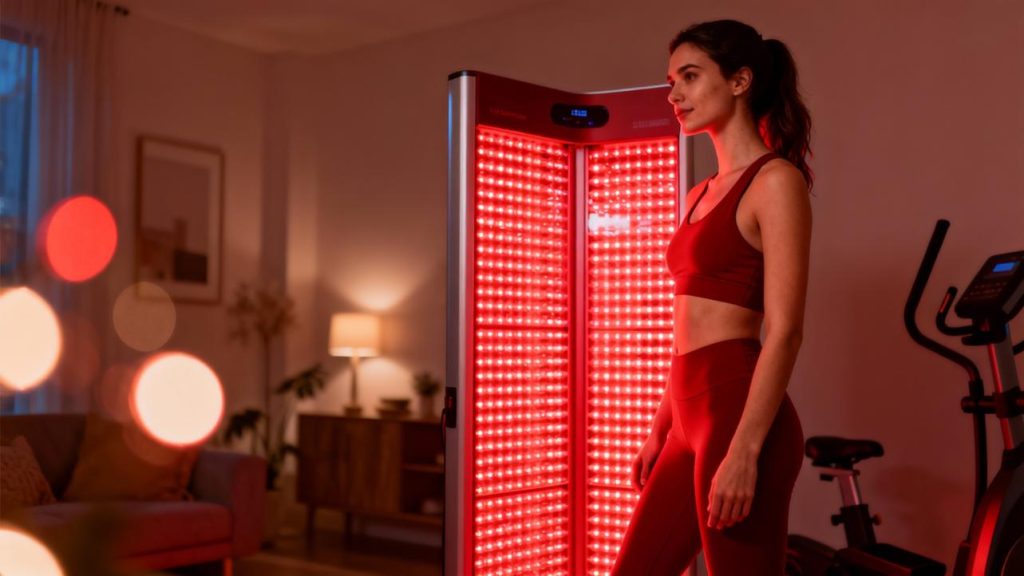
A medical grade panel should deliver roughly 30–50 mW/cm² at 15 cm across the central 80% of the panel face. If the edge value falls below 70% of the center value, the effective treatment area shrinks, and users must move the panel more often. Some suppliers provide a uniformity plot; if not, request one before placing a sample order.
Rule of thumb: never accept a single irradiance number without a distance and a measurement area. A panel that claims 100 mW/cm² at the LED surface may deliver only 20 mW/cm² at a 30 cm working distance.
Driver Topology and Thermal Design: The Hidden Failure Modes
LED output drops as junction temperature rises, and cheap drivers accelerate this problem. Constant-voltage designs with series resistors allow current to climb when the LEDs heat up, which increases power dissipation and shortens LED life. A medical grade device uses a constant-current driver per LED string, often with active thermal foldback that reduces current if the heat sink exceeds a set temperature—commonly 60–70°C.
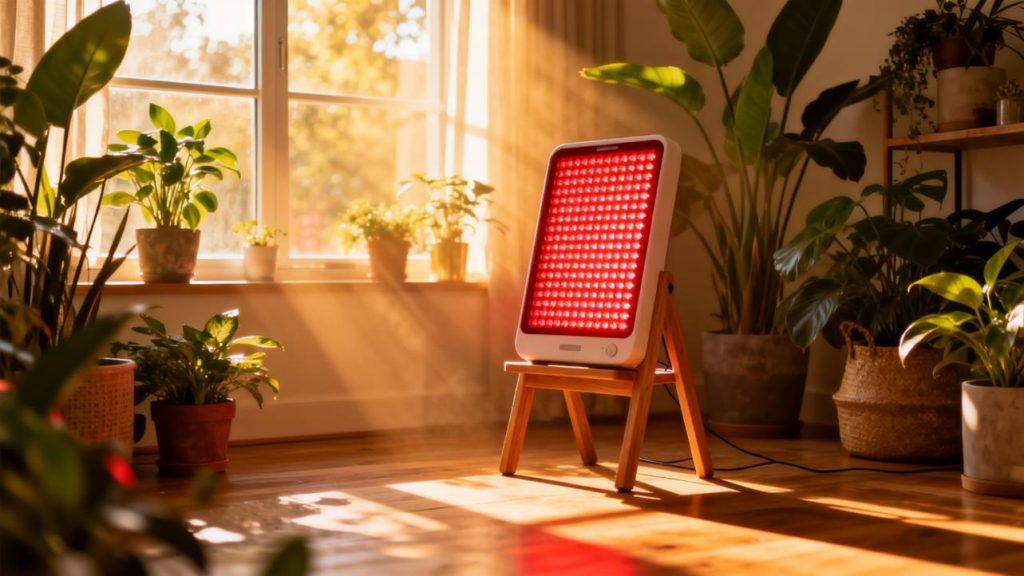
Thermal design is the second failure point. Panels with a thin FR4 PCB and no heat sink will show lumen depreciation of 10–20% within the first 1,000 hours. Look for an aluminum core PCB, a finned heat sink, and, for high-power panels above 300 W, active cooling fans with a tachometer signal so the control board can shut down if a fan fails.
Ask the supplier for an LM-80 report on the LEDs and a thermal simulation or measured case temperature at full power after 30 minutes. A credible manufacturer will provide both; a trader will not.
Factory Certifications and What They Actually Cover
CE marking alone is not enough for professional buyers. CE can be self-declared for low-voltage devices, and many commodity panels carry a CE mark without third-party testing. For medical grade red light therapy equipment, require at minimum CE with a test report from a notified body, RoHS compliance for lead-free soldering, and ISO 9001 for the factory quality system.
ISO 13485 is the key differentiator. This standard certifies the factory’s quality management system for medical device components, including traceability, risk management, and design control. A supplier with ISO 13485 can provide batch records, incoming inspection data, and change notifications—documents that matter for distributors selling into clinics.
Verify certificates directly. Ask for the certificate number, the issuing body, and the scope of registration. Many factories show expired certificates or certificates that cover only part of the production line. A five-minute check on the certifier’s public database prevents a costly sourcing mistake.
Panel, Bed, or Handheld: Matching Form Factor to Use Case
The device class determines the business model. Full-body panels and beds suit clinics that run multiple sessions per day, while handheld units fit home users and targeted applications. A panel in the 300–1,500 W range typically covers 60 cm × 30 cm to 180 cm × 60 cm, with a working distance of 15–30 cm. Beds deliver higher irradiance over a larger area but cost three to five times more and require dedicated space.
For importers, panels offer the best balance of shipping cost, duty classification, and after-sales simplicity. Handheld devices have lower unit value but higher return rates due to battery and connector failures. Beds carry the highest margin but also the highest freight and installation complexity.
- Panel: 60 cm × 30 cm to 180 cm × 60 cm, 300–1,500 W, 15–30 cm working distance, modular design for stacking or wall mounting.
- Bed: full-body coverage, 1,000–3,000 W, built-in cooling, fixed treatment distance, requires electrical installation.
- Handheld: 10–50 W, battery or AC adapter, single wavelength or dual wavelength, limited treatment area.
Sourcing Medical Grade Red Light Therapy Devices: MOQ, Lead Time, and Supplier Questions
Typical OEM/ODM minimum order quantities for medical grade panels start at 50–100 units for a standard design, with lead times of 30–45 days after deposit. Custom wavelength mixes, housing colors, or branding add 15–30 days and may raise the MOQ to 200–500 units. Price tiers generally fall into three bands: commodity panels at $150–$300 per unit, mid-grade panels with tighter bins and ISO 13485 at $400–$800, and full clinical systems with software and service contracts at $1,500–$4,000.
Before paying a deposit, ask the supplier these questions:
- Can you provide a spectral power distribution report for the exact LED bins used in production?
- What is the irradiance uniformity at 15 cm, and can you provide a 9-point grid map?
- Do you use constant-current drivers per string, and what is the thermal foldback set point?
- Is the factory certified to ISO 13485, and can you share the certificate number and scope?
- What is your warranty policy for LED lumen depreciation, and do you stock replacement driver boards?
A supplier that answers all five with documentation is worth a sample order. A supplier that answers with “trust me” or “we use the best LEDs” is not.
FAQ: Medical Grade Red Light Therapy Device Selection
What is the most important specification to verify first?
Wavelength tolerance. A panel that drifts more than ±5 nm from the nominal peak changes the absorption profile and makes dose comparisons between sessions unreliable. Request the LED bin report and an integrating sphere measurement before evaluating irradiance or build quality.
How much irradiance do I actually need for a clinic panel?
For a professional panel used at 15–30 cm, aim for 30–50 mW/cm² across the central treatment area. Higher values shorten session time but increase heat and LED stress. The uniformity map matters more than the peak number: a panel with 50 mW/cm² at center but 20 mW/cm² at the edges forces users to reposition constantly.
Is CE marking enough for a medical grade device?
No. CE can be self-declared for low-voltage devices, and many commodity panels carry a CE mark without third-party testing. Require CE with a notified body test report, RoHS compliance, and ISO 9001 at minimum. ISO 13485 indicates a quality system designed for medical device components and is the strongest signal for professional buyers.
What is a realistic MOQ and lead time for OEM panels?
Standard designs typically start at 50–100 units with a 30–45 day lead time after deposit. Custom wavelengths, branding, or housing changes raise the MOQ to 200–500 units and add 15–30 days. Mid-grade panels with tight bins and ISO 13485 usually fall in the $400–$800 per unit range at these quantities.
Conclusion: Specify Before You Source
Medical grade red light therapy equipment is defined by what you can measure, not by what the brochure promises. Lock down wavelength tolerance, irradiance uniformity, driver topology, and thermal design before comparing prices. A panel that fails any one of these checks will cost more in returns, warranty claims, and lost clinic trust than the savings justify.
When you are ready to source, start with a documented sample: SPD report, uniformity map, thermal test data, and factory certificates. Then place a small pilot order and measure the delivered units against the sample. That discipline separates professional buyers from those who learn the hard way.
Post time: 11-21-26