


Medical grade red light therapy devices are not a single product category but a set of engineering choices around wavelength, irradiance, thermal management, and build quality. This article answers the question importers, distributors, and clinic owners most often ask: how do you separate a durable clinical tool from a consumer panel that will drift out of spec within a year? We will examine the hardware decisions that determine device performance and the supplier questions that protect your investment.
What Makes a Device Medical Grade Red Light Therapy Equipment
The term medical grade is not defined by a single standard, so buyers must verify it through measurable specifications. Look for a stated wavelength tolerance of ±5 nm or tighter, an irradiance figure measured at a defined distance such as 6 inches or 15 cm, and a thermal design that keeps the LED junction temperature stable over a 20-minute session. A device that lists only total wattage without beam angle and distance is hiding the two variables that determine dose.
In practice, a medical grade red light therapy device should use a constant-current LED driver rather than a constant-voltage driver. Constant-current drivers hold each LED at the same forward current, which reduces wavelength drift and intensity variation across the panel. Ask the supplier whether the driver is integrated or external, because an external driver often runs cooler and is easier to replace in the field.
Wavelength Bands and Irradiance Ranges That Matter
Red light therapy devices typically operate in two bands: 630-660 nm red and 810-850 nm near-infrared. These ranges are widely used because they correspond to absorption peaks of cytochrome c oxidase, a mitochondrial enzyme involved in cellular respiration. The proposed mechanism is that photons in these bands increase electron transport activity, which may support cellular energy production.
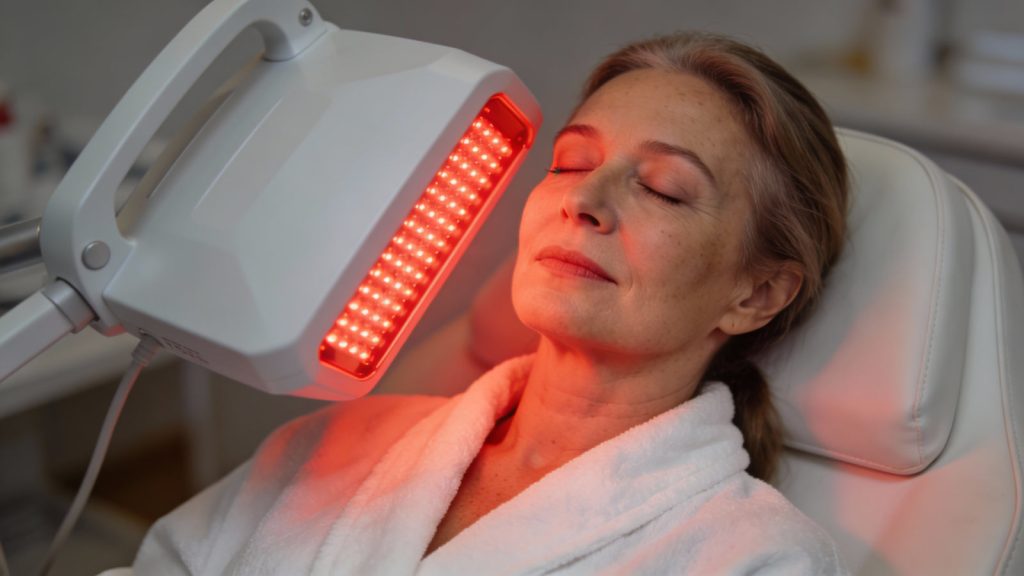
Irradiance should be specified in mW/cm2 at a stated distance, not as a raw LED output. A panel that delivers 30 mW/cm2 at 6 inches is very different from one that delivers 30 mW/cm2 at contact, because irradiance falls with distance according to the inverse square law for a point source and more gradually for a large array. For clinical use, look for roughly 30-100 mW/cm2 at the intended treatment distance; for home use, 20-50 mW/cm2 is common. A session dose of 3-20 J/cm2 is typical, calculated as irradiance multiplied by time in seconds divided by 1000.
- 630-660 nm red penetrates roughly 2-5 mm into tissue and is often used for surface-level applications.
- 810-850 nm near-infrared penetrates deeper, roughly 5-10 mm, and is preferred for larger body areas.
- Some panels combine both bands in a 1:1 or 2:1 red-to-NIR ratio; ask for the exact spectral power distribution, not just a marketing phrase.
- Beam angle matters: a 30-degree lens concentrates light, while a 120-degree lens spreads it, changing the effective irradiance at distance.
How to Read a Spec Sheet Without Getting Fooled
Most spec sheets list peak wavelength, total power, LED count, and dimensions, but omit the variables that determine real-world performance. A 1,000-LED panel rated at 500 W total power may deliver only 150 W of optical power, with the rest lost as heat. The optical power density in mW/cm2 at a defined distance is the number that matters.

Check whether the irradiance is measured with a calibrated spectrometer or a simple lux meter. Lux meters are designed for human vision and underweight near-infrared wavelengths above 780 nm. A supplier that cannot provide a spectral graph with a NIST-traceable or equivalent calibration reference is likely guessing. Also confirm the measurement distance: 0 cm, 6 inches, and 12 inches give wildly different numbers.
A practical rule of thumb: if a spec sheet lists only watts and LED count, treat the irradiance claim as unverified. Ask for a spectral power distribution graph and a test report showing irradiance at your intended working distance.
Thermal Design and LED Lifetime: The Hidden Cost Drivers
LED junction temperature is the single largest factor in wavelength drift and lumen depreciation. A well-designed panel keeps the junction temperature below 85°C at full power for 30 minutes, often using an aluminum PCB bonded to a finned heatsink with active fans. Passive cooling alone is rarely sufficient for panels above 100 mW/cm2 average irradiance.
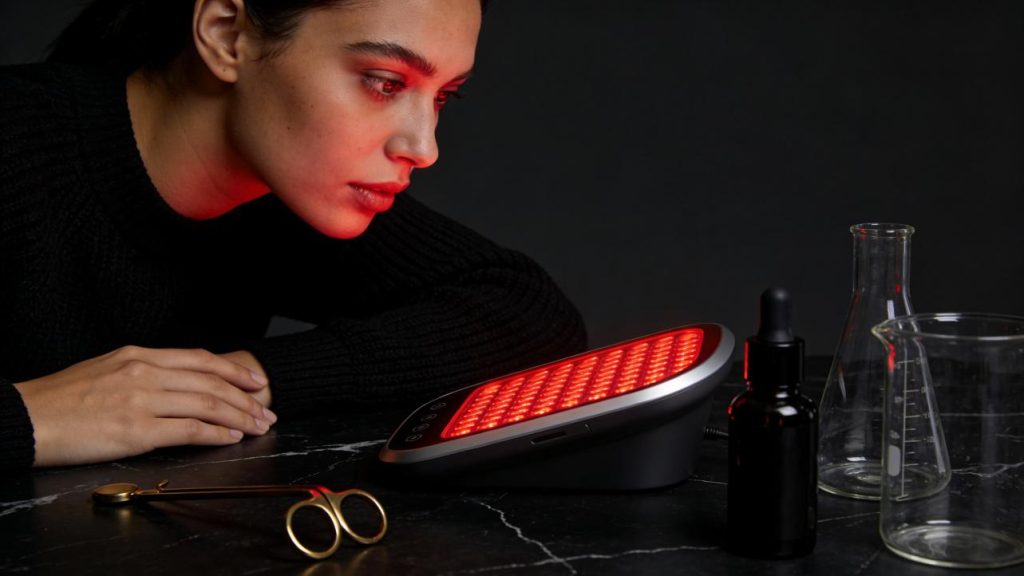
LED lifetime is usually quoted as L70, the time until output falls to 70% of initial value. A quality panel should specify L70 of at least 50,000 hours at a defined junction temperature, often 85°C. However, wavelength drift can occur before L70, especially if the driver allows current spikes. Ask the supplier for a thermal test report showing case temperature and junction temperature after a 30-minute run at maximum power.
Panel, Bed, and Handheld: Matching Form Factor to Use Case
The three common form factors are panels, beds, and handheld devices. Panels dominate the clinic market because they cover a large area with uniform irradiance and can be mounted on rolling stands or gantries. Beds offer full-body coverage but cost 5-10 times more and require more floor space and electrical capacity. Handheld devices are portable but have small treatment areas and often lower irradiance.
| Form Factor | Typical Irradiance at 6 in | Coverage Area | Decision Consequence |
|---|---|---|---|
| Panel (single) | 30-80 mW/cm2 | 12 x 24 in to 24 x 48 in | Best balance of cost and coverage for most clinics; can be ganged for larger areas. |
| Panel (full-body stack) | 20-50 mW/cm2 | Up to 72 x 24 in | Higher upfront cost but lower per-session labor; requires 220 V or multiple circuits. |
| Bed | 10-30 mW/cm2 | Full body | Highest capital cost and maintenance; justify only for very high patient volume. |
| Handheld | 20-60 mW/cm2 at contact | 2-4 in diameter | Useful for targeted applications but slow for large areas; check battery runtime and driver stability. |
Supplier Sourcing: Certifications, MOQ, and After-Sales
When sourcing medical grade red light therapy devices from an OEM or ODM, request factory certifications such as ISO 9001 for quality management and ISO 13485 for medical device quality systems. CE marking under the Low Voltage Directive and RoHS compliance are common for electrical safety and restricted substances. These are factory and system certifications, not product efficacy claims.
Typical MOQs for custom panels range from 50 to 500 units depending on tooling and wavelength mix. Lead times run 30-60 days for standard configurations and 60-90 days for custom wavelengths or housings. Price tiers for a 24 x 12 inch dual-wavelength panel generally fall between $150 and $400 per unit at 100-unit quantities, excluding shipping and duties. Always ask for a pilot sample before bulk production and a written warranty covering LED output drop of more than 10% within the first year.
FAQ: Medical Grade Red Light Therapy Devices
What is the difference between medical grade and consumer red light panels?
Medical grade panels typically have tighter wavelength tolerance (±5 nm vs ±10 nm), constant-current drivers, aluminum PCBs, and documented irradiance at a stated distance. Consumer panels often use constant-voltage drivers and plastic housings, which can lead to uneven output and faster drift.
How much irradiance do I need for clinical use?
Most clinical protocols use 30-100 mW/cm2 at the treatment distance, with session doses of 3-20 J/cm2. Higher irradiance shortens session time but increases heat load, so thermal design becomes critical above 50 mW/cm2.
Can I trust a supplier’s irradiance claim?
Only if the supplier provides a spectral graph from a calibrated spectrometer and states the measurement distance and beam angle. Ask for a third-party test report or request a sample unit to verify with your own meter before placing a bulk order.
What certifications should a factory have?
Look for ISO 9001 and ISO 13485, plus CE and RoHS for the finished device. These cover quality systems and electrical safety, not therapeutic outcomes. Confirm the certificate holder matches the factory name on the invoice.
What to Do Next Before You Commit
Medical grade red light therapy devices are a capital investment, and the difference between a reliable clinical tool and a fading panel shows up in the first 12 months. Before you place an order, request a pilot sample, verify irradiance at your working distance with a calibrated meter, and check the thermal performance after a full session.
Ask the supplier for a written specification sheet that includes wavelength tolerance, irradiance at a defined distance, driver type, L70 lifetime, and factory certifications. If any of those items is missing, treat the quote as incomplete. A supplier that cannot document its hardware will not be able to support it in the field.
Post time: 11-26-26