


Choosing between private label red light therapy manufacturers can determine your product’s market success. This guide explains how to evaluate suppliers, what specs and certifications to check, and which sourcing questions to ask before committing to an order.
Key Selection Criteria for Private Label Red Light Therapy Manufacturers
When sourcing private label red light therapy devices, buyers must distinguish between basic assembly shops and experienced photobiomodulation factories. Start with these concrete criteria:
- Wavelength accuracy: Confirm the factory can bin LEDs to a tolerance of ±5 nm, particularly for 630-660 nm (red) and 810-850 nm (near-infrared) bands.
- Irradiance consistency: Request measured data (mW/cm2) from an integrating sphere, not just claimed numbers.
- Thermal design: Ask about heat sinks, fan selection, and temperature cycling tests; poor thermal management can halve LED lifespan.
- Factory certifications: Look for ISO 9001 (quality systems) and ISO 13485 (medical device QMS), plus CE and RoHS product certifications.
- OEM/ODM capabilities: Evaluate their track record on custom housing, PCB layout, and packaging—request photos and reference projects.
Always request a sample and a complete bill of materials (BOM) before placing a bulk order.
Common Device Classes and Their Trade-Offs
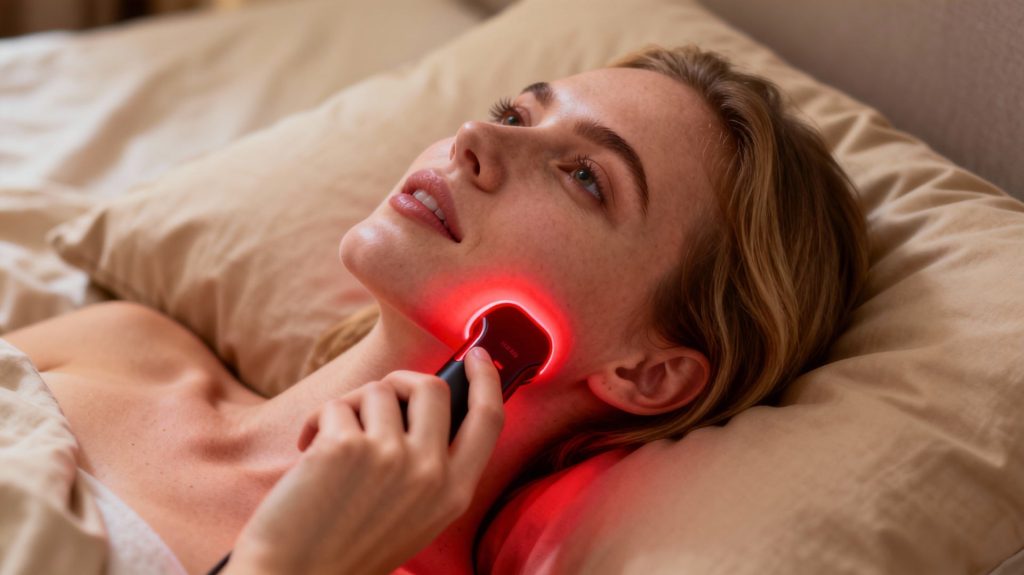
Red light therapy equipment is available as panels, beds, handhelds, and targeted devices. Each class suits different business models and end-user needs. Your choice impacts factory selection and minimum order quantities (MOQ).
| Device Class | Typical Use | MOQ Range | Spec Focus | Decision Consequence |
|---|---|---|---|---|
| Panel | Clinic, home, wellness centers | 20–100 units | Irradiance uniformity, wall mounting | Best for broad market, easier CE path |
| Bed | Spa, gym, premium clinics | 1–10 units | Thermal safety, large-area coverage | High ticket, longer tooling lead time |
| Handheld | Retail, home, travel | 200–1000 units | Battery life, ergonomic design | Lower price, higher certification cost per unit |
| Targeted array | Veterinary, research, special applications | 10–50 units | Wavelength customization | Custom PCB/layout, niche market |
Choose the device class based on your intended channel and the supplier’s specialization. Panel MOQs are often negotiable if you commit to repeated orders.
Understanding Wavelength Tolerance and Binning
Wavelength tolerance directly affects device effectiveness and consistency. Manufacturers source LEDs in bins—small ranges of wavelength and radiant flux. For red light therapy, bins should center on 630-660 nm (red) and 810-850 nm (near-infrared), with a tolerance of ±5 nm for premium applications. Request spectral test reports for each batch, ideally from a third-party lab or with the factory’s integrating sphere model specified. Lower-cost devices may have ±10 nm variation, which can impact uniformity across an array. Always clarify whether the quoted wavelength is the dominant or peak value, as datasheets often list both.
Photobiological Safety and Compliance Standards
IEC 62471 is the baseline photobiological safety standard for LED devices. Ask the manufacturer if they conduct IEC 62471 risk group classification (e.g., RG0, RG1) and provide test reports. For CE marking, also request EMC (electromagnetic compatibility) and RoHS (Restriction of Hazardous Substances) certificates. ISO 9001 and ISO 13485 are factory-level certifications indicating quality management systems. Devices intended for medical or wellness use in the EU require a technical file with risk assessment, labeling, and user manual in the local language. Some suppliers may only offer self-declared CE; verify if third-party testing was used. Non-compliance can result in customs holds or market recall.

Evaluating Driver Electronics and Thermal Management
Constant-current drivers are standard for quality red light therapy devices, ensuring stable output and longevity. Check if the supplier uses branded drivers (such as Meanwell or Lifud) or in-house designs. Ask about over-temperature protection, as a lack of it is a common failure mode—LED junction temperatures above 85°C can degrade output by over 20% within a year. For panels over 100 W, fan cooling is typical; for smaller devices, passive heat sinks may suffice if properly dimensioned. Request a thermal profile or IR camera test report at maximum load. Board-level fuses or thermal cutoffs are signs of robust design. If the factory cannot provide these details, consider it a red flag for quality and warranty risk.
MOQ, Lead Times, and Pricing Structures in Private Label Manufacturing
Private label red light therapy manufacturers typically set MOQs based on device class, customization level, and component sourcing. For standard panels, MOQs often start at 20-50 units; for beds, 1-5 units is common but expect higher up-front tooling fees (often $3,000–$10,000). Handhelds and custom arrays may require 500+ units due to injection molding costs. Lead times for first orders range from 25–60 days, especially if custom branding, packaging, or firmware is involved. Reorders with no design change may ship in 10–25 days. Pricing tiers depend on LED grade (binning tolerance and brand), driver choice, case finish, and certification package. Always request a written breakdown and clarify incoterms (EXW, FOB, CIF) before payment.
Supplier Audit and Quality Control Checklist
Before finalizing a supplier, conduct a remote or in-person audit. Focus on these checklist items:
- Inspect the production line for ESD (electrostatic discharge) control and clean assembly zones.
- Verify that integrating spheres or spectrometers are calibrated within the last 12 months.
- Review sample test reports for IEC 62471, CE, and RoHS—ensure they match the actual product SKU.
- Ask to see warehouse and packaging areas; check for moisture control and drop-test procedures.
- Request after-sales process documentation, including warranty claim flow and spare part logistics.
Don’t rely solely on video calls; third-party inspection firms can audit for $250–$500 per visit in most manufacturing hubs.
For first-time importers, a practical rule: never skip the pre-shipment inspection, even for repeat orders. LED batch variation and last-minute substitutions are common in this industry.
FAQ on Private Label Red Light Therapy Manufacturers
What is a realistic lead time for private label red light therapy panels?
For a new design, expect 35–50 days from deposit to shipment, including sample approval and packaging; reorders can ship in 10–20 days if no changes are made.
How can I verify the claimed irradiance values?
Request a test report from an integrating sphere or a third-party photometric lab, stating the irradiance in mW/cm2 at a specified distance (commonly 15–30 cm).
What certifications should I require from a private label manufacturer?
At minimum, request CE and RoHS for the device, and ISO 9001 or ISO 13485 for the factory; check that certificates reference the actual model and supplier name.
Can I request custom wavelengths or mixed LED arrays?
Most ODM factories can mix 630-660 nm and 810-850 nm LEDs on a single PCB, but custom binning may increase MOQ and lead time by 2–4 weeks depending on LED availability.
How to Proceed with Private Label Red Light Therapy Manufacturers
Evaluating private label red light therapy manufacturers requires a structured approach. Focus on wavelength and irradiance specs, demand documented compliance with IEC 62471, CE, and RoHS, and clarify driver, thermal, and after-sales provisions before contracting. Always request and review real test reports, not just certificates on file.
For importers and distributors, a robust sourcing process reduces risk and builds a product line that meets global safety and quality expectations. Use the criteria in this guide to shortlist, audit, and select the right manufacturer for your private label red light therapy business.
Post time: 11-28-26