


Private label red light therapy mat cost is a key concern for importers, distributors, and clinic owners planning to launch or source a new device line. This article details the cost structure, specification decisions, and sourcing challenges that affect the bottom line for private label projects.
Core Components Driving Private Label Red Light Therapy Mat Cost
The bill of materials for a red light therapy mat centers on LED arrays, constant-current drivers, flexible substrates, and enclosure materials. LED chip selection alone can account for 30-45% of direct component cost. For typical 630-660 nm red and 810-850 nm near-infrared wavelengths, chip binning accuracy (±5 nm), and high radiometric output are priced at a premium. A 60 x 180 cm mat usually contains 300-500 LEDs, each rated 0.2-0.5 W. Higher density and dual-wavelength layouts raise cost per unit by 15-30% over single-wavelength designs.
Constant-current drivers, thermal management elements, and reinforced wiring add to the cost, especially if you require IEC 62471 photobiological safety compliance or specific ingress protection (IP) ratings. Fabrics and plastics must meet RoHS and, in some markets, ISO 10993 biocompatibility standards. Adding a digital controller or Bluetooth module increases electronics cost by $6-12 per unit at 1,000 pc MOQ. Each of these choices impacts both the upfront tooling and per-unit cost.
How Wavelength, Irradiance, and Mat Size Affect Cost
Wavelength and irradiance directly influence both efficacy and price. Most private label mats use 630-660 nm (visible red) and 810-850 nm (near-infrared). Red-only mats are less expensive. Dual-wavelength mats require two chip bins, two driver circuits, and more complex quality assurance, typically adding 10-20% to the BOM. Specifying higher irradiance (e.g., 30-50 mW/cm2 at the mat surface) means more LEDs per area, or higher drive currents, which requires better heat dissipation and increases power supply cost.
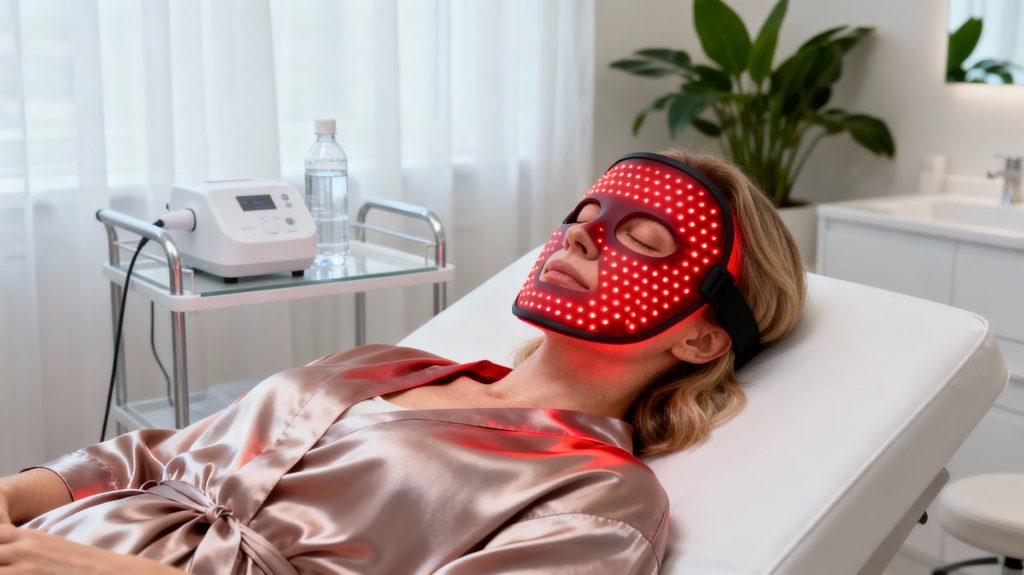
- Mat size: Standard sizes range from 60×180 cm (full body) to 30×80 cm (targeted use). Larger mats require more LEDs, larger power supplies, and more durable construction, raising cost per unit by 25-40% over small mats.
- Surface irradiance: A mat rated at 40 mW/cm2 will use up to 40% more LEDs than a 20 mW/cm2 mat of the same size.
- Wavelength tolerance: Tighter binning (e.g., ±2 nm) can add $1-3 per mat at 500 pc MOQ.
Be sure to check the supplier’s test report for irradiance uniformity and actual wavelength output. Not all vendors use calibrated meters, so request a sample test or third-party verification if precise output is critical for your application.
Factory Certifications and Compliance: Cost Implications
Importers and distributors in North America and Europe usually require factory certifications such as CE, RoHS, ISO 9001, and sometimes ISO 13485. Acquiring these involves both factory audits and device-level testing. For a new private label mat, initial compliance documentation can add $2,000-4,000 in one-time fees, or $2-5 per unit amortized over a 1,000 pc batch.
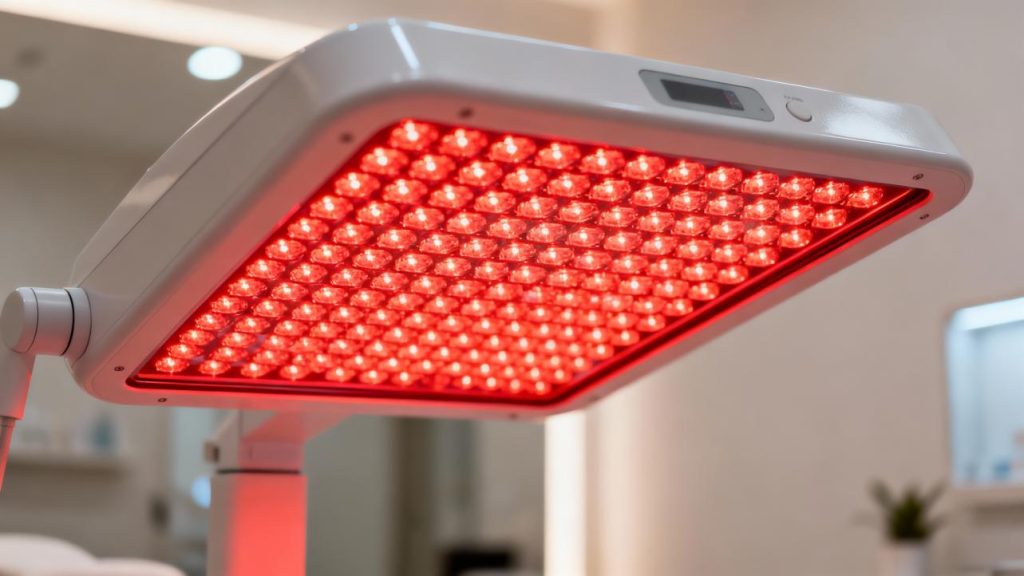
IEC 62471 photobiological safety testing is increasingly requested for professional and clinic markets, especially if the mat will be marketed for wellness or physiotherapy use. This test checks for blue light hazard, thermal emission, and UV output. Some factories have in-house test labs; others use third parties, which can affect both lead time and cost. Always request sample reports and confirm the test lab accreditation (e.g., CNAS, TUV, SGS).
For first-time importers: If your market requires CE or RoHS, budget at least $3 per mat in compliance costs for the first 1,000 units, and verify the supplier’s certificate number on the issuing body’s website.
MOQ, Lead Time, and Pricing Structure in Private Label Projects
Minimum order quantity (MOQ) for private label red light therapy mats typically starts at 200-300 units for standard builds, but can rise to 500-1,000 units for custom sizes, colors, or electronics. Tooling fees for custom molds or specialty fabrics are usually quoted separately, ranging from $800 to $2,500 depending on complexity.
Lead time for a first order is often 35-55 days, including prototype approval, component sourcing, and compliance testing. Repeat orders can be shorter—typically 25-35 days—if no changes are made. Payment terms are generally 30% deposit, balance before shipment, with some flexibility for established clients.
- MOQ: 200-1,000 units, depending on customization
- Lead time: 35-55 days for initial order, 25-35 days for repeats
- Unit price: $60-130 FOB China for standard full-body mats at 500 pc
Some suppliers offer smaller trial batches at a 20-35% price premium, but these may not include custom branding or packaging.
Comparison Table: Red Light Therapy Mat Sourcing Options
| Option | MOQ | Lead Time | Certification | Unit Cost (FOB) | Key Trade-Off |
|---|---|---|---|---|---|
| ODM Standard Mat | 200 | 30 days | CE, RoHS | $65-85 | Limited branding, faster delivery |
| OEM Custom Size/Wavelength | 500 | 45 days | CE, RoHS, ISO 9001 | $95-130 | Full customization, higher tooling cost |
| Premium Clinic Model | 300 | 55 days | CE, RoHS, IEC 62471 | $120-160 | Advanced safety, higher margin |
| Trial Batch (Unbranded) | 50 | 25 days | Supplier test report | $100-180 | No branding, not for retail |
Spec-Sheet Lines Worth Scrutinizing
Reviewing the technical specification sheet is critical before confirming a private label order. Beyond total LED count and wavelength, check for:
- Irradiance at surface: Look for third-party measurements at 0 cm, 3 cm, and 5 cm. Acceptable range is usually 15-50 mW/cm2 at surface.
- Driver current: Overdriven LEDs (above 350 mA for 2835/3535 chips) can shorten lifespan and compromise safety.
- Thermal cutoff: Mats should have a cutoff or auto-shutdown above 60°C. Absence of this feature is a common failure mode.
- Fabric spec: If offering a wipeable or waterproof mat, request IPX4 or higher rating, and check seam construction.
- Certification numbers: Cross-check any CE or RoHS number on the issuing body’s public database for validity.
Some suppliers list theoretical output rather than measured values. Always ask for a sample test report and confirm the meter model used (e.g., Apogee, Thorlabs).
Customization, Branding, and Packaging Choices
Private label projects often require custom logo application, color schemes, and retail packaging. Silk-screen or heat-transfer logos add $0.50-1.50 per mat at 500 pc, while full-color printed boxes run $1.20-2.50 each. Adding a user manual in English or other languages is usually $0.30-0.60 per unit.
If you need custom electronics (timers, Bluetooth, app integration), expect an additional $8-15 per mat, plus firmware development fees if software is involved. Custom packaging may increase shipping volume and cost, so request sample packaging for a carton drop test (ISTA 1A or equivalent).
- Logo application: Silk screen, transfer, or sewn label
- Packaging: Standard brown carton vs. custom printed box
- Manual: Single or multi-language options
Be clear on branding file requirements (vector AI or PDF) and confirm pre-production samples before mass order. Revisions after production starts may incur substantial fees and delays.
Common Failure Modes and Quality Control
Quality control for red light therapy mats must address both electrical and mechanical risks. Common failure modes include LED dropout (often due to insufficient driver protection), uneven irradiance from poor soldering or binning, and delamination of the flexible PCB during repeated rolling or folding.
Request a detailed QC checklist and sample test reports. For larger orders, consider third-party inspection (e.g., SGS, Intertek) with sampling at AQL 1.5 or tighter for electrical and appearance defects. Key QC steps:
- LED function test at full power for 30 minutes
- Irradiance uniformity mapping across the mat
- Thermal cycling: 10 cycles from 0°C to 50°C
- Flex test: 100 cycles of rolling/unrolling
- Visual inspection for seam integrity and logo adhesion
Failure to enforce these checks can lead to high return rates or warranty claims in the field, especially for products sold to clinics or high-traffic wellness centers.
FAQ: Private Label Red Light Therapy Mat Cost
What is the typical MOQ for private label red light therapy mats?
Most suppliers require a minimum order of 200-500 units for basic private label projects, with higher MOQs for fully custom designs or electronics.
How much does factory certification add to the cost?
Factory certifications such as CE, RoHS, and ISO 9001 add about $2-5 per unit when amortized over a 1,000-piece order, plus initial audit fees.
What is the main cost driver: size, irradiance, or wavelength?
All three are important, but mat size and total LED count have the largest impact, followed by the choice of dual-wavelength or high-irradiance designs.
How can I reduce cost without sacrificing quality?
Choose standard LED bins and mat sizes, opt for proven ODM designs, and limit customization to branding and packaging, which have less impact on electronic performance.
Conclusion: Planning Your Private Label Red Light Therapy Mat Project
Understanding private label red light therapy mat cost requires balancing technical specifications, safety compliance, branding needs, and supplier capabilities. Mat size, LED density, dual-wavelength options, and required certifications all play major roles in both unit price and lead time. A realistic budget for a certified, branded, full-body mat at 500 pc MOQ is $95-130 per unit FOB China, with 35-55 days lead time for first orders.
For best results, request detailed spec sheets, cross-check compliance documentation, and confirm QC protocols before placing a deposit. This careful approach will help you set accurate retail pricing and avoid costly surprises as you enter the light therapy market.
Post time: 11-29-26