

Red light for sleep is a growing category in photobiomodulation, but most buyers struggle to separate meaningful device specifications from marketing noise. This article answers the concrete question: which wavelengths, irradiance levels, and device formats are actually relevant when evaluating red light therapy equipment positioned for sleep support, and how should importers and clinic owners judge supplier claims. We focus on the engineering and sourcing side, not medical promises.
What Red Light for Sleep Actually Means in Device Terms
When suppliers say a device supports sleep, they are usually referencing two wavelength bands: 630-660 nm red and 810-850 nm near-infrared. These bands are widely used in photobiomodulation research because they penetrate skin and reach deeper tissue, but the exact mechanism for sleep is still being studied. A responsible buyer should ask for the spectral power distribution, not just a marketing wavelength number.
The key specification is irradiance at the treatment surface, typically measured in mW/cm2. For sleep-related use, most studies and commercial devices operate between roughly 3 and 50 mW/cm2. A panel that claims 100 mW/cm2 at 6 inches is either using a different measurement distance or overdriving the LEDs, which shortens lifespan and creates thermal issues.
Dose is the second number that matters: irradiance multiplied by time. Common protocols suggest 3-20 J/cm2 per session, but there is no universal standard. If a supplier cannot state the dose their device delivers at a specific distance, that is a red flag for a buyer who needs reproducible treatment parameters.
Wavelength Selection: 630-660 nm vs 810-850 nm
Red light in the 630-660 nm range is absorbed more superficially, while 810-850 nm near-infrared penetrates deeper into tissue. For sleep support, some users prefer red-only panels because near-infrared can feel warm and may be less comfortable before bed. Others combine both bands, arguing that deeper penetration may influence systemic factors, though the evidence is still developing.
From a sourcing perspective, the binning tolerance matters more than the nominal wavelength. A reputable LED supplier will provide a bin range, such as ±5 nm or ±10 nm. If a panel is labeled 660 nm but the actual LEDs vary from 640 to 680 nm, the delivered dose changes. Ask for the LED manufacturer’s datasheet and the bin code.
| Wavelength Band | Typical Penetration Depth | Common Device Formats | Buyer Consequence |
|---|---|---|---|
| 630-660 nm red | 2-5 mm | Panels, handhelds, face masks | Lower heat, often preferred for evening use; verify bin tolerance |
| 810-850 nm near-infrared | 5-10 mm | Panels, beds, wraps | Deeper reach but more thermal load; check cooling design |
| Dual red + NIR | Combined | Full-body panels, beds | Flexible dosing but higher cost and power draw |
Irradiance, Dose, and the Measurement Problem
Irradiance claims are the most abused specification in red light therapy. A panel may be advertised as 100 mW/cm2, but that number is often measured at the LED surface, not at the user’s skin distance. At 6 inches, the actual irradiance can drop by 50-70% depending on the optics and LED density.
Buyers should request an irradiance map, not a single number. A quality manufacturer will provide measurements at multiple distances (e.g., 0, 6, 12, 18 inches) using a calibrated spectrometer or photometer. The map should show uniformity across the treatment area; a 20% variation is acceptable, a 50% hot spot is not.
For sleep-related protocols, lower irradiance for longer time is often preferred over high irradiance for short time. A panel delivering 10 mW/cm2 at 12 inches for 20 minutes gives 12 J/cm2, which is within the commonly cited range. This also reduces the risk of overexposure and heat discomfort.
A practical rule: never buy a red light panel without an irradiance map at the distance you will actually use it. If the supplier cannot provide one, treat the spec as unverified.
Device Formats: Panel, Bed, Handheld, and Mask
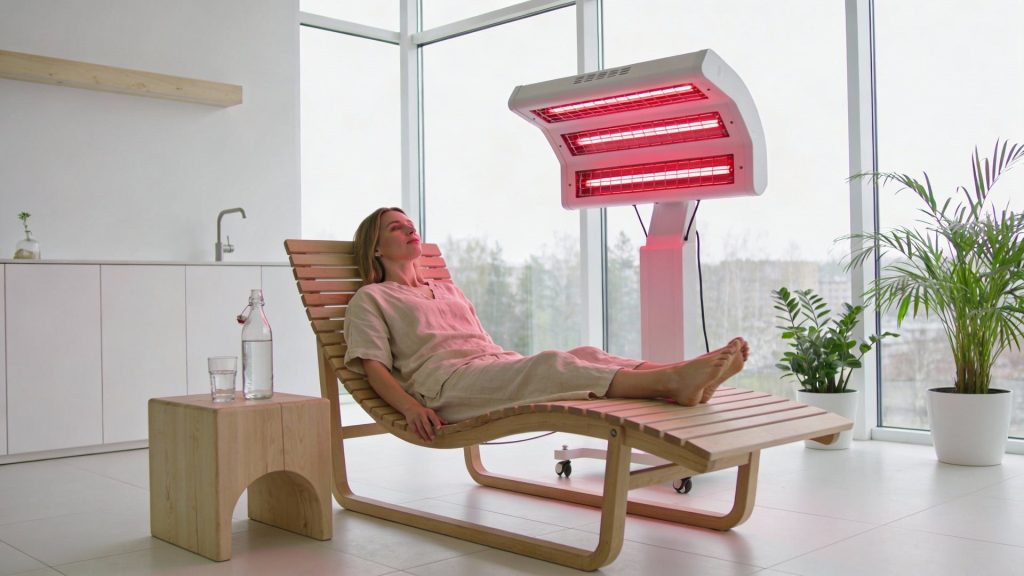
The format decision depends on the use case and the buyer’s market. Full-body panels (typically 300-1500 LEDs) are the most common for professional and home sleep-support setups because they cover a large area and allow consistent dosing. Beds offer full-body coverage but cost 3-10 times more and require dedicated space.
Handheld devices are portable and inexpensive, but their small treatment area makes consistent dosing difficult. A handheld with a 2-inch aperture at 50 mW/cm2 may deliver the same dose as a panel at 10 mW/cm2, but only to a small spot. For sleep support, where users often treat the upper back or chest, a panel is usually more practical.
- Panel: best balance of coverage, cost, and dosing consistency; check LED count and cooling fans.
- Bed: highest throughput for clinics, but high upfront cost and maintenance; verify EMC and safety certifications.
- Handheld: low cost, good for travel, but slow and inconsistent for large areas.
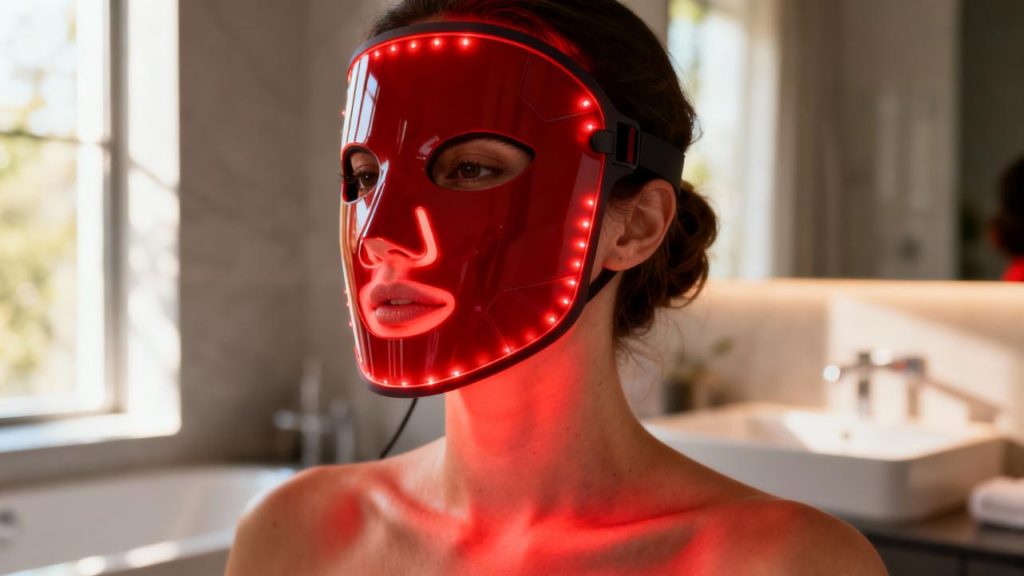
- Mask: targeted for face and eyes, but many masks have low irradiance and poor wavelength accuracy.
Safety Standards and Factory Certifications
Red light therapy devices fall under photobiological safety standard IEC 62471. This standard classifies devices by their risk of optical radiation to skin and eyes. A device labeled “Exempt” or “Risk Group 1” is generally considered safe for intended use, but the classification depends on the actual irradiance and exposure time.
Buyers should ask for the IEC 62471 test report, not just a statement. The report should be from an accredited lab and cover the specific device model. Many low-cost suppliers skip this test, which is a liability for importers in the EU and North America.
Factory certifications like ISO 13485 (medical device quality management) and CE marking under the Low Voltage Directive or EMC Directive are also relevant. CE marking is not a quality certification; it is a declaration of conformity. Verify the technical file exists and the notified body number if applicable.
OEM and ODM Sourcing: MOQ, Lead Time, and Price Tiers
For importers and distributors, the sourcing conversation starts with MOQ (minimum order quantity). Typical MOQs for red light panels range from 10 to 100 units for OEM orders, with lead times of 30-60 days after deposit. Custom ODM projects with new molds or firmware can take 90-120 days and require a higher MOQ, often 500-1000 units.
Price tiers are driven by LED quality, driver design, and housing materials. A basic 300-LED panel with generic LEDs and a plastic housing may cost $40-60 per unit at 100 units. A premium panel with branded LEDs (e.g., Osram or Seoul Semiconductor), aluminum housing, and a constant-current driver may cost $120-200 per unit at the same volume.
Ask the supplier for the LED bin code, driver topology (constant current vs constant voltage), and warranty terms. Constant-current drivers are more stable and extend LED life, but they cost more. A constant-voltage design with resistors is cheaper but can cause uneven brightness and early failure.
FAQ: Red Light for Sleep Device Questions
What wavelength is best for sleep support?
There is no single best wavelength. 630-660 nm red and 810-850 nm near-infrared are both commonly used, with red often preferred for evening use due to lower heat. The bin tolerance and actual spectral output matter more than the nominal number.
How much irradiance do I need for sleep-related use?
Most research and commercial protocols use 3-50 mW/cm2 at the treatment surface. A panel delivering 10-20 mW/cm2 at 12 inches is practical for 10-20 minute sessions, giving a dose of 6-24 J/cm2. Verify the measurement distance before comparing devices.
Can I use a red light panel right before bed?
Some users report that bright red light can be stimulating, while others find it relaxing. There is no universal rule. If you are evaluating a device for evening use, consider a model with dimming control or a red-only mode, and test the actual brightness at the intended distance.
What certifications should a red light panel have?
Look for an IEC 62471 photobiological safety test report, CE marking with a valid technical file, and RoHS compliance. ISO 13485 is a plus for medical-grade suppliers. Avoid devices that claim FDA approval; red light therapy panels are typically marketed as general wellness devices and do not require FDA premarket approval.
What to Do Next
Red light for sleep is a promising category, but the device you buy will only perform as well as its specifications. Start by defining your use case: home user, clinic, or distribution. Then request irradiance maps, wavelength bin data, and safety test reports from at least three suppliers.
If you are sourcing for resale, compare MOQ, lead time, and after-sales support alongside the technical specs. A panel with excellent specs but no warranty or spare parts supply will cost more in the long run. Use the decision rules in this article to filter out suppliers who cannot answer basic engineering questions.
Post time: 11-20-26