


Red light therapy vs TENS for wrist pain is a common comparison for buyers evaluating professional equipment. This article answers the practical question: which device class makes sense to source for wrist applications, and what hardware specifications actually matter. We focus on wavelengths, irradiance, build quality, factory certifications, and OEM/ODM sourcing, not medical claims.
How the Two Device Classes Differ
Red light therapy devices deliver optical energy, typically in the 630-660 nm red and 810-850 nm near-infrared bands, at irradiance levels of roughly 3-50 mW/cm2. TENS units deliver low-voltage electrical pulses through skin-contact electrodes, usually in the 1-250 Hz frequency range with adjustable pulse width. The hardware, safety profile, and manufacturing supply chain are completely different.
For importers and clinic owners, the first decision is whether to source one modality or both. A red light therapy panel has no consumable electrodes, while TENS units require replacement electrode pads every 10-30 sessions depending on adhesive quality. That recurring revenue model can matter as much as the upfront unit cost.
Wavelength and Irradiance: The Specs That Matter for Red Light
For wrist applications, the two most common bands are 660 nm red and 850 nm near-infrared. The 660 nm band is absorbed more superficially, while 850 nm penetrates deeper into tissue. Many professional panels combine both bands in a 1:1 or 1:2 ratio.
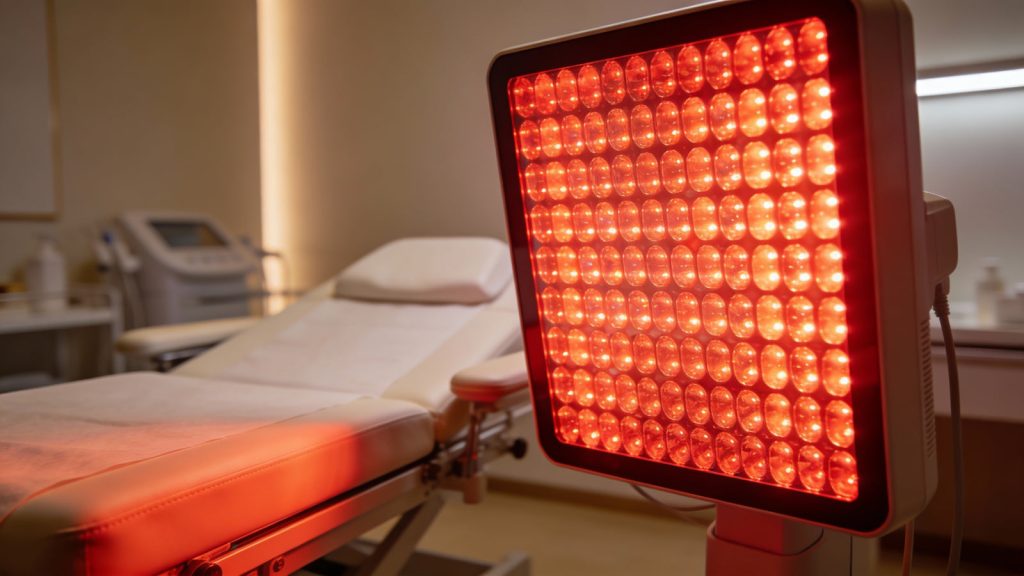
Irradiance at the treatment surface should be verified with a solar power meter or spectrometer, not taken from the supplier’s marketing sheet. A panel claiming 100 mW/cm2 at the LED surface may deliver only 20-30 mW/cm2 at a 15 cm working distance. Ask the factory for an irradiance map at the intended distance, not a single peak number.
LED chip binning also matters. A tolerance of ±5 nm on the peak wavelength is standard for quality chips; ±10 nm is acceptable for budget panels. Wider tolerance means less predictable optical output and more variation between production batches.
TENS Hardware: Pulse Parameters and Electrode Quality
A TENS unit for wrist use should offer adjustable frequency (typically 2-150 Hz), pulse width (50-250 microseconds), and at least two independent channels. The electrode pads are the weakest link: carbon film electrodes last longer than hydrogel, but hydrogel offers better skin contact and comfort.
Battery type and connector quality are the main failure points. Look for units with a 9V or rechargeable lithium battery, and a reinforced 2 mm or 3.5 mm jack. Cheap snap connectors break within weeks of daily clinical use. For B2B buyers, ask the factory for the connector’s rated insertion cycles—anything below 5,000 cycles is a red flag.
Red Light Therapy vs TENS for Wrist Pain: Sourcing and Certification
When comparing red light therapy vs TENS for wrist pain from a sourcing perspective, the certification routes diverge. Red light panels are typically classified as general wellness or cosmetic devices in many markets, while TENS units often fall under active medical device regulations. That affects the paperwork burden and the factory’s quality system requirements.
For red light therapy, look for factories with ISO 9001 and, ideally, ISO 13485 certification. CE marking under the Low Voltage Directive and EMC Directive is common for panels, plus RoHS compliance. For TENS units, ISO 13485 is more critical, and the factory should provide a technical file including electrical safety testing per IEC 60601-1.
Ask the supplier for a copy of the test report, not just the certificate. A CE certificate without a valid test report from an accredited lab is worthless. The same applies to RoHS: request the actual lab analysis, not a self-declaration.
Build Quality and Failure Modes: What to Inspect
Red light therapy panels fail most often from thermal stress. Poor heat sinking leads to LED degradation, wavelength drift, and premature failure. Check that the panel uses aluminum PCB and a finned heatsink, not just a flat plate. Fan noise is another issue: a 60 dB fan is unacceptable in a quiet clinic, while 40 dB is tolerable.
TENS units fail from broken wires, corroded battery contacts, and worn-out electrode jacks. For OEM buyers, specify strain relief on the lead wires and a minimum of 10,000 insertion cycles on the output jacks. Ask for a sample unit and run a 72-hour continuous test at maximum output.
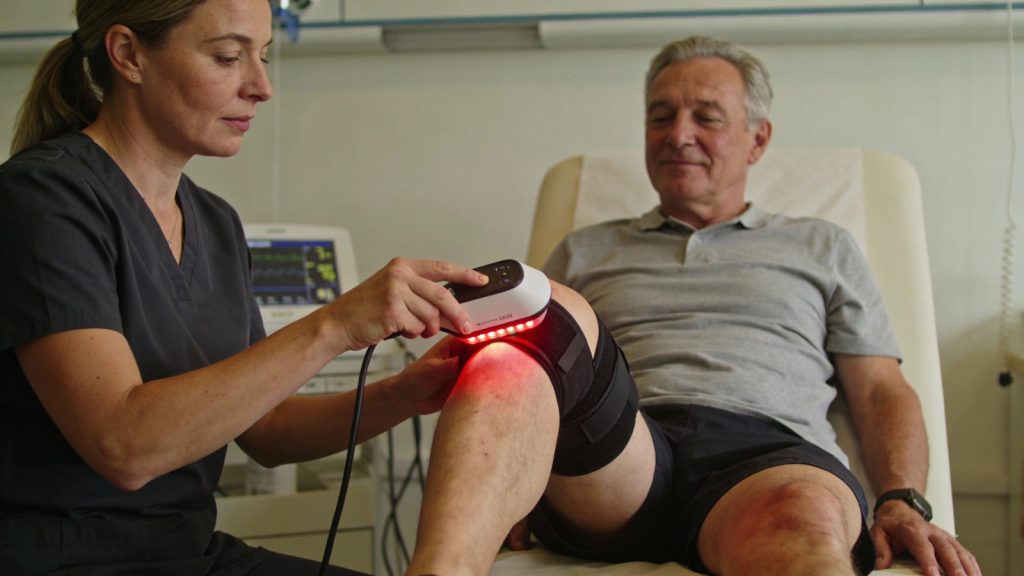
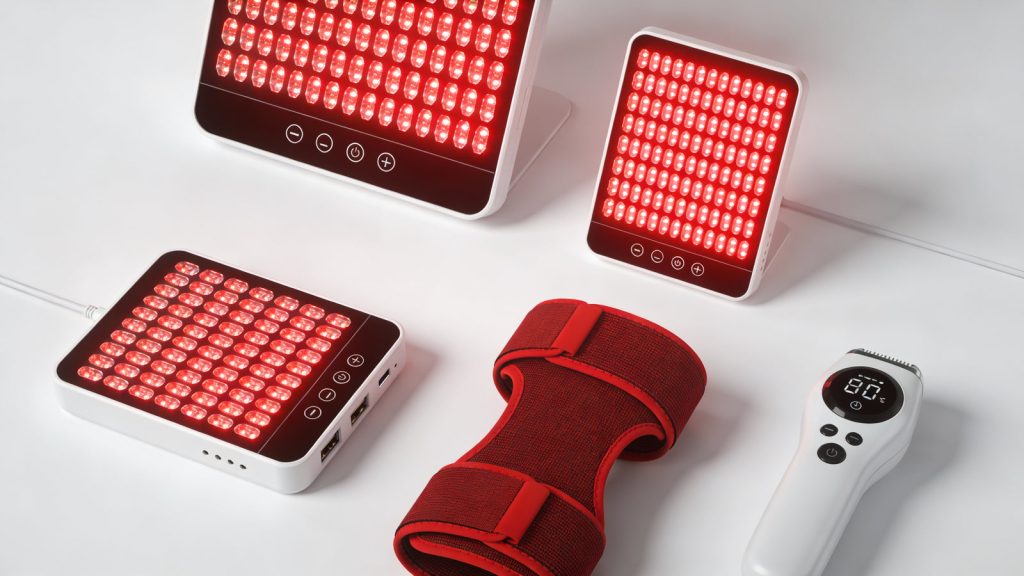
Both device classes should have a minimum IP rating for clinical use: IP22 for indoor dry environments, IP54 if there is any chance of liquid spills. The wrist is a small treatment area, so a compact panel of 100-300 LEDs or a handheld TENS unit with a 3.5-inch screen is usually sufficient.
Comparison Table: Red Light Panels vs TENS Units for Wrist Applications
| Factor | Red Light Therapy Panel | TENS Unit | Consequence for Buyer |
|---|---|---|---|
| Primary output | 630-660 nm and 810-850 nm light | Electrical pulses, 1-250 Hz | Different safety standards and user training required |
| Consumables | None | Electrode pads (replace every 10-30 uses) | TENS offers recurring revenue; red light has lower running cost |
| Typical MOQ | 50-100 units for OEM | 500-1,000 units for OEM | Red light allows smaller initial order |
| Factory certifications | ISO 9001, ISO 13485, CE, RoHS | ISO 13485, IEC 60601-1 test report | TENS requires more regulatory documentation |
| Main failure mode | Thermal degradation of LEDs | Broken lead wires, worn jacks | Inspect heatsink and connector quality before ordering |
| Price tier (FOB) | $80-300 per panel | $15-60 per unit | TENS is cheaper per unit but lower margin |
OEM/ODM Considerations for Importers and Distributors
If you are sourcing red light therapy panels for wrist applications, the minimum order quantity is typically 50-100 units for a standard OEM design, with a lead time of 30-45 days. Custom ODM projects, such as a wrist-specific curved panel or a dual-wavelength array, may require 500 units and 60-90 days.
For TENS units, MOQs are higher because the tooling for plastic enclosures and electrode connectors is expensive. Expect 500-1,000 units for OEM, with a lead time of 45-60 days. The unit price drops sharply above 5,000 pieces, but so does your margin if the market is saturated.
Ask the factory for a pre-production sample and a golden sample. The golden sample is the reference unit that all mass production must match. Without it, you risk receiving units with different LED bins, different battery capacities, or different firmware versions.
Rule of thumb: if a supplier cannot provide an irradiance map for a red light panel or an IEC 60601-1 test report for a TENS unit within 48 hours, walk away. Serious factories keep these documents on file.
Market Positioning: Which Device Fits Your Channel
Red light therapy panels have a higher perceived value and a longer lifespan, often 50,000 hours of LED operation. That makes them suitable for clinic owners who want a durable, low-maintenance device. The upfront cost is higher, but there are no consumables to reorder.
TENS units are cheaper and more familiar to consumers, but the market is crowded with low-quality imports. To differentiate, focus on build quality: reinforced connectors, medical-grade electrodes, and a clear display. A TENS unit with a 2-year warranty and a spare electrode set can command a premium.
Some distributors bundle both devices for a complete wrist care package. That approach works if your target customer is a physical therapy clinic or a sports medicine practice. The red light panel provides the optical modality, while the TENS unit offers electrical stimulation. The combined package can increase average order value by 30-50%.
Safety and Regulatory Boundaries for B2B Buyers
Red light therapy panels should comply with IEC 62471 for photobiological safety, especially if they emit in the near-infrared range. Ask for the risk group classification: RG0 or RG1 is acceptable for consumer and clinical use. RG2 requires additional warnings and is generally not suitable for unsupervised home use.
TENS units must meet electrical safety standards. The factory should provide a test report showing compliance with IEC 60601-1 and IEC 60601-2-10 for nerve and muscle stimulators. The report should include leakage current measurements and dielectric strength tests.
Neither device class should make medical claims on the packaging or in the user manual. For red light therapy, describe the device as a general wellness product that delivers specific wavelengths and irradiance. For TENS, describe it as a transcutaneous electrical nerve stimulator for temporary relief of minor aches, but always check local regulations before importing.
FAQ: Red Light Therapy vs TENS for Wrist Pain
Which device has a lower total cost of ownership for a clinic?
A red light therapy panel has no consumables and a 50,000-hour LED lifespan, so the total cost over 5 years is often lower than a TENS unit that requires electrode replacement every 10-30 sessions, despite the higher upfront price.
Can I source both devices from the same factory?
Rarely. Red light therapy panels are made by LED lighting and electronics factories, while TENS units come from medical device contract manufacturers. Using two specialized suppliers usually yields better quality than a single generalist.
What is the most common quality issue with budget TENS units?
Broken lead wires and worn electrode jacks. Always request a sample and test the connector for at least 5,000 insertion cycles before placing a bulk order.
What irradiance should I specify for a wrist-sized red light panel?
For a panel used at 10-15 cm from the wrist, specify 20-50 mW/cm2 at the treatment surface. Verify with a solar power meter, and ask the factory for an irradiance map rather than a single peak value.
Conclusion: Make Your Sourcing Decision Based on Hardware, Not Hype
The choice between red light therapy vs TENS for wrist pain comes down to your distribution channel, margin expectations, and tolerance for regulatory paperwork. Red light panels offer higher perceived value and zero consumables, but require careful thermal design and irradiance verification. TENS units are cheaper and familiar, but the market is crowded and the recurring electrode revenue is offset by quality risks.
Before you commit, request samples from at least three factories, compare the golden samples side by side, and verify every certification with the issuing lab. The device that survives a 72-hour stress test and arrives with a complete technical file is the one worth importing.
Post time: 11-25-26