


Infrared light therapy devices are now a common sight in wellness clinics, sports recovery centers, and home treatment rooms. The core question for any buyer is simple: how do you separate a panel that delivers a clinically meaningful dose from a cosmetic LED array that merely glows red? This article answers that question with concrete wavelength, irradiance, and sourcing criteria drawn from production-floor experience.
What Infrared Light Therapy Actually Delivers
Infrared light therapy, often called photobiomodulation, uses red and near-infrared wavelengths to stimulate cellular processes. The widely studied bands are 630-660 nm red light and 810-850 nm near-infrared light. These wavelengths are absorbed by cytochrome c oxidase in mitochondria, which may increase ATP production and reduce oxidative stress.
For a device to have any chance of that effect, it must deliver enough photons to the target tissue. That means two numbers matter on every spec sheet: irradiance at the treatment surface, typically 3-50 mW/cm2 for clinical panels, and total dose per session, usually 3-20 J/cm2. A panel that lists only total wattage without beam area or distance is hiding the only number that counts.
Wavelength Tolerance and LED Binning: The First Quality Gate
Infrared light therapy devices are only as good as their LED bins. A 660 nm LED is never exactly 660 nm; production variance can push it to 650 nm or 670 nm. Reputable manufacturers bin LEDs to a tolerance of ±5 nm or tighter, and they document that binning in the batch record.
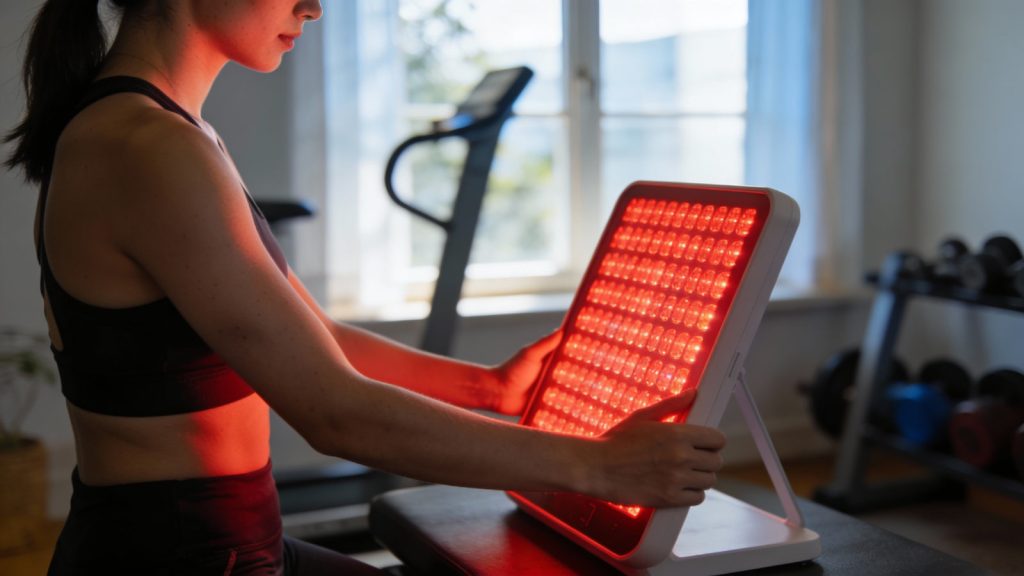
Ask your supplier for the LED bin code, not just the nominal wavelength. If the supplier cannot provide bin data, assume the panel contains mixed or off-spec chips. That failure mode shows up as uneven treatment results and complaints from clinicians who measure output with a spectrometer.
- Check the spec sheet for wavelength tolerance, not just peak wavelength.
- Request the LED manufacturer part number and bin code for the exact batch.
- Reject any panel that lists a range wider than ±10 nm for 660 nm or 850 nm emitters.
- For multi-wavelength panels, confirm that each wavelength channel is independently binned.
Irradiance Measurement: The Number Most Spec Sheets Fudge
Irradiance is the power density delivered to the skin, expressed in mW/cm2. It is measured with a calibrated optical power meter or spectrometer at a defined distance, usually 6 inches or 15 cm from the panel face. Many budget panels quote irradiance at the LED surface, which is meaningless because light spreads and loses intensity with distance.
A legitimate spec sheet states irradiance at a specific distance with a specific sensor aperture. For example, a panel might deliver 40 mW/cm2 at 6 inches with a 1 cm2 sensor. If the distance or sensor size is missing, the number cannot be verified. This is the single most common failure mode in imported panels.
Rule of thumb: if a supplier will not state irradiance at a defined distance with a defined sensor aperture, treat the panel as unverified regardless of its wattage rating.
Device Classes Compared: Panel, Bed, and Handheld
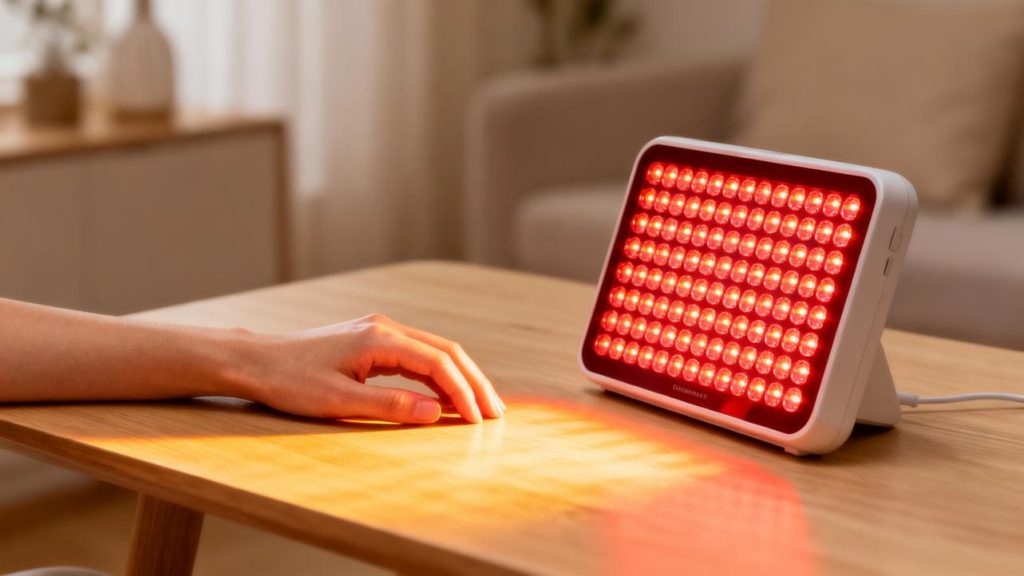
The form factor changes treatment area, dose uniformity, and price tier. Panels dominate the clinic market because they cover a large area with even irradiance. Beds offer full-body coverage but cost more and require more space. Handheld units are portable but treat only small areas, so session time increases sharply.
The table below compares the three classes on the criteria that matter for a purchasing decision. Every row includes a consequence you can act on during sourcing.
| Criteria | Panel (60-300 LEDs) | Bed (500-1500 LEDs) | Handheld (10-30 LEDs) |
|---|---|---|---|
| Typical treatment area | 12 x 24 in to 24 x 48 in | Full body, 72 x 30 in | 2 x 4 in spot |
| Irradiance at 6 in | 20-50 mW/cm2 | 10-30 mW/cm2 | 30-80 mW/cm2 |
| Session time for 10 J/cm2 | 3-8 min | 6-15 min | 2-5 min per spot |
| Thermal management | Passive heatsink or fan | Active cooling required | Passive only |
| Price tier (OEM, FOB) | $150-$600 | $1,500-$4,000 | $30-$120 |
| Key failure mode | Uneven LED binning | Fan noise and dust ingress | Overheating driver |
Panels are the default choice for clinics because they balance coverage, dose control, and cost. Beds make sense only for high-throughput wellness centers that can justify the space and maintenance. Handhelds are best as companion devices for spot treatment or travel.
Thermal Design and Driver Quality: What Fails First
LEDs convert most of their electrical input into heat, not light. Without adequate thermal management, junction temperature rises and output drops, sometimes by 20-30% within the first 10 minutes of operation. That means the delivered dose falls below the intended level even though the panel looks bright.
Look for panels with aluminum heatsinks, active fans, or both. The driver is equally important: a constant-current driver holds LED current steady as temperature changes, while a constant-voltage driver allows current to drift. Constant-current drivers are the industry standard for clinical devices.
Ask the supplier for the driver part number and the LED junction temperature at full power after 30 minutes. A reputable manufacturer will have thermal test data. If the panel uses a constant-voltage wall adapter, treat it as a consumer-grade device regardless of the marketing language.
Safety Standards and Certification Routes
Infrared light therapy devices fall under photobiological safety standard IEC 62471. This standard classifies devices by their risk of eye and skin damage from optical radiation. Most clinical panels fall into the Exempt or Risk Group 1 category, meaning they are safe for normal use without special eyewear.
For the US market, many panels are marketed as general wellness devices under FDA enforcement discretion. That means no 510(k) clearance is required if the device makes only low-level wellness claims and does not claim to treat a specific disease. For the EU, CE marking under the Low Voltage Directive and EMC Directive is common, but if the device makes medical claims, it may need conformity assessment under the Medical Device Regulation.
Request the IEC 62471 test report from an accredited lab. A supplier that cannot provide one has not done basic safety due diligence. Also confirm the electrical safety certification: UL 60601-1 for medical devices or UL 60950-1 for general equipment.
Sourcing Infrared Light Therapy Devices: Supplier Questions and Price Tiers
Most infrared light therapy panels are manufactured in China, with clusters in Shenzhen and Guangzhou. OEM and ODM suppliers typically offer three tiers: consumer-grade, clinic-grade, and medical-grade. The differences are in LED binning, driver quality, thermal design, and documentation.
Consumer-grade panels cost $50-$150 FOB and often use unbinned LEDs and constant-voltage drivers. Clinic-grade panels cost $150-$600 FOB and include binned LEDs, constant-current drivers, and IEC 62471 reports. Medical-grade panels cost $600-$2,000 FOB and add 60601-1 electrical safety, full batch traceability, and regulatory support.
Typical MOQ is 50-200 units for OEM orders, with lead times of 30-60 days. Some suppliers offer lower MOQs for stock models but charge a premium. Always request a pre-production sample and test it with a spectrometer and optical power meter before placing a bulk order.
Supplier questions that expose weak vendors
- Can you provide the LED bin code and manufacturer part number for the exact batch?
- What is the irradiance at 6 inches with a 1 cm2 sensor, and what meter was used?
- Do you have an IEC 62471 test report from an accredited lab?
- What is the LED junction temperature after 30 minutes at full power?
- What is the constant-current driver part number and its tolerance?
Frequently Asked Questions
What is the difference between red light and infrared light therapy?
Red light therapy uses 630-660 nm wavelengths that penetrate 1-3 mm into skin, while near-infrared light uses 810-850 nm wavelengths that penetrate 5-10 mm and reach muscle and joint tissue. Many panels combine both bands for broader coverage.
How much irradiance do I need for a clinical panel?
Aim for 20-50 mW/cm2 at the treatment distance, typically 6 inches. Below 10 mW/cm2, session times become impractically long for a 10 J/cm2 dose. Above 60 mW/cm2, thermal discomfort and skin heating become concerns.
Do I need FDA approval to sell infrared light therapy devices in the US?
For general wellness devices that make no disease-treatment claims, FDA enforcement discretion applies and no 510(k) is required. If you make medical claims, you must obtain clearance. Consult a regulatory specialist before finalizing labeling.
Why do two panels with the same wattage deliver different doses?
Wattage is total electrical input, not optical output. Differences in LED efficiency, lens design, beam angle, and driver current all change the delivered irradiance. Always compare mW/cm2 at a defined distance, never total watts.
What to Do Next
You now have the spec-sheet criteria to evaluate any infrared light therapy device: wavelength tolerance of ±5 nm or better, irradiance of 20-50 mW/cm2 at 6 inches, constant-current driver, and IEC 62471 report. These four checks eliminate most underperforming panels before you spend money on samples.
Start by requesting those four documents from three suppliers. Test the samples with a calibrated spectrometer and optical power meter. Then place a small pilot order of 10-20 units and measure output consistency across the batch. That process takes about six weeks and will save you from importing a container of panels that cannot deliver a therapeutic dose.
Post time: 11-17-26