

Jaundice light treatment for newborns relies on narrowband blue light, typically 450–470 nm, delivered at a measured irradiance of 30–35 µW/cm²/nm to lower unconjugated bilirubin. The practical question for importers and clinic owners is not whether phototherapy works, but which device design—LED panel, halogen spotlight, or fiberoptic blanket—meets clinical duty cycles at a defensible cost. This article breaks down the specifications, standards, and supplier checks that separate a reliable unit from a risky purchase.
How Jaundice Light Treatment for Newborns Works
Phototherapy converts bilirubin into water-soluble isomers that the infant can excrete without liver conjugation. The conversion rate depends on three controllable variables: peak wavelength, spectral irradiance at the skin, and exposed body surface area. Clinical guidelines, including those from the American Academy of Pediatrics, converge on a narrow blue band of 460–490 nm, with 450–470 nm as the most efficient range for bilirubin absorption.
Irradiance is the number to verify on every spec sheet. A minimum of 30 µW/cm²/nm at the infant’s skin is the common threshold for intensive phototherapy, while 10–15 µW/cm²/nm is considered standard. Many low-cost panels quote total irradiance in mW/cm², which is not interchangeable with spectral irradiance; always ask for the µW/cm²/nm value measured with a calibrated radiometer at the treatment distance.
LED vs Halogen vs Fiberoptic: A Comparison Table
| Technology | Typical Irradiance | Heat Output | Lifespan | Consequence for Buyer |
|---|---|---|---|---|
| LED panel | 30–50 µW/cm²/nm | Low | 20,000–50,000 hours | Higher upfront cost, lower maintenance; verify uniform irradiance across the full mattress area. |
| Halogen spotlight | 20–35 µW/cm²/nm | High | 500–2,000 hours | Cheap to buy, expensive to run; requires frequent bulb changes and strict distance monitoring to avoid burns. |
| Fiberoptic blanket | 10–20 µW/cm²/nm | Very low | 10,000–20,000 hours (source) | Good for home use or combination therapy, but often insufficient alone for intensive treatment. |
| Compact fluorescent | 15–25 µW/cm²/nm | Moderate | 5,000–10,000 hours | Fading from market due to mercury disposal and lower efficiency; check for flicker and warm-up time. |
The table shows why LED panels dominate new hospital purchases: they deliver the highest spectral irradiance without the thermal risk of halogen. However, LED uniformity is a common failure mode. A panel rated 40 µW/cm²/nm at center may drop to 20 µW/cm²/nm at the corners, leaving parts of the infant undertreated. Ask the supplier for an irradiance map, not a single point measurement.
Key Specifications to Verify Before Ordering
When evaluating a jaundice light treatment device for newborns, four numbers on the data sheet matter more than any marketing language. First, confirm the peak wavelength is within 450–470 nm, not a broad “blue” range that wastes energy outside the bilirubin absorption curve. Second, demand spectral irradiance in µW/cm²/nm at a stated distance, typically 30–50 cm from the light source.
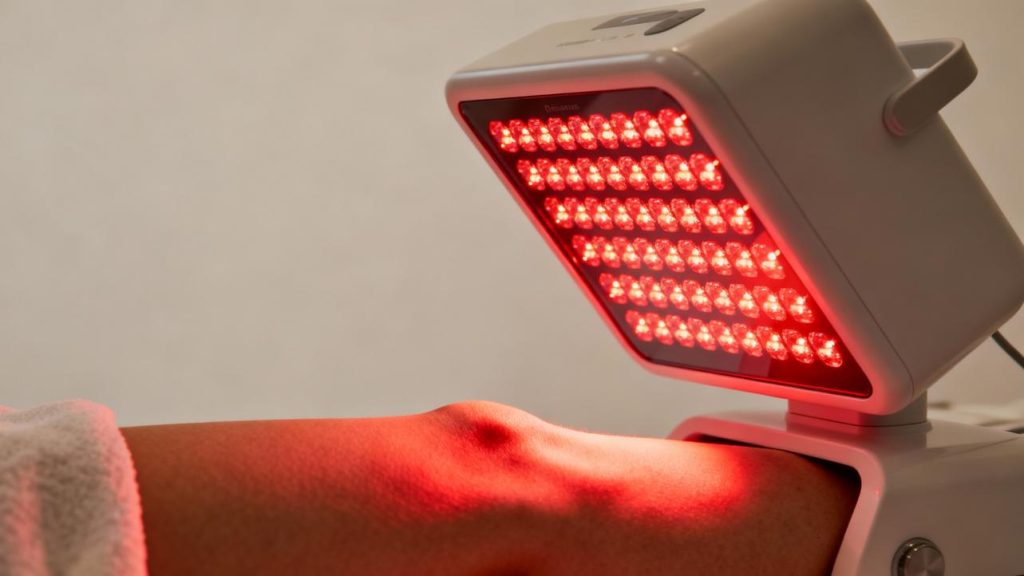
Third, check the treatment area coverage. A panel should illuminate at least 60 × 30 cm at the specified irradiance, enough for a standard bassinet. Fourth, look at the LED binning and driver design. Constant-current drivers prevent irradiance drift as LEDs heat up, which is a common cause of underdosing in cheap units after the first hour of use.
- Peak wavelength: 450–470 nm, with full width at half maximum under 30 nm.
- Spectral irradiance: ≥30 µW/cm²/nm for intensive, ≥10 µW/cm²/nm for standard, measured at treatment distance.
- Uniformity: irradiance variation across the treatment area should be less than ±20%.
- Electrical safety: IEC 60601-1 and IEC 60601-2-50 compliance, with leakage current below 100 µA.
Regulatory and Safety Standards: IEC 62471 and IEC 60601-2-50
Jaundice light treatment for newborns is a medical procedure, so the device must meet photobiological and electrical safety standards. IEC 62471 classifies the light source’s risk to skin and eyes; for neonatal phototherapy, the blue light hazard is usually in the exempt or low-risk group if the irradiance is below 100 µW/cm²/nm, but the standard requires labeling and measurement documentation. More critical is IEC 60601-2-50, the particular standard for infant phototherapy equipment, which sets requirements for irradiance stability, timer accuracy, and protection against overheating.
In the US, a 510(k) clearance is typically required for jaundice phototherapy devices unless they qualify as low-risk general wellness products. Most hospital buyers will not consider a device without FDA clearance or CE marking under the Medical Device Regulation. Ask the supplier for the certificate number and verify it on the FDA or EU database; counterfeit certificates are a known problem in low-cost sourcing.
A practical rule of thumb: if the supplier cannot provide an irradiance map and a copy of the IEC 60601-2-50 test report within 48 hours, walk away. Legitimate manufacturers keep these documents on file for every production batch.
Sourcing from OEM/ODM Suppliers: Questions and Red Flags
Importers and distributors sourcing jaundice light treatment devices from China or Southeast Asia face a wide quality spread. Typical price tiers for LED panels range from $200–$600 per unit at 100–500 pieces, with lead times of 30–60 days for OEM branding. Halogen units are cheaper at $80–$200, but the hidden cost of replacement bulbs and higher electricity consumption erodes the margin over three years.
Before placing an order, ask these questions and document the answers in writing. A supplier that hesitates on any of them is likely cutting corners on LED binning, driver quality, or safety testing.
- What is the measured spectral irradiance at 30 cm, and can you provide a test report from a calibrated spectroradiometer?
- Which LED bins are used, and what is the wavelength tolerance? (Look for ±5 nm or tighter.)
- Is the driver constant-current or constant-voltage? Constant-voltage drivers cause irradiance to drop as LEDs heat up.
- Do you have a valid IEC 60601-1 and IEC 60601-2-50 test report from an accredited lab, not just a CE self-declaration?
- What is the warranty on LED modules, and what is the stated lumen maintenance at 10,000 hours?
Common failure modes in low-cost panels include uneven LED spacing that creates hot spots, poor thermal management that shortens LED life to under 5,000 hours, and firmware timers that drift by more than 10% over a month. Ask for a sample unit and measure irradiance at nine points across the treatment area with a calibrated meter before committing to a container order.
Maintenance and Lifetime Costs: What the Spec Sheet Won’t Tell You
The purchase price of a jaundice light treatment device is only the first cost. LED panels have a rated lifespan of 20,000–50,000 hours, but that assumes proper thermal management and a junction temperature below 85°C. Cheap panels with inadequate heat sinks can lose 30% of their irradiance within the first 2,000 hours, which means the device fails to deliver intensive therapy long before the LEDs actually burn out.
Routine maintenance includes monthly irradiance checks with a calibrated radiometer, cleaning the acrylic diffuser to remove dust and disinfectant residue, and replacing any LED module that falls below 80% of its initial output. Budget $300–$800 per year per device for calibration and replacement parts, depending on usage. Halogen units require bulb changes every 500–2,000 hours, adding $50–$150 per bulb and significant labor time in a busy NICU.
FAQ: Jaundice Light Treatment for Newborns
What is the minimum irradiance for effective jaundice light treatment?
For intensive phototherapy, the American Academy of Pediatrics recommends a spectral irradiance of at least 30 µW/cm²/nm over the 460–490 nm band, measured at the infant’s skin. Standard phototherapy can use 10–15 µW/cm²/nm, but many clinicians now start with intensive levels for faster bilirubin reduction and shorter hospital stays.
Are LED jaundice lights safe for a newborn’s eyes?
Yes, when used with proper eye protection. The blue light can damage the retina if the infant looks directly at the source, so opaque eye shields are mandatory during treatment. The device itself should comply with IEC 62471 photobiological safety limits, and the exposed skin should be checked regularly for erythema or overheating.
How long does a jaundice light treatment device last?
A well-built LED panel should maintain at least 80% of its initial irradiance for 20,000–50,000 hours, which translates to 5–10 years of typical hospital use. Halogen bulbs last only 500–2,000 hours and require frequent replacement. Always ask for the LM-80 test report that verifies LED lumen maintenance over time.
Can I use a red light therapy panel for jaundice treatment?
No. Red light therapy panels emit wavelengths of 630–850 nm, which do not convert bilirubin efficiently. Jaundice phototherapy requires narrowband blue light at 450–470 nm. Using a red light panel would delay treatment and could lead to higher bilirubin levels, so it is not a substitute for a dedicated phototherapy device.
What to Do Next: A Sourcing Checklist
Before you contact suppliers, write down your clinical requirements: target irradiance, treatment area size, and expected daily usage hours. Then request the three documents that separate serious manufacturers from resellers: an irradiance uniformity map, an IEC 60601-2-50 test report, and an LM-80 LED lifetime report. If a supplier cannot produce all three, move to the next one.
Finally, order a pre-production sample and test it yourself. Measure spectral irradiance at nine points across the treatment area, run the device for 24 hours and re-measure to check thermal drift, and verify the timer accuracy against a stopwatch. These checks take an afternoon but can prevent a container load of devices that underdose newborns and damage your reputation.
Post time: 11-17-26