

How to heal herpes sores faster is a question that drives both clinical protocol design and device purchasing decisions. Red light therapy, also called photobiomodulation, uses specific wavelengths to potentially reduce healing time and symptom severity. This article reviews the evidence, dosing ranges, hardware specifications, and sourcing factors for importers, distributors, and clinic owners evaluating LED-based devices for herpes sore management.
What Red Light Therapy Does at the Cellular Level
Red and near-infrared light are absorbed by cytochrome c oxidase in mitochondria, increasing ATP production and modulating reactive oxygen species. For herpes sores, this may accelerate epithelial repair and reduce local inflammation. The mechanism is photochemical, not thermal: tissue temperature rises less than 1°C at therapeutic irradiance.
Wavelengths matter because penetration depth and absorption coefficients differ. Red light at 630-660 nm reaches the basal epidermis and superficial dermis, while near-infrared at 810-850 nm penetrates 2-3 mm deeper. For labial or genital sores, red light alone is usually sufficient because lesions are superficial.
A typical session uses 3-20 J/cm² delivered at 10-50 mW/cm². Higher irradiance shortens session time but increases risk of thermal discomfort if the device lacks proper heat sinking. Most clinical protocols for wound healing use daily sessions for 5-10 days, but herpes-specific studies are limited and heterogeneous.
Evidence for Faster Herpes Sore Healing
Published clinical trials on photobiomodulation for herpes simplex are small and often uncontrolled. A 2013 randomized trial of 28 patients with recurrent herpes labialis found that 660 nm light at 4 J/cm² reduced time to crusting by 2.1 days compared with placebo. Another study using 810 nm at 6 J/cm² reported reduced pain scores but no significant difference in total healing time.
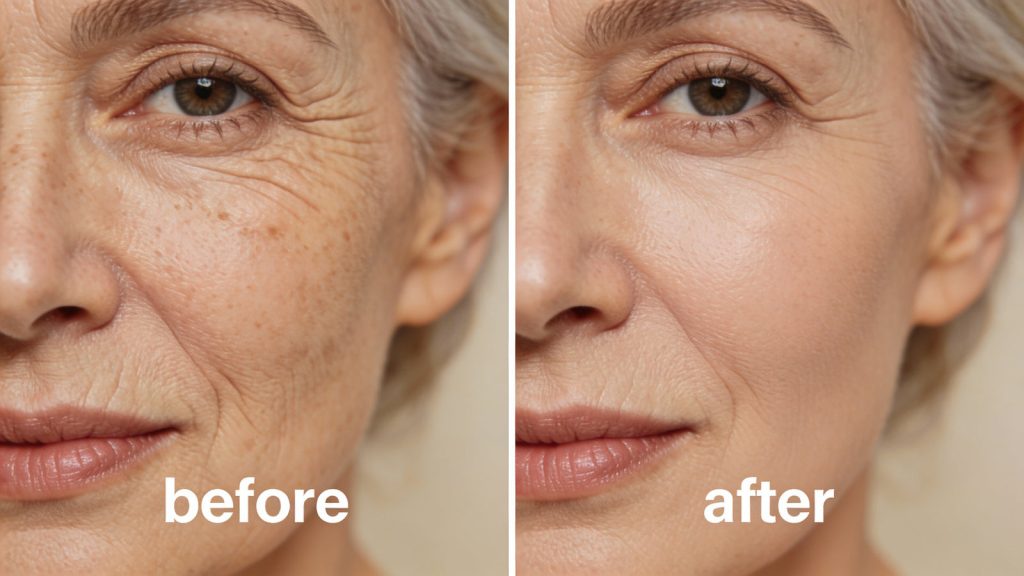
These results are promising but not definitive. The heterogeneity in wavelength, dose, and treatment schedule makes meta-analysis difficult. Clinicians should treat red light therapy as an adjunct to standard antiviral therapy, not a replacement.
Practical rule: start with 4-6 J/cm² per session at 630-660 nm, once daily for 5 days, and adjust based on patient tolerance. Do not exceed 20 J/cm² per session without a documented rationale.
For device buyers, the key implication is that clinical claims must be supported by your own testing or supplier data. A manufacturer that promises a specific healing time reduction is making a medical claim that requires regulatory clearance in most markets.
Choosing the Right Wavelength and Irradiance
LED devices for herpes sores typically use 630-660 nm red light. Some panels add 810-850 nm near-infrared to target deeper tissue, but for superficial lesions this adds cost without clear benefit. The optimal wavelength depends on lesion depth and skin type: darker skin absorbs more light, reducing effective fluence at the target.
Irradiance at the skin surface should be measured with a calibrated optical power meter, not estimated from LED datasheets. A common failure mode is a device that outputs 100 mW/cm² at the LED surface but only 15 mW/cm² at a 10 cm treatment distance due to poor optics or LED spacing.
For clinical use, a panel with 30-60 mW/cm² at the treatment plane allows a 4 J/cm² dose in 2-3 minutes. Handheld devices often have higher peak irradiance but smaller spot size, requiring multiple passes to cover a sore larger than 1 cm².
| Device Type | Typical Irradiance at Skin | Treatment Area | Consequence for Herpes Sore Use |
|---|---|---|---|
| Handheld LED (single diode) | 50-150 mW/cm² | 1-3 cm² | Precise dosing but slow for multiple or large sores |
| Small panel (10×10 cm) | 20-60 mW/cm² | 100 cm² | Good for perioral region, requires 2-5 minute sessions |
| Large panel (30×30 cm) | 30-80 mW/cm² | 900 cm² | Overkill for herpes; higher cost and heat management burden |
| LED bed or wrap | 10-40 mW/cm² | Full body | Not practical for localized sores; risk of overexposure |
For herpes sores, a small panel or a well-designed handheld is usually the best balance of cost, coverage, and dosing control. Large panels and beds are intended for systemic or musculoskeletal applications and introduce unnecessary safety and regulatory complexity.
LED Chip Quality and Wavelength Tolerance
Not all 660 nm LEDs are equal. Reputable suppliers bin chips to ±5 nm tolerance, while low-cost chips may drift ±15 nm or more. A 645 nm chip still falls within the red band but has lower cytochrome c oxidase absorption than 660 nm, reducing effective dose by up to 30%.
Ask suppliers for a spectral power distribution plot measured with an integrating sphere, not just the peak wavelength. The full width at half maximum should be 20-30 nm for a typical LED. Chips with a secondary peak in the infrared indicate poor quality control.
Safety Standards and Regulatory Compliance
Red light therapy devices are classified under IEC 62471 for photobiological safety. For skin-only treatment at 630-660 nm and irradiance below 100 mW/cm², the device typically falls into the Exempt or Risk Group 1 category. Near-infrared wavelengths require more careful assessment because of retinal hazard potential.

In the United States, red light therapy devices for herpes treatment are Class II medical devices requiring a 510(k) clearance if the manufacturer makes disease-specific claims. Many devices are marketed under general wellness claims, which avoids the need for premarket notification but prohibits any mention of herpes or healing.
For importers, the critical document is the Declaration of Conformity to IEC 60601-1 for electrical safety and IEC 62471 for optical safety. A supplier that cannot provide test reports from an accredited lab is a red flag, regardless of price.
- Verify wavelength tolerance with a spectral plot, not a datasheet claim.
- Request IEC 62471 test report and confirm the risk group for the intended treatment distance.
- Check that the driver is constant-current, not constant-voltage, to prevent LED overdrive and wavelength shift.
- Confirm that the device has a timer with automatic shutoff to prevent overdosing.
How to Heal Herpes Sores Faster: Clinical Protocol Considerations
For clinic owners, the protocol should specify wavelength, irradiance, dose, treatment area, and session frequency. A defensible starting protocol is 630-660 nm at 20-50 mW/cm², delivering 4-6 J/cm² per session, once daily for 5 consecutive days. This falls within the range used in published wound healing studies.
Treatment should begin at the prodrome stage, when tingling or burning occurs before visible blisters. Early intervention may reduce lesion severity, but this has not been proven in large trials. Patients with recurrent sores should be advised that red light therapy does not prevent viral shedding or transmission.
Documentation matters for both clinical and regulatory reasons. Record the device serial number, session date, dose, and patient-reported pain scores. This data supports future protocol refinement and protects against liability if a patient claims harm.
Sourcing Red Light Therapy Devices for Herpes Applications
Importers and distributors should evaluate suppliers on three dimensions: optical performance, electrical safety, and regulatory documentation. The lowest-cost panels from generic Alibaba suppliers often fail on all three, with wavelength drift, non-compliant drivers, and missing test reports.
Typical price tiers for a 10×10 cm 660 nm panel are $25-45 per unit at 500-unit MOQ from Chinese OEMs, $60-100 from mid-tier manufacturers with in-house testing, and $150-300 from US or EU brands with 510(k) clearance. Lead times range from 30 days for stock designs to 90 days for custom wavelength mixes or housing.
For herpes-specific devices, the market is smaller than for general wellness panels, so most suppliers will offer a standard red light panel rather than a purpose-built herpes device. This is acceptable if the panel meets the wavelength and irradiance requirements, but the importer must avoid making disease-specific claims on packaging or marketing materials unless the device has clearance.
Questions to Ask a Supplier
- Can you provide an IEC 62471 test report for the exact model and treatment distance?
- What is the wavelength bin tolerance for the LEDs used in this production batch?
- Is the driver constant-current with over-temperature protection?
- What is the measured irradiance uniformity across the treatment plane at 5 cm and 10 cm?
- Do you hold any medical device certifications, such as ISO 13485 or MDSAP?
Suppliers that answer these questions with specific numbers and documents are more likely to deliver consistent quality. Those that respond with marketing language or vague assurances should be deprioritized.
FAQ: Red Light Therapy for Herpes Sores
Does red light therapy cure herpes?
No. Red light therapy does not eliminate the herpes simplex virus from the body. It may support faster healing of sores and reduce local symptoms, but it is not a cure and does not prevent future outbreaks or viral shedding.
What is the best wavelength for herpes sores?
Most studies use 630-660 nm red light because it is well absorbed by superficial tissue and has a strong evidence base for wound healing. Near-infrared at 810-850 nm may be added for deeper penetration, but for typical labial or genital sores, red light alone is sufficient and less expensive.
How many sessions are needed to see faster healing?
Clinical protocols typically involve one session per day for 5-10 days, starting at the first sign of an outbreak. Some users report reduced pain after the first session, but healing time reduction is more reliably seen after 3-5 sessions.
Is red light therapy safe for all skin types?
Red light at therapeutic doses is generally safe for all Fitzpatrick skin types, but darker skin absorbs more light, which may reduce the effective dose at the target. Clinicians should adjust irradiance or session time accordingly and monitor for any unexpected skin reaction.
What to Do Next
If you are evaluating red light therapy for herpes sore management, start by defining your clinical or commercial requirements: wavelength, treatment area, session time, and regulatory pathway. Then request spectral data and safety test reports from at least three suppliers before making a purchase decision.
For clinic owners, run a small pilot with 10-20 patients using a documented protocol and track healing time, pain scores, and adverse events. This data will inform whether red light therapy is worth adding to your herpes treatment offerings.
For importers and distributors, remember that disease-specific claims require regulatory clearance in most markets. Marketing a general wellness panel as a herpes treatment device without proper certification exposes you to legal and reputational risk. Choose suppliers that provide verifiable optical and electrical test data, and build your product claims on evidence, not enthusiasm.
Post time: 11-17-26