


Choosing the best red light therapy panel for your business in 2026 is not simply about choosing the panel with the highest wattage or the largest number of LEDs.
For clinics, gyms, beauty centers, wellness facilities, spas, rehabilitation centers, distributors, and private-label brands, the right commercial red light therapy panel needs to match the business application, treatment area, customer volume, operating environment, technical requirements, and budget.
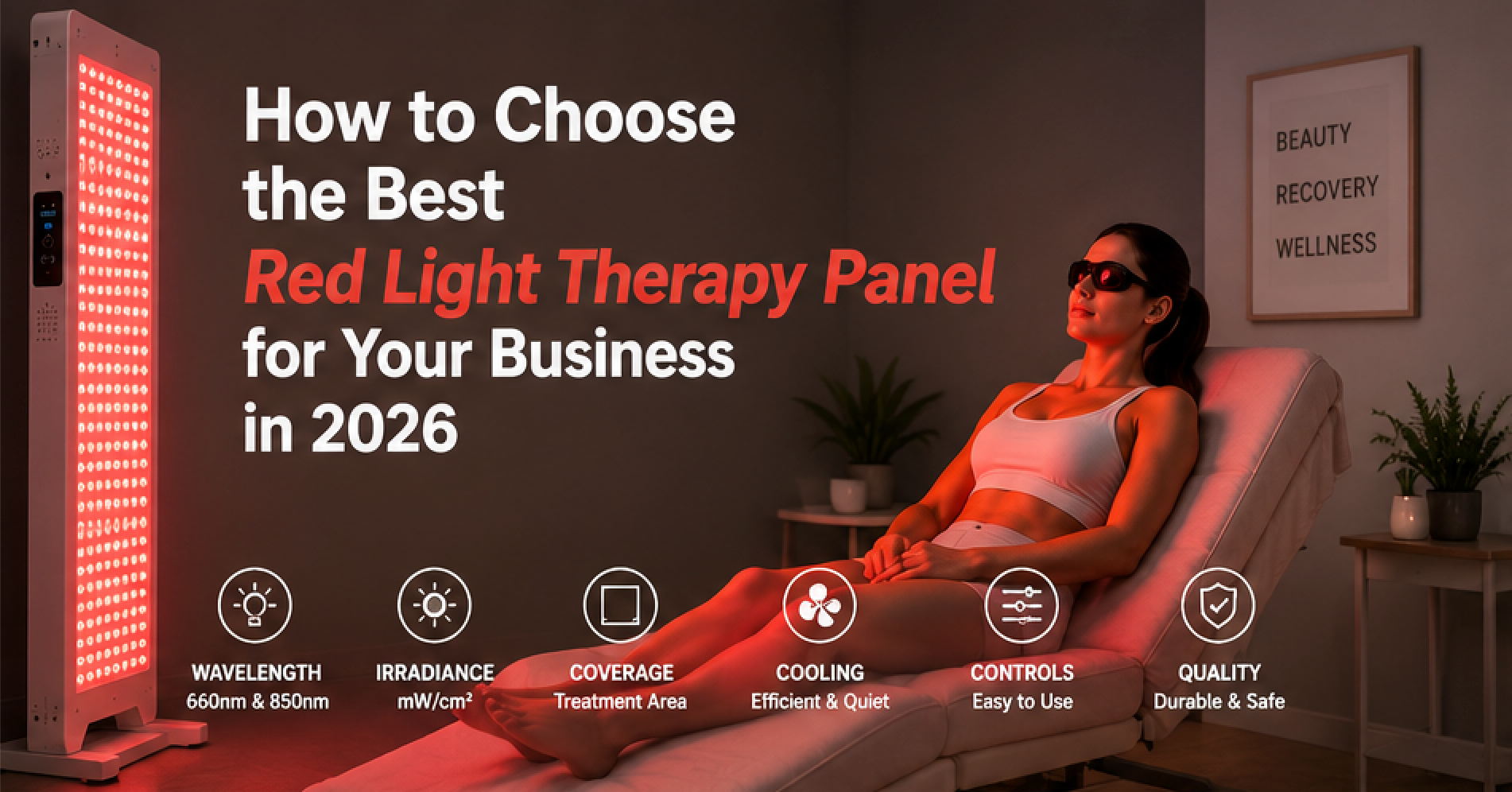
A professional red light therapy panel should be evaluated based on wavelength, irradiance, treatment distance, coverage area, LED configuration, cooling, controls, durability, warranty, and customization options.
This guide explains how to choose the right professional red light therapy equipment for your business in 2026.
What Makes a Red Light Therapy Panel Suitable for Business Use?
A home-use device and a commercial red light therapy panel are not necessarily designed for the same operating environment.
A business may need to use its equipment repeatedly throughout the day. This means commercial buyers should consider more than basic power specifications.
Important factors include:
- Wavelength
- Irradiance
- Treatment distance
- Treatment coverage
- LED quantity
- Cooling system
- Operating controls
- Timer functions
- Housing materials
- Product durability
- Warranty
- Technical support
- OEM/ODM capabilities
For businesses looking for a complete range of equipment, the 【Professional Red Light Therapy Panels】 section of the website provides different panel configurations for professional applications.
1. Define Your Business Application First
The best red light therapy panel depends on what your business wants to use it for.
Before comparing products, determine your primary application.
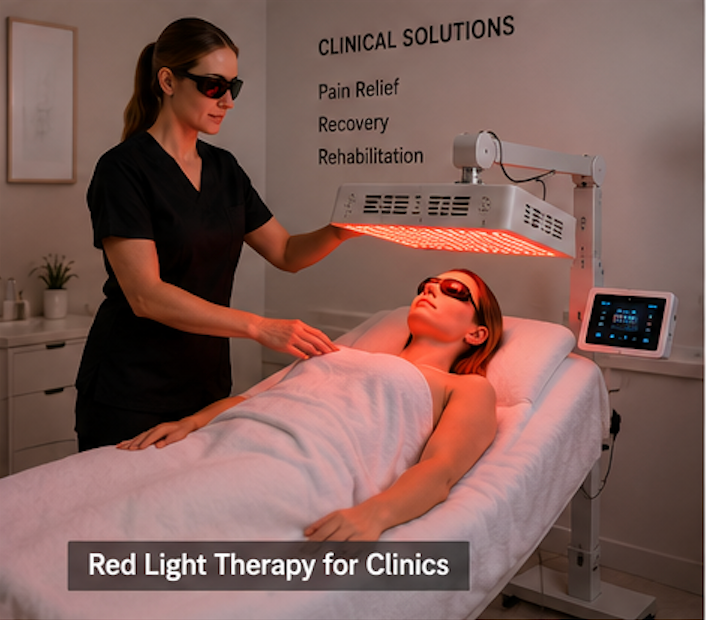
Red Light Therapy Panels for Clinics
Clinics generally need professional equipment that can support different treatment areas and repeated daily operation.
If your business is a clinic, rehabilitation center, or professional wellness facility, explore the 【Red Light Therapy Solutions for Clinics】 page.
A clinic should consider:
- Treatment area
- Customer volume
- Equipment placement
- Wavelength requirements
- Irradiance
- Treatment distance
- Staff operation
- Cleaning and maintenance
- Equipment durability
A smaller targeted panel may work well for specific treatment areas, while larger systems can provide broader coverage.
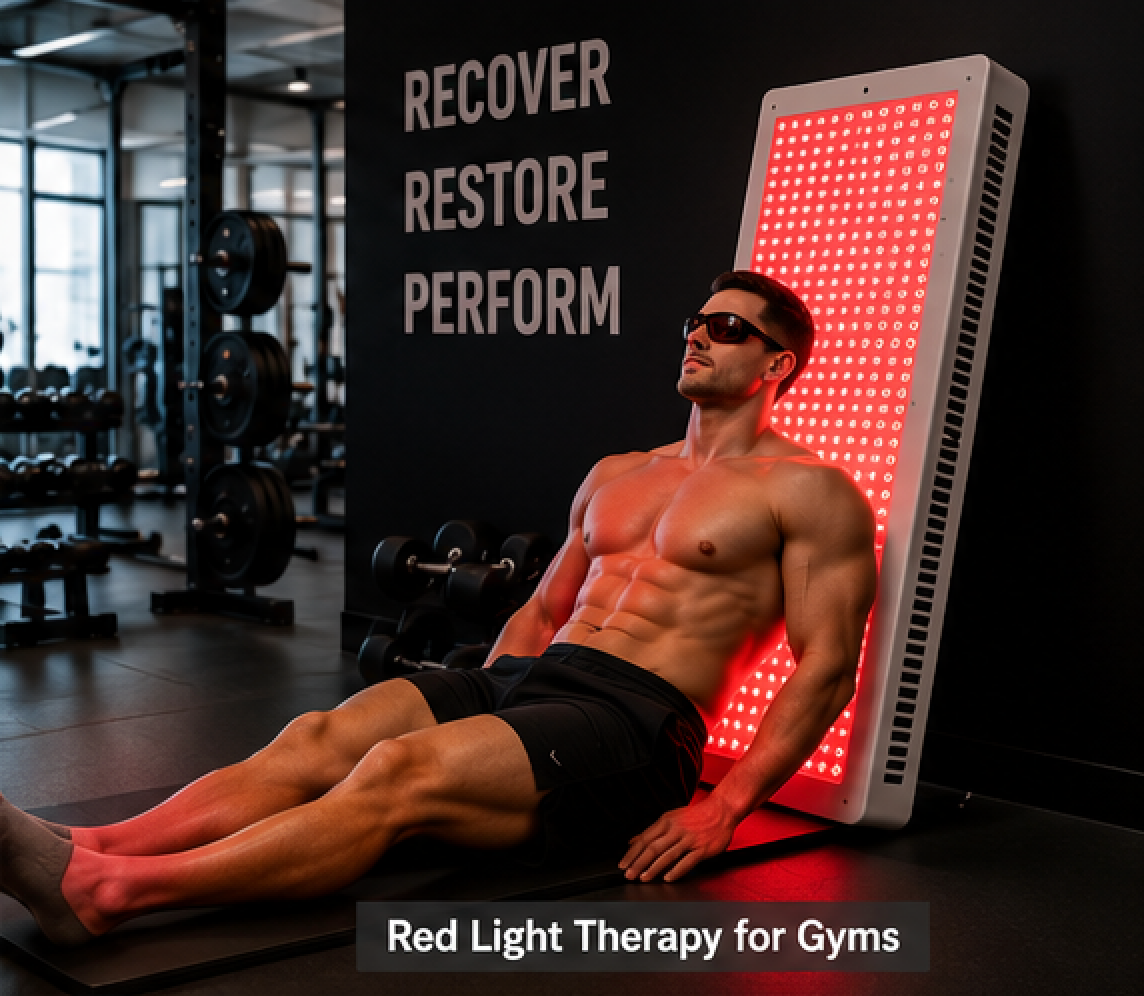
Red Light Therapy Panels for Gyms
Gyms and fitness centers often have different requirements.
The equipment may be placed in a dedicated recovery area or wellness zone, so businesses need to consider customer flow and available space.
Our 【Red Light Therapy for Gyms】 solutions can be used as a reference when planning a commercial fitness application.
For gyms, important considerations include:
- Large-area coverage
- Easy operation
- Adjustable intensity
- Timer functions
- Cooling performance
- Durability
- Fast customer turnover
- Available floor space
A gym with a large customer base may have different equipment requirements from a small boutique fitness studio.
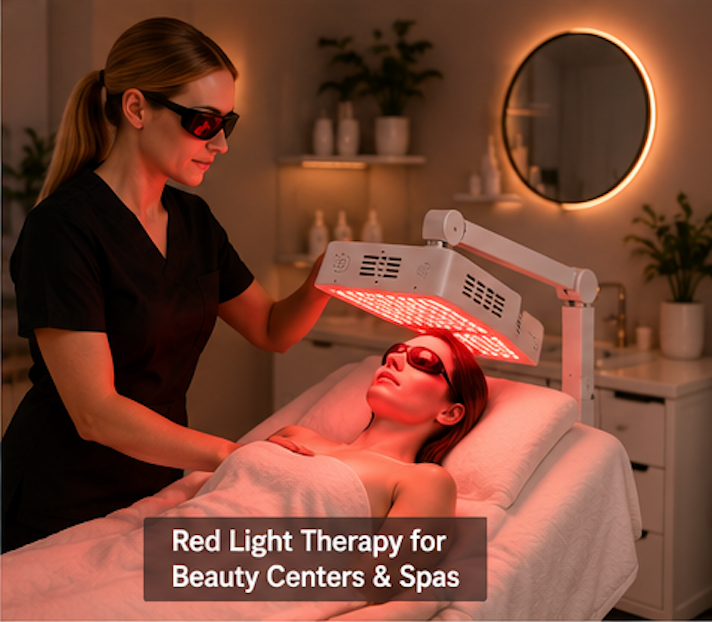
Red Light Therapy Panels for Beauty Centers and Spas
Beauty centers, skincare businesses, aesthetic facilities, and spas may prioritize targeted applications and compact equipment.
Our 【Beauty Red Light Therapy Solutions】 page focuses on professional equipment configurations for beauty and wellness businesses.
For beauty applications, buyers should consider:
- Facial or body treatment areas
- Panel size
- Treatment distance
- Appearance and design
- Customer comfort
- Easy operation
- Cleaning requirements
- Room layout
A compact tabletop panel may be suitable for a smaller treatment room, while larger panels can provide broader coverage.
2. Choose the Right Wavelength
Wavelength is one of the most important technical specifications when choosing a professional red light therapy panel.
Common configurations include red light wavelengths around 630–660nm and near-infrared wavelengths such as 810–850nm.
Many professional systems combine multiple wavelengths.
660nm Red Light
660nm is a visible red-light wavelength.
It is commonly incorporated into red light therapy systems designed for skin and surface-level applications.
For beauty businesses, skincare-focused services, and some targeted applications, 660nm can be an important part of the product configuration.
850nm Near-Infrared Light
850nm is a near-infrared wavelength that is outside the visible range.
It is commonly incorporated into professional systems designed for broader body applications and recovery-oriented wellness services.
660nm + 850nm Dual-Wavelength Systems
For businesses that want greater flexibility, a combination of 660nm + 850nm can be considered.
A dual-wavelength system allows businesses to use both visible red and near-infrared light from the same device.
This can be particularly useful for:
- Clinics
- Gyms
- Wellness centers
- Beauty centers
- Spas
- Sports recovery facilities
However, wavelength should never be the only purchasing criterion.
3. Check Red Light Therapy Irradiance
One of the most important specifications when comparing professional panels is irradiance.
Irradiance describes optical power delivered over a specific area and is commonly expressed in mW/cm².
If you want to understand this specification in more detail, see the 【Red Light Therapy Irradiance Guide】 on the website.
Why Does Irradiance Matter?
Two panels can have similar electrical wattage but deliver different optical output.
For this reason, commercial buyers should ask manufacturers for:
- Irradiance
- Measurement distance
- Measurement method
- Wavelength
- Treatment area
- Actual electrical power
For example, an irradiance value without a measurement distance is difficult to compare.
A professional supplier should clearly state whether the measurement was taken at 3 inches, 6 inches, or another distance.
4. Do Not Choose a Panel Based on Wattage Alone
One of the most common mistakes when buying a commercial red light therapy panel is assuming that higher wattage automatically means better performance.
It does not.
Electrical wattage and optical irradiance are different specifications.
A 600W panel and another 600W panel may have different:
- LED configurations
- Optical lenses
- Irradiance
- Beam angles
- Treatment coverage
- Cooling systems
- Actual power consumption
Therefore, businesses should compare complete technical specifications instead of focusing on the wattage number printed on the product name.
5. Consider Treatment Area and Coverage
Treatment coverage should match your business application.
Small Treatment Areas
For face, neck, joints, or other targeted applications, a compact panel may be more practical.
A smaller panel can:
- Require less space
- Be easier to position
- Support targeted applications
- Work well in smaller treatment rooms
For these applications, a 【60W Red Light Therapy Power Panel】 can be considered as one example of a compact dual-wavelength configuration.
Medium Treatment Areas
If your business needs broader coverage without installing a large full-body system, a medium-size panel can provide a balance between coverage and space requirements.
A 【110W Tabletop Red Light Therapy Panel】 is another type of professional configuration to consider for treatment rooms, wellness facilities, and rehabilitation environments.
Full-Body Applications
Businesses that need larger treatment coverage may consider full-body or large-panel systems.
These can be useful for:
- Wellness centers
- Fitness facilities
- Recovery centers
- Clinics
- Spas
- Professional treatment environments
The key is to select the panel size based on actual customer usage rather than simply choosing the largest product available.
6. Compare Treatment Distance
Treatment distance is another important factor when comparing commercial red light therapy panels.
The amount of light delivered to the treatment area can change with distance.
For example, a manufacturer may specify irradiance at:
- 3 inches
- 6 inches
- 12 inches
When comparing two products, make sure the irradiance measurements were taken at a similar distance.
Otherwise, the numbers may not provide a meaningful comparison.
7. Check LED Configuration and Light Distribution
The number of LEDs is useful, but it should not be the only consideration.
Businesses should also evaluate:
- LED type
- LED density
- Wavelength configuration
- Beam angle
- Light distribution
- Treatment coverage
- Optical lens design
A panel with more LEDs does not automatically provide better results.
The overall optical design is more important than the LED count alone.
8. Evaluate Cooling and Long-Term Operation
Commercial red light therapy equipment may be operated repeatedly throughout the day.
For this reason, cooling is an important consideration.
Active Cooling
Larger professional panels may use fans or other active cooling systems.
The goal is to manage heat during repeated operation.
Passive Cooling
Smaller panels may rely more heavily on heat sinks and passive cooling.
The appropriate cooling design depends on the size, power, operating environment, and product structure.
Why Cooling Matters for Businesses
A commercial buyer should consider:
- Expected daily usage
- Session frequency
- Operating temperature
- Fan noise
- Maintenance
- Ventilation
- Product lifespan
A panel designed for occasional home use may not be the ideal choice for a busy commercial facility.
9. Look at Controls and Operating Modes
Professional equipment should be easy for staff and customers to operate.
Depending on the product, useful functions can include:
- Timer
- Intensity adjustment
- Continuous mode
- Pulse mode
- Preset programs
- Remote control
- Touchscreen
- App control
The right control system depends on the business model.
For example, a small beauty center may prefer simple controls, while a large wellness facility may benefit from more advanced control options.
10. Consider Product Size and Installation
Before purchasing a red light therapy panel, measure the available space.
Consider:
- Wall space
- Floor space
- Treatment bed position
- Customer access
- Panel height
- Panel width
- Mounting requirements
- Cable management
- Storage
A large panel may offer greater coverage but require more installation space.
A compact panel may be easier to integrate into an existing treatment room.
The best solution is therefore the one that balances coverage, performance, workflow, and available space.
11. Choose Equipment Based on Customer Volume
Customer volume should influence your purchasing decision.
Small Business
A small clinic, beauty studio, or boutique gym may only need one or two professional panels.
The priority may be:
- Compact design
- Flexible installation
- Easy operation
- Reasonable investment
- Multi-purpose use
Medium-Sized Business
A medium-sized facility may need multiple panels or a combination of panel sizes.
For example:
Targeted Panel + Medium Panel + Full-Body Panel
This can create different treatment zones within the same facility.
High-Volume Facility
Large clinics, wellness chains, fitness centers, and recovery facilities may need multiple professional systems.
In this case, businesses should pay particular attention to:
- Durability
- Cooling
- Maintenance
- Warranty
- Replacement parts
- Technical support
- Supply consistency
12. Consider OEM and ODM Requirements
If you are buying red light therapy panels for your own brand, OEM and ODM capabilities should be considered from the beginning.
A manufacturer may be able to customize:
Product Design
- Housing
- Dimensions
- Mounting system
- Appearance
- Logo
Technical Configuration
- Wavelength
- LED quantity
- Irradiance
- Power
- Timer
- Operating modes
Branding
- Logo
- Packaging
- User manuals
- Product labels
- Brand colors
Smart Features
Depending on the product, customization may include:
- App interface
- UI
- Firmware
- Remote control
- Preset programs
The website currently positions itself as a B2B OEM/ODM manufacturer and offers customized design, private labeling, packaging, wavelengths, and app/UI customization.
For brands and distributors, this can be more important than simply finding the lowest unit price.
13. Choose the Right Red Light Therapy Panel for Your Budget
Price should be evaluated together with the total cost of ownership.
Instead of asking:
“Which panel is cheapest?”
ask:
“Which panel provides the right specifications for my business at an acceptable total cost?”
Consider:
- Product price
- Shipping
- Installation
- Warranty
- Maintenance
- Replacement parts
- Expected operating life
- Customer capacity
- After-sales support
A cheaper panel may not necessarily be more cost-effective if it cannot support your expected operating volume.
14. Compare Different Panel Sizes
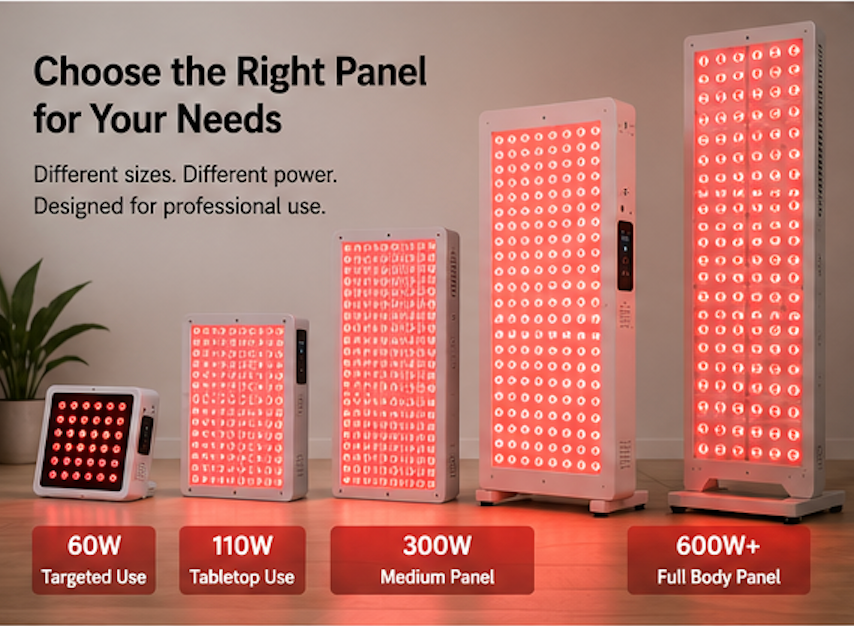
A professional red light therapy manufacturer may offer several panel configurations.
A typical product portfolio can include:
| Panel Type | Typical Business Application |
|---|---|
| Small / Targeted Panel | Beauty rooms, targeted applications, small clinics |
| Tabletop Panel | Clinics, spas, wellness rooms |
| Medium Panel | Gyms, clinics, wellness centers |
| Large Panel | Recovery centers, commercial facilities |
| Full-Body Panel | Wellness centers, professional facilities |
| Multi-Panel System | High-volume commercial environments |
The website currently lists professional red light therapy panels ranging from compact 60W and tabletop models through larger 300W, 600W, 900W, 1600W and 1700W configurations.
This type of product range allows businesses to select equipment according to treatment coverage and facility requirements rather than using the same panel for every application.
15. Check Certifications, Warranty, and Technical Support
For B2B buyers, product specifications are only part of the purchasing decision.
You should also ask the manufacturer about:
- Product certifications
- Warranty
- Quality control
- Technical documentation
- User manuals
- Replacement parts
- After-sales support
- Production capacity
The manufacturer’s About Us page states that its products carry certifications including FDA, ETL, DLC, CE, and RoHS. Buyers should still verify the specific certification and applicable device before making regulatory or compliance decisions.
For commercial projects, technical support can become especially important when multiple units are installed at the same location.
16. Ask the Manufacturer These Questions Before Ordering
Before placing a bulk order, ask the supplier for clear answers to the following questions:
Technical Questions
- What wavelengths are available?
- What is the actual irradiance?
- At what distance was irradiance measured?
- What is the actual electrical power?
- How many LEDs are used?
- What is the treatment area?
- What cooling system is used?
- What operating modes are available?
Commercial Questions
- What is the MOQ?
- What is the lead time?
- What is the warranty?
- Are spare parts available?
- Can you provide samples?
- Can the product be private labeled?
- Can packaging be customized?
- Can the wavelength configuration be customized?
Compliance Questions
- What certifications does the specific model have?
- What documentation is available?
- What is the intended use?
- What claims can be used in marketing?
- Are there country-specific requirements?
These questions can help you avoid comparing suppliers based only on product price.
Best Red Light Therapy Panel for Different Businesses
There is no single red light therapy panel that is best for every business.
The right choice depends on your application.
For Clinics
Prioritize:
- Professional specifications
- Treatment coverage
- Irradiance
- Wavelength flexibility
- Durability
- Technical support
Explore 【内链:Red Light Therapy Solutions for Clinics】.
For Gyms
Prioritize:
- Large-area coverage
- Easy operation
- Durability
- Cooling
- Customer flow
- Flexible installation
Explore 【内链:Red Light Therapy for Gyms】.
For Beauty Centers
Prioritize:
- Targeted treatment
- Compact design
- Customer comfort
- Appearance
- Easy operation
- Treatment room integration
Explore 【内链:Beauty Red Light Therapy Solutions】.
For Wellness Centers
Prioritize:
- Flexible equipment configurations
- Full-body coverage
- Customer capacity
- Multiple treatment areas
- Professional controls
Explore 【Health Center Red Light Therapy Solutions】.
For Distributors and Private-Label Brands
Prioritize:
- OEM/ODM capabilities
- MOQ
- Customization
- Packaging
- Certifications
- Production capacity
- Long-term supply stability
Red Light Therapy Panel Buying Checklist for 2026
Before you place an order, use this checklist:
Technical
-
Wavelength confirmed
-
Irradiance confirmed
-
Measurement distance confirmed
-
Treatment area confirmed
-
LED configuration confirmed
-
Actual power confirmed
-
Cooling system confirmed
-
Timer confirmed
-
Operating modes confirmed
Commercial
-
MOQ confirmed
-
Sample available
-
Lead time confirmed
-
Warranty confirmed
-
Spare parts available
-
After-sales support available
Branding
-
Logo customization
-
Packaging customization
-
User manual customization
-
Housing customization
-
Wavelength customization
-
App/UI customization
Compliance
-
Certification documents
-
Technical documentation
-
ntended use
-
Applicable market requirements
-
Marketing claim requirements
Frequently Asked Questions
What is the best red light therapy panel for a business?
There is no single best panel for every business.
The appropriate product depends on your business type, treatment area, customer volume, wavelength requirements, irradiance, available space, and budget.
What is the best red light therapy panel for a clinic?
Clinics should generally focus on professional specifications, treatment coverage, wavelength options, irradiance, durability, cooling, controls, warranty, and technical support.
A targeted panel may be suitable for smaller treatment areas, while larger panels may be more appropriate for broader coverage.
What is the best red light therapy panel for a gym?
Gyms should consider coverage area, customer flow, operating volume, durability, cooling, controls, and available space.
A medium or large commercial panel may be more practical for a busy fitness facility than a small consumer device.
What should I look for in a professional red light therapy panel?
Important specifications include:
- Wavelength
- Irradiance
- Treatment distance
- Treatment coverage
- LED configuration
- Cooling
- Timer
- Operating modes
- Warranty
- Technical support
Is higher wattage better?
Not necessarily.
Electrical wattage does not directly tell you how much optical power reaches the treatment area.
Always compare irradiance, measurement distance, wavelength, coverage, and actual power consumption.
Should I choose 660nm, 850nm, or both?
The appropriate configuration depends on your intended application.
For businesses that want broader flexibility, a dual-wavelength configuration such as 660nm + 850nm can be considered.
Can I customize a red light therapy panel for my brand?
Yes. Depending on the manufacturer and product, OEM/ODM customization may include housing, logo, packaging, wavelength configuration, controls, app/UI, and other product specifications.
Final Thoughts: How to Choose the Best Red Light Therapy Panel in 2026
Choosing the right commercial red light therapy panel requires looking beyond wattage and price.
Start with your business application.
Then evaluate:
Business Type → Treatment Area → Wavelength → Irradiance → Coverage → Controls → Cooling → Durability → Warranty → OEM/ODM
For a small beauty studio, a compact targeted panel may be enough.
For a clinic, a professional medium or large panel may provide greater flexibility.
For a gym or wellness center, broader coverage and commercial durability may be more important.
For distributors and private-label brands, OEM/ODM capability and long-term manufacturing support can become critical factors.
The best red light therapy panel is therefore not necessarily the most powerful or the most expensive product.
It is the panel configuration that best matches your application, customers, facility, operating volume, and business model.
If you are planning a commercial red light therapy project in 2026, start by defining your requirements and then compare professional equipment based on measurable specifications rather than marketing claims.

Post time: 09-22-26