


A red light therapy bed is a full-body photobiomodulation device that typically combines 630-660 nm red and 810-850 nm near-infrared LEDs. Buyers evaluating these systems for clinics, wellness centers, or distribution need to separate marketing claims from measurable specifications. This guide covers wavelength tolerance, irradiance, thermal design, safety standards, and supplier qualification so you can make a defensible purchasing decision.
Wavelength Bands and LED Binning
Red light therapy relies on specific absorption bands of cytochrome c oxidase, with common clinical wavelengths at 633 nm, 660 nm, and 850 nm. A bed that lists only “red and infrared” without a tolerance is not specifying anything useful. Reputable suppliers state wavelength tolerance, usually ±5 nm or ±10 nm, and bin their LEDs to maintain consistency across the array.
Ask for the LED manufacturer’s binning report. A 660 nm LED with a ±10 nm tolerance can emit anywhere from 650 nm to 670 nm, which changes the photon energy delivered. For near-infrared, 850 nm is more common than 810 nm in full-body beds because it penetrates slightly deeper, but 810 nm is still used in some clinical protocols. The decision rule is simple: if a supplier cannot provide a binning report or a spectral power distribution graph, treat the wavelength claim as unverified.
Irradiance and Dose: What the Numbers Mean
Irradiance is power density, measured in mW/cm2 at the treatment surface. Most red light therapy beds deliver between 30 and 50 mW/cm2 at the skin, but some budget panels drop below 10 mW/cm2 at the advertised distance. A session dose of 5-20 J/cm2 then requires 3 to 20 minutes depending on irradiance, so a low-irradiance bed forces longer sessions to reach the same dose.
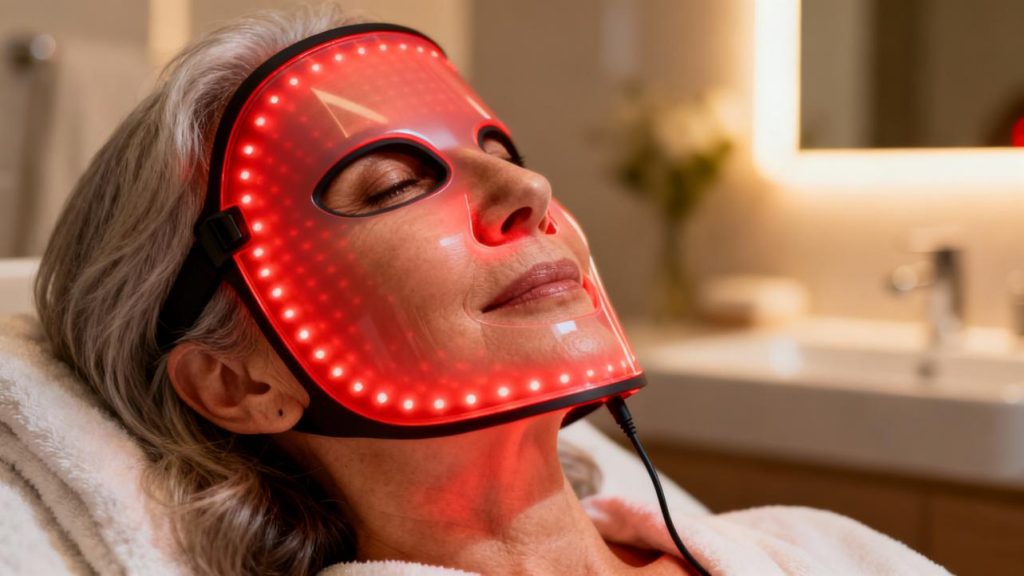
Two measurement conditions matter: distance from the LEDs and whether the sensor is a cosine-corrected spectrometer or a simple lux meter. Lux meters measure visible light and are blind to near-infrared, so an irradiance figure from a lux meter is meaningless for 850 nm. Ask for irradiance measured with a calibrated spectroradiometer at the intended skin distance, typically 15-30 cm from the acrylic shield. A bed that claims 100 mW/cm2 at the surface but drops to 20 mW/cm2 at 30 cm is not a high-dose device.
Rule of thumb: if a supplier quotes irradiance without stating the measurement distance and instrument, assume the number is inflated by at least 50%.
Red Light Therapy Bed Design: Panel, Canopy, and Thermal Management
Most full-body beds are built from multiple flat panels arranged in a canopy or clamshell design. The key thermal failure mode is LED junction temperature: when LEDs run hot, their output drops and their wavelength shifts by 1-2 nm per 10°C. A bed without active cooling may lose 15-20% of irradiance after 30 minutes of continuous use.
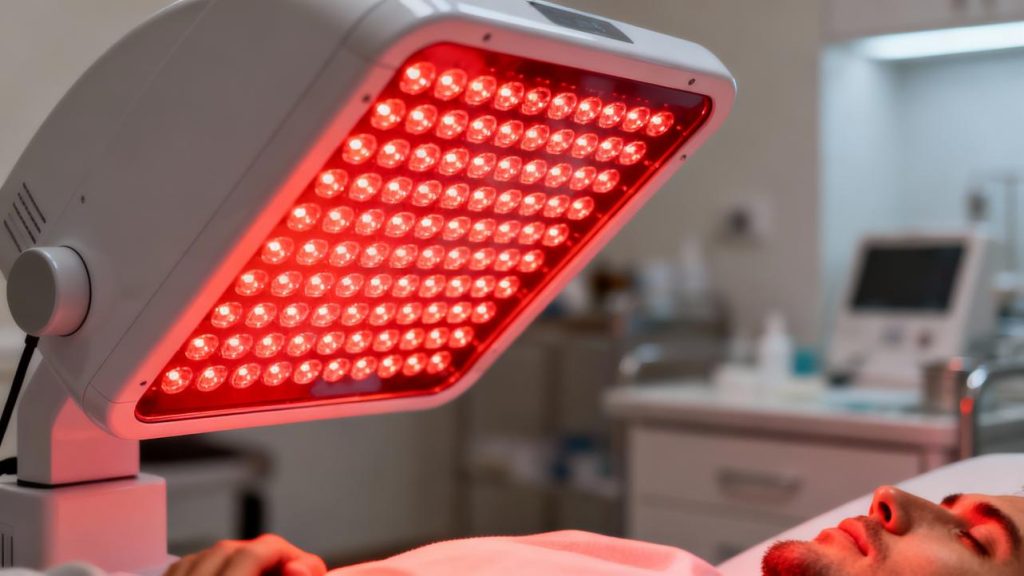
Look for aluminum PCB substrates, heat sinks with adequate fin area, and fans that are quiet enough for a clinical setting, typically below 45 dB at one meter. Passive cooling works for low-power handhelds but not for a bed with 500-2000 LEDs. Ask the supplier for a thermal test report showing irradiance at 0, 15, and 30 minutes of continuous operation. If the drop exceeds 10%, the thermal design is inadequate.
Safety Standards and Regulatory Documentation
For photobiological safety, IEC 62471 is the relevant standard, and a red light therapy bed should be classified as Exempt or Risk Group 1 at the intended use distance. Risk Group 2 is acceptable only if the device includes clear exposure time limits and eye protection. Request the IEC 62471 test report from an accredited lab, not a self-declaration.

In the United States, red light therapy beds are Class II medical devices requiring a 510(k) clearance if marketed for specific medical indications. Many devices are sold as general wellness products, which falls under FDA’s low-risk general wellness guidance and does not require premarket notification, but the claims must be limited to general wellness. For CE marking in Europe, the device falls under the Medical Device Regulation if it has a medical purpose, or under the Low Voltage Directive and EMC Directive if it is a general wellness product. Confirm which route the supplier used and ask for the Declaration of Conformity.
Comparing Device Classes: Bed, Panel, and Handheld
| Device class | Typical irradiance | Coverage | Decision consequence |
|---|---|---|---|
| Full-body bed | 30-50 mW/cm2 | Front and back simultaneously | Highest throughput for clinics; requires 2-4 m2 floor space and dedicated circuit |
| Half-body panel | 40-80 mW/cm2 | One side at a time | Lower upfront cost; doubles session time for full-body treatment |
| Handheld device | 50-150 mW/cm2 | Small area, 10-50 cm2 | Good for targeted use; impractical for full-body protocols |
| Modular panel array | 30-60 mW/cm2 | Configurable | Flexible for clinics; requires careful mounting and electrical planning |
Sourcing and Supplier Qualification
When sourcing red light therapy beds from OEM or ODM suppliers, expect minimum order quantities of 1-10 units for stock designs and 50-100 units for custom branding. Lead times range from 30 to 60 days for stock, and 60 to 90 days for custom configurations. Price tiers typically start around $2,000-$4,000 per bed for basic models and exceed $10,000 for high-irradiance, medically certified systems, excluding shipping and import duties.
- Request a spectral power distribution graph for each wavelength band, measured with a calibrated spectrometer.
- Ask for the LED manufacturer name and binning report; reject suppliers who will not disclose the LED source.
- Confirm the driver type: constant-current drivers are required for stable output; constant-voltage drivers cause uneven LED brightness and premature failure.
- Request a sample or a video of the bed running for 30 minutes with irradiance measurements at start and end.
- Verify the IEC 62471 report and the regulatory route (FDA general wellness, 510(k), or CE under MDR/LVD).
FAQ
What is the best wavelength for a red light therapy bed?
Most clinical protocols use 630-660 nm for skin-level effects and 810-850 nm for deeper tissue. A bed with both bands allows protocol flexibility, but the exact wavelength matters less than the tolerance and the delivered irradiance.
How long should a session be on a red light therapy bed?
Session length depends on irradiance. At 30 mW/cm2, a 10 J/cm2 dose takes about 5.5 minutes; at 50 mW/cm2, it takes 3.3 minutes. Always follow the manufacturer’s exposure guidelines and confirm with a clinician if you have a medical condition.
Are red light therapy beds safe for the eyes?
If the bed is classified as Exempt or Risk Group 1 under IEC 62471, it is safe for normal use without goggles. Risk Group 2 devices require eye protection or exposure time limits. Check the test report before use.
Do red light therapy beds require FDA approval?
Not always. Devices marketed for general wellness purposes do not require FDA premarket clearance. Devices marketed for specific medical claims, such as treating a disease, require 510(k) clearance. The claims determine the regulatory path.
What to Do Next
Before you contact a supplier, write down your three non-negotiable specifications: wavelength tolerance, irradiance at skin distance, and IEC 62471 classification. Then request the three documents that prove those specs: a spectral power distribution graph, an irradiance test report with measurement distance, and the photobiological safety report.
A red light therapy bed is a capital investment, and the difference between a $3,000 unit and a $9,000 unit is often invisible in photos. The difference shows up in LED binning, driver quality, thermal stability, and documentation. If a supplier cannot produce the reports, walk away, regardless of the price.
Post time: 11-17-26