

Quality control is one of the most important steps when sourcing red light therapy devices for an OEM, ODM, or private label business.
For distributors, wellness brands, clinics, and importers, red light therapy quality control involves much more than checking whether a device turns on. Buyers also need to verify wavelength accuracy, irradiance, electrical safety, operating functions, product appearance, branding, packaging, and manufacturing consistency.
A professional OEM inspection checklist helps identify potential problems before products leave the factory, reducing the risk of defective shipments, unexpected replacement costs, and customer complaints.
Whether you are ordering red light therapy panels, full-body mats, LED masks, or customized equipment, this guide explains what to inspect, how to evaluate product quality, and which documents to request before approving shipment.
Quick Answer: What Should You Inspect Before Shipping OEM Red Light Therapy Devices?
A comprehensive red light therapy pre-shipment inspection should cover:
- Product specifications and approved samples
- LED wavelength configuration
- Irradiance and optical output consistency
- Electrical safety and power supply performance
- Controller, timer, and operating functions
- Cooling system and temperature management
- Product appearance and assembly quality
- Aging and reliability test records
- OEM branding and private label packaging
- Applicable certifications and technical documentation
- Accessories, labels, and user manuals
- Final inspection reports and shipment approval
The specific acceptance criteria should be agreed upon before production and matched to the product’s intended use and destination market.
Why Red Light Therapy Quality Control Matters for OEM Buyers
When purchasing red light therapy equipment in bulk, consistent product quality can directly influence customer satisfaction and long-term business performance.
Unlike one-time retail purchases, OEM and wholesale orders may involve hundreds or thousands of units carrying the buyer’s own brand.
A quality issue in one production batch can affect an entire product launch.
1. Protect Your Brand Reputation
Customers expect products from the same brand and model to deliver consistent performance.
For example, two red light therapy panels with identical model numbers should not have significantly different optical outputs or operating functions unless those differences fall within the approved product specifications.
A documented quality assurance process helps reduce unacceptable variations between production batches.
2. Reduce Returns and Warranty Costs
Common product problems may include:
- Defective LED chips
- Incorrect wavelength configurations
- Power supply failures
- Malfunctioning controllers
- Fan noise or cooling problems
- Damaged housings
- Inaccurate product labels
- Missing accessories
- Shipping damage
Identifying these issues before shipment is generally less costly than addressing them after international delivery.
3. Maintain Consistency Across Repeat Orders
A major challenge in OEM manufacturing is maintaining the same quality over multiple production runs.
Component substitutions, changes in suppliers, or adjustments to assembly processes can affect the finished device.
Buyers should therefore establish an approved product specification, component list, and change-control procedure.
For a broader explanation of custom manufacturing, explore our Red Light Therapy OEM & ODM Solutions.

What Should Be Prepared Before OEM Production Begins?
Effective red light therapy quality assurance starts before the production line begins operating.
Establish an Approved Golden Sample
A golden sample is a physical product approved by the buyer and supplier as a reference for production.
It should represent the agreed final design, including:
- Housing dimensions and materials
- LED arrangement
- Wavelength configuration
- Controller functions
- Power supply
- Product appearance
- Logo placement
- Packaging
- Accessories
The golden sample should be supported by written specifications. A physical sample alone is not sufficient for measurements that cannot be assessed visually.
Confirm the Product Specification Sheet
The specification sheet should define measurable requirements, including:
| Specification | Information to Confirm |
|---|---|
| Product model | Exact model and revision |
| Wavelength | Approved nominal peaks and tolerances |
| LED quantity | Total LEDs and configuration |
| Irradiance | Target values, tolerances, and measurement conditions |
| Power | Rated input and operating requirements |
| Voltage | Supported supply voltage and frequency |
| Controller | Modes, intensity levels, timer settings |
| Cooling | Fan operation or passive cooling requirements |
| Housing | Material, dimensions, finish |
| Packaging | Approved artwork and packing method |
| Labeling | Model, ratings, traceability and required warnings |
Any proposed changes to critical components or performance requirements should receive written approval before implementation.
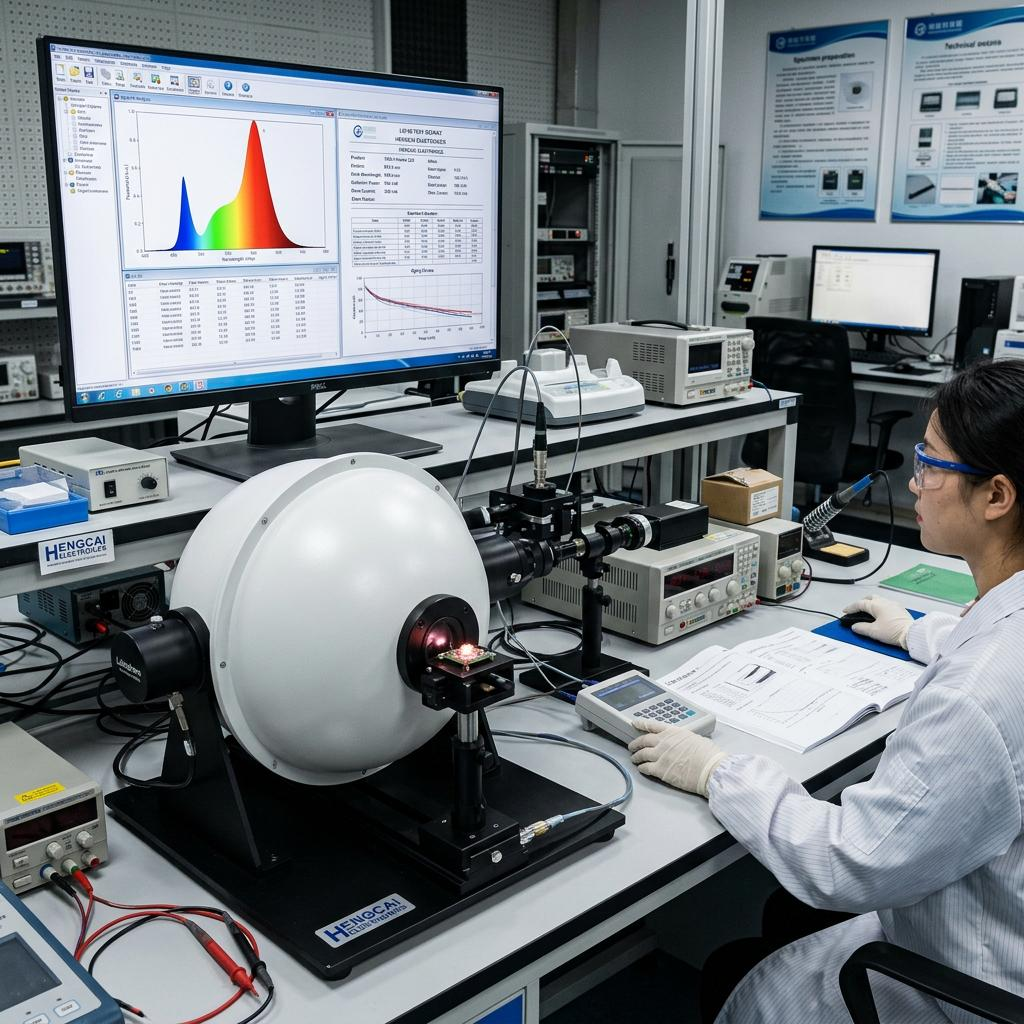
Red Light Therapy OEM Inspection Checklist Before Shipment
The following OEM inspection checklist can be used as a starting point for red light therapy panels, mats, and other LED light therapy products.
| No. | Inspection Item | Verification Method | Acceptance Requirement |
|---|---|---|---|
| 1 | Model and configuration | Compare labels, BOM and specifications | Match approved model and revision |
| 2 | LED quantity and layout | Visual inspection and functional check | Match approved LED configuration |
| 3 | Wavelength | Suitable calibrated optical measurement | Within agreed spectral tolerances |
| 4 | Irradiance | Measure under defined conditions | Within approved output limits |
| 5 | Power input | Electrical measurement | Within specified electrical limits |
| 6 | Electrical safety | Applicable approved safety tests | Meet relevant safety criteria |
| 7 | Controller | Test modes, intensity and timer | All specified functions operate |
| 8 | Cooling system | Functional and temperature testing | Meet agreed thermal requirements |
| 9 | Aging test | Review recorded test results | No unresolved failures |
| 10 | Housing and assembly | Visual and mechanical inspection | Meet cosmetic and assembly criteria |
| 11 | Logo and labels | Compare against artwork | Correct text, placement and durability |
| 12 | Product packaging | Packaging inspection | Match approved design and protection requirements |
| 13 | Accessories | Verify packing list | All required items present |
| 14 | Documentation | Review manuals and compliance evidence | Correct model, language and revision |
| 15 | Traceability | Verify batch or serial identification | Records match production lot |
| 16 | Final release | Review inspection and defect records | Written acceptance or approved disposition |
This checklist should be adapted to the relevant product, order size, inspection plan, and contractual requirements. It does not replace product-specific safety or regulatory testing.
1. Verify LED Wavelength Accuracy
Wavelength configuration is an important technical characteristic of red light therapy equipment.
Common product configurations include:
- 660nm red light
- 850nm near-infrared light
- Combined 660nm and 850nm wavelengths
- Customized multi-wavelength combinations
During red light therapy quality control, buyers should confirm that the installed LEDs match the approved technical specifications.
How Should Wavelength Be Tested?
An appropriate optical measuring instrument, such as a calibrated spectrometer suitable for the relevant wavelength range, can help evaluate spectral characteristics.
The inspection should confirm:
- Nominal peak wavelengths
- Agreed wavelength tolerances
- Correct LED combinations
- Consistency between samples
- No unauthorized LED substitutions
For a device specified to use 660nm and 850nm LEDs, the inspector should verify the actual measured characteristics against the approved specifications rather than assuming that every LED emits at exactly its nominal wavelength.
Important: Near-infrared light is not reliably evaluated by visual appearance. A device should not pass wavelength inspection simply because its LEDs appear to be illuminated.
2. Test Irradiance and Optical Output Consistency
Irradiance is another important measurement in red light therapy panel quality testing.
It describes radiant power incident on a surface per unit area and is commonly expressed in mW/cm².
However, irradiance results depend on measurement conditions.
What Should an Irradiance Test Include?
A useful red light therapy irradiance testing procedure should define:
- Measurement distance
- Measurement location
- Device operating mode
- Warm-up conditions
- Ambient measurement conditions
- Instrument type and calibration status
- Target irradiance and acceptance tolerance
For example, a buyer may specify measurements at a defined distance and at several positions across the illuminated treatment area.
The exact distance, measuring points, and acceptable variation should be established before testing.
Why Is Optical Consistency Important?
Two panels with the same advertised wattage may deliver different optical outputs because of differences in LED efficiency, lenses, layout, and electrical design.
Inspectors should look for significant deviations from the approved optical performance criteria.
Where applicable, evaluate output uniformity rather than checking only the brightest point.
For more technical information, read our Red Light Therapy Panel Irradiance Guide.
3. Inspect Electrical Safety and Power Supply Performance
Electrical testing is essential when preparing red light therapy devices for commercial distribution.
Depending on the product design, intended use, and applicable standards, inspections may cover:
- Input voltage and frequency compatibility
- Power supply identification
- Power consumption
- Electrical insulation
- Protective earthing, where applicable
- Leakage current or other applicable safety measurements
- Wiring and connector integrity
- Relevant temperature and protection functions
Inspection procedures and pass/fail limits must come from the applicable product safety requirements and approved test plan.
Why Does Power Supply Quality Matter?
Power supplies influence electrical performance, reliability, temperature management, and long-term device operation.
An unauthorized power supply substitution can potentially affect safety, electromagnetic compatibility, and other product characteristics.
Buyers should require written approval for changes involving critical electrical components.
For medical electrical equipment, additional requirements may apply depending on product classification and intended use.
4. Check Controller Functions and Operating Modes
Modern red light therapy devices may include multiple operating functions.
Depending on the model, these can include:
- On/off controls
- Adjustable intensity
- Timer settings
- Red-only and near-infrared operating modes
- Pulse settings
- Remote controls
- Touchscreen interfaces
- Memory functions
- App connectivity
During final inspection, each specified function should be tested.
Example: OEM Controller Inspection
For a customized red light therapy panel, the inspector can verify whether:
- The device starts correctly.
- Each intensity setting responds as specified.
- Timer settings operate within agreed tolerances.
- Wavelength modes activate the intended LED groups.
- The controller responds reliably.
- The device shuts down according to its programmed settings.
- Labels and interface language match the approved design.
For private label projects, controller functions and language settings should match the requirements approved by the customer.
5. Review Cooling Performance and Product Temperature
Thermal management is especially relevant for high-output red light therapy panels.
Depending on the design, cooling may involve fans, heat sinks, ventilation, or passive heat dissipation.
Cooling System Inspection Checklist
Check whether:
- Fans start and operate correctly
- Airflow passages are unobstructed
- Abnormal vibration or noise is present
- Cooling components match the approved design
- Operating temperatures remain within specified limits
- Required thermal protection functions work correctly
Temperature testing should follow defined operating conditions and appropriate measurement procedures.
Inspectors should not use an arbitrary surface temperature as a universal pass/fail limit.
Why Thermal Testing Matters for Commercial Equipment
Products used in clinics, gyms, or wellness centers may experience repeated operating cycles.
Poor cooling performance can affect component reliability and consistent operation.
Buyers considering commercial equipment can review our OEM and Wholesale Red Light Therapy Panels.
6. Check Aging and Reliability Test Records
An aging test, sometimes called a burn-in test, operates equipment under defined conditions to help detect certain early failures.
It may reveal issues such as:
- Intermittent electrical connections
- Controller malfunctions
- Unstable power supply behavior
- Fan failures
- Unexpected device shutdowns
- Early LED failures
How Long Should an Aging Test Last?
There is no single aging-test duration suitable for every red light therapy product.
The duration and operating conditions should be selected according to the product design, reliability goals, applicable requirements, and agreed quality plan.
Buyers should ask suppliers for:
- Test procedures
- Test duration and conditions
- Number of units tested
- Recorded results
- Failure records
- Corrective actions
Aging tests can help identify defects but cannot guarantee that a device will remain failure-free throughout its service life.
7. Inspect Housing, Assembly, and Physical Construction
Visual and mechanical quality affect both product appearance and safe operation.
For metal-housed red light therapy panels, inspection points may include:
- Scratches, dents, and coating defects
- Sharp edges
- Loose screws
- Misaligned components
- Damaged LED lenses
- Cracked display covers
- Incorrect product dimensions
- Mounting hardware
- Cable strain relief
- Assembly stability
The buyer and supplier should agree on cosmetic defect standards.
A small surface mark and a loose electrical connection should not be treated as defects of equal severity.
Mechanical and safety-related defects require appropriate investigation.
8. Check Private Label Branding and Packaging
For an OEM or private label business, packaging quality is part of the customer experience.
A technically correct device may still be commercially unacceptable if its logo, packaging, or labels are incorrect.
OEM Branding Inspection
Confirm that:
- The brand logo matches approved artwork.
- Logo position and dimensions are correct.
- Product color and finish are approved.
- The model number is accurate.
- Electrical rating labels are correct.
- Required warnings are included.
- Printed instructions match the product version.
Packaging Inspection
Check:
- Inner protective materials
- Product positioning inside the box
- Carton dimensions and condition
- Accessories and protective eyewear, if specified
- Power cords and plug types
- User manual language
- Barcode accuracy
- Shipping carton markings
- Agreed transport-testing evidence
Packaging requirements should reflect product fragility, shipment methods, and destination-market requirements.
9. Apply Product-Specific Inspection Requirements
Not every red light therapy device should use an identical inspection procedure.
Red Light Therapy Panels
Additional checks may include:
- Fan and heat sink assembly
- Hanging hardware and brackets
- Stand compatibility and stability
- LED lens alignment
- Electrical connections
- Optical output across the treatment area
- Controller and display operation
Red Light Therapy Mats
For flexible red light therapy mats, buyers should also evaluate:
- Flexible LED circuit construction
- Seams and stitching
- Cable routing and strain relief
- Material quality
- Connector durability
- Controller compatibility
- Approved bending and flexing requirements
- Cleaning instructions and relevant material claims
Durability testing should use approved test conditions rather than improvised handling procedures.
Explore our OEM Full-Body Red Light Therapy Mats for product customization options.
LED Masks and Wearable Devices
Depending on the design, additional inspection points may include contact materials, attachment systems, battery and charging functions, fit, and relevant optical or electrical safety requirements.
Each product should have its own approved inspection specification.
10. Decide Between 100% Testing and Sampling Inspection
One important question for bulk buyers is whether every device must be tested or whether sampling is sufficient.
The answer depends on the type of test and the risk associated with potential failures.
What Is 100% Inspection?
A 100% inspection means every unit in the defined batch is checked for the specified characteristic.
It can be appropriate for selected routine functional or safety-related production checks, depending on the product requirements and inspection process.
However, inspecting every unit does not automatically mean every possible defect will be discovered.
What Is AQL Sampling Inspection?
Acceptance Quality Limit (AQL) sampling is used in defined statistical acceptance sampling plans.
For example, ISO 2859-1:2026 provides sampling schemes indexed by AQL for lot-by-lot inspection.
A sampling plan determines the sample size and the criteria for accepting or rejecting a lot.
It should be selected based on factors including:
- Lot size
- Inspection level
- Defect classification
- Agreed AQL
- Relevant sampling procedure
- Product and customer risk
An AQL value is not a guarantee that the accepted shipment contains that percentage of defects.
How Should Defects Be Classified?
| Defect Type | Example | Recommended Response |
|---|---|---|
| Critical | A potentially hazardous electrical defect | Hold affected products and investigate |
| Major | Controller failure or unacceptable optical output | Rework or reject according to the inspection agreement |
| Minor | Cosmetic defect outside agreed appearance criteria | Apply agreed acceptance rules |
For safety-critical failures, buyers should establish strict nonconformity procedures rather than relying only on a general cosmetic sampling plan.
Recommended approach: Define routine unit-level tests separately from final lot sampling, and have the full inspection arrangement agreed upon before mass production.
Reference: ISO 2859-1:2026 — Sampling Procedures for Inspection by Attributes.
11. Verify Certifications and Technical Documentation
Pre-shipment inspection should confirm that the actual manufactured product matches the approved regulatory and technical documentation.
Requirements vary depending on the device’s intended use, claims, classification, design, and destination market.
Relevant documentation may include:
- Applicable electrical safety test reports
- Electromagnetic compatibility documentation
- Photobiological safety assessments
- RoHS-related documentation
- Applicable EU conformity documentation
- Relevant U.S. regulatory documentation
- Approved labels and user instructions
- Product identification and traceability information
Do Not Assume Every Certification Applies to Every Device
IEC 62471 addresses photobiological safety evaluation for relevant lamps and lamp systems, including LED sources.
Certain medical electrical equipment may be subject to applicable standards from the IEC 60601 series.
The required regulatory pathway must be assessed for the specific product.
In the United States, FDA establishment registration and device listing do not, by themselves, establish FDA approval or clearance.
Buyers should verify claims and documentation rather than relying solely on certification logos.
For a detailed explanation, read our Guide to Verifying Red Light Therapy Device Certifications Before Bulk Ordering.
12. How to Conduct a Red Light Therapy Pre-Shipment Inspection
A structured red light therapy pre-shipment inspection can follow five practical stages.
Step 1: Confirm the Production Lot
Before inspection, identify:
- Purchase order number
- Product model and revision
- Batch or lot number
- Ordered quantity
- Production completion status
- Approved product specifications
- Available inspection records
The inspected lot should be clearly defined.
Step 2: Select Inspection Samples
Choose samples according to the approved sampling plan.
Where sampling is used, samples should be selected from the actual shipment lot rather than only from units chosen in advance by the supplier.
Step 3: Perform Inspections and Measurements
The inspector should perform the required checks using suitable instruments and documented procedures.
Measurements should be recorded against the agreed acceptance limits.
Step 4: Document Defects and Corrective Actions
For each nonconformity, record:
- Affected product identification
- Description of the defect
- Photographic evidence, where useful
- Severity classification
- Quantity affected
- Required corrective action
- Reinspection results
Step 5: Approve or Hold the Shipment
Shipment approval should follow the contractual quality requirements.
A failed inspection may require rework, further testing, expanded inspection, lot rejection, or a formal corrective action.
Safety or regulatory nonconformities should not be released simply because the buyer wants faster delivery.
What Should Be Included in the Final OEM Quality Control Report?
A useful final quality control report should provide enough information to support shipment decisions and future traceability.
| Report Item | Required Information |
|---|---|
| Order information | PO number, product model, quantity |
| Product traceability | Lot, batch or serial numbers |
| Specifications | Approved revision and acceptance criteria |
| Inspection scope | Tests performed and sampling method |
| Instruments | Equipment identification and calibration status |
| Test results | Measurements, observations, pass/fail results |
| Defect summary | Defect descriptions and classifications |
| Corrective actions | Rework, investigation and reinspection |
| Supporting evidence | Relevant images, test records and documents |
| Final status | Pass, fail, hold or approved disposition |
| Authorization | Inspector and responsible approval records |
For important OEM projects, buyers may also arrange independent third-party pre-shipment inspection.
A third-party report can provide additional oversight, but it does not replace contractual quality requirements or applicable regulatory obligations.
Questions to Ask an OEM Red Light Therapy Supplier Before Shipment
Before approving a bulk order, ask the supplier:
- Can you provide a complete quality control checklist for this model?
- Are the wavelength and irradiance specifications verified using suitable measuring equipment?
- What functional tests are performed on each unit?
- Which inspections use sampling?
- How are electrical safety requirements verified?
- Can you provide aging-test records?
- How do you control substitutions of LEDs, power supplies, and controllers?
- Can you provide inspection photographs and traceable test records?
- What happens if the final inspection fails?
- Can a third-party inspector access the finished production lot?
- Does the documentation cover the exact customized product?
- What warranty and corrective-action support is available after delivery?
Clear answers to these questions can help buyers compare suppliers beyond their quoted unit prices.
For more supplier evaluation considerations, see our Red Light Therapy Manufacturer B2B Buying Guide.

Frequently Asked Questions About Red Light Therapy Quality Control
What Is Red Light Therapy Quality Control?
Red light therapy quality control is the process of inspecting and testing device components, finished products, technical performance, labeling, and documentation against approved requirements. Its purpose is to identify nonconforming products and support consistent manufacturing.
What Should an OEM Inspection Checklist Include?
An OEM inspection checklist should include product identification, wavelength, irradiance, electrical and functional testing, cooling, assembly, appearance, branding, packaging, documentation, traceability, and shipment approval.
Is Irradiance Testing Necessary Before Shipment?
Irradiance testing is particularly useful when optical output is a key product specification. The measurement method, frequency, sampling requirements, and acceptance tolerances should be agreed upon before production.
Can I Request Third-Party Inspection for Red Light Therapy Products?
Yes. Buyers can arrange independent inspection subject to the supplier’s access arrangements and purchase agreement. The scope should clearly state the required tests, sampling plan, acceptance criteria, and reporting requirements.
Does Every Red Light Therapy Device Need FDA Approval?
No. U.S. regulatory requirements depend on the device’s intended use, claims, classification, and applicable regulatory pathway. FDA establishment registration or device listing should not be confused with FDA clearance or approval.
What Happens If a Shipment Fails Quality Inspection?
The shipment should be handled according to the agreed nonconformity procedure. This may involve corrective action, product rework, reinspection, or rejection of the affected lot. Safety or regulatory issues require appropriate resolution before release.
How Can OEM Buyers Improve Quality Consistency?
Buyers can improve consistency by using approved golden samples, documented specifications, controlled component changes, defined test procedures, traceable inspection records, and clear corrective-action requirements.
Conclusion: Build a Reliable Red Light Therapy OEM Quality Control Process
Successful OEM sourcing depends on more than price, appearance, and delivery time.
For red light therapy devices, buyers should pay particular attention to optical performance, electrical safety, product functionality, physical construction, branding accuracy, and shipment documentation.
A well-defined red light therapy quality control process makes it easier to identify problems before products reach customers.
By using an agreed OEM inspection checklist, approving production samples, defining measurable acceptance criteria, and reviewing inspection evidence, businesses can make better-informed shipment decisions.
The goal is not merely to receive a passing inspection report. It is to build a repeatable manufacturing and quality assurance process that supports long-term product consistency.
Looking for Red Light Therapy OEM & ODM Solutions?
US Red Light Therapy supports brands, distributors, importers, and professional equipment buyers with red light therapy OEM, ODM, private label, and wholesale product sourcing solutions.
Whether you are developing a customized red light therapy panel, planning a private label product line, or preparing for a bulk order, clear technical specifications and inspection requirements are essential.
Discuss your OEM project requirements with our team.
Share your preferred product type, target market, estimated order quantity, customization requirements, and quality inspection expectations.
Explore Our Red Light Therapy OEM & ODM Services
Contact US Red Light Therapy for an OEM Quote
Post time: 10-26-26